Online Reporter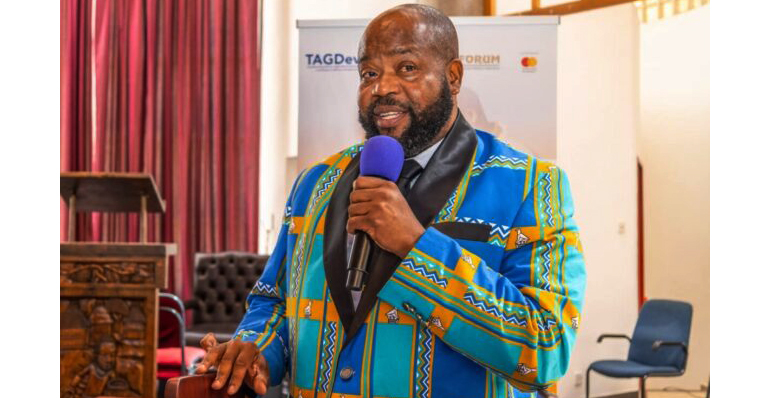
Lovemore Kadzura
Post Reporter
THE Government has reaffirmed its commitment to working with civil society organisations and non-governmental organisations, saying their contribution remains critical to achieving the objectives of the National Development Strategy (NDS2) and Vision 2030.
Speaking at the 2026 Eastern Region NGO Expo and Winter School in Mutare, Minister of State for Manicaland Provincial Affairs and Devolution, Advocate Misheck Mugadza, said the Government remains committed to create an enabling environment that promotes collaboration, innovation and active citizen participation in national development.
He assured development partners that Zimbabwe’s civic space remains open for organisations seeking to complement Government efforts in improving livelihoods and accelerating socio-economic transformation.
“Across the world, development actors are operating in an increasingly complex environment characterised by shifting funding priorities, heightened competition for resources, rapid technological transformation and evolving regulatory frameworks.
“These realities compel us to rethink how we collaborate, innovate and collectively respond to the needs of our communities,” said Minister Mugadza.
He said sustainable development can only be achieved through strong partnerships that bring together Government, civil society, development partners, academia, the private sector, independent commissions, traditional leaders and local communities.
“The Government firmly believes that lasting development cannot be achieved by one institution or sector acting in isolation. Durable and meaningful transformation requires robust partnerships among all stakeholders.
“Inclusive civic spaces are essential for promoting dialogue, mutual trust, shared learning, accountability and constructive engagement. They empower citizens to participate meaningfully in development processes and ensure programmes remain people-centred, locally driven and responsive to community needs,” he said.
Minister Mugadza said the Government’s decentralisation and devolution agenda continues to provide communities with greater authority to determine their development priorities while contributing towards the attainment of Vision 2030.
“As Government, we remain fully committed to fostering an environment that encourages collaboration, innovation and active citizen participation. Through decentralisation and devolution, communities are being empowered to shape their own development trajectory while contributing to the national vision of becoming an empowered and prosperous upper-middle-income economy by 2030,” he said.
Minister Mugadza said the Second Republic’s development agenda is firmly anchored on inclusivity, with special attention being given to vulnerable and marginalised groups.
“The principle of leaving no one and no place behind remains at the centre of our national development agenda. Development must deliberately include women, youths, persons with disabilities, older persons and vulnerable communities.
“Our national progress will only be meaningful when every Zimbabwean has an equal opportunity to participate in and benefit from development,” he said.
He said the Government will continue prioritising programmes that promote inclusive economic growth, job creation, food security and climate resilience under NDS2.
“Priority areas under NDS2 include inclusive growth, employment creation, food security, climate resilience, human capital development, digital transformation, industrialisation, infrastructure development, good governance and strengthened social protection systems.
“These goals can only be achieved through stronger partnerships, innovation, accountability and active citizen participation.”
Minister Mugadza commended NGOs and civil society organisations for their longstanding contribution to national development, saying they continue to play a vital complementary role in supporting Government programmes.
“Over the years, NGOs have made significant contributions in key sectors such as education, health, food security, disaster preparedness and response, environmental protection, governance, social protection, youth empowerment, gender equality and community resilience.
“They remain important partners in our collective quest to improve the quality of life for all Zimbabweans,” he said.
The National Association of Non-Governmental Organisations (NANGO) emphasised the need for stronger partnerships among development stakeholders despite growing financial pressures facing the sector.
NANGO said shrinking donor funding and increasing development challenges required greater collaboration and innovation among stakeholders.
The organisation said fostering constructive engagement between Government and civil society was no longer optional, but essential in ensuring development efforts remain coordinated, sustainable and responsive to the needs of communities.
The NGO Expo and Winter School brought together representatives from civil society, Government departments, development partners and community-based organisations to discuss emerging development challenges, share experiences and strengthen partnerships aimed at accelerating progress towards Vision 2030.