

 admin
admin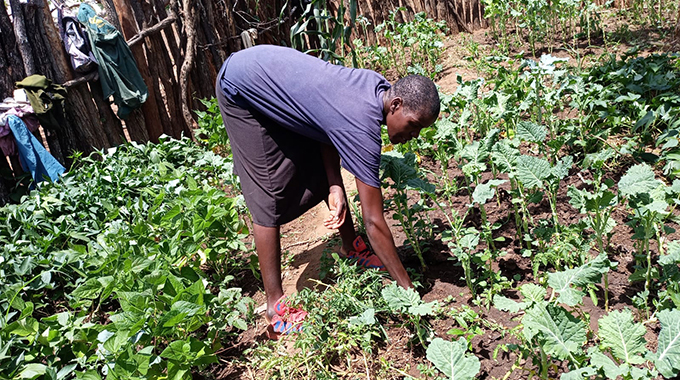
Phyllis Kachere Deputy News Editor (Convergence)
With 5,6 million Zimbabweans grappling the country’s leanest period in terms of food security, the Zimbabwe Red Cross Society (ZRCS) in partnership with the International Federation of Red Cross (IFRC) has embarked on a Hunger Crisis Programme in some of the worst affected districts that include, Chiredzi, Buhera and Mwenezi.
Ms Torerai Zinaka (42), a widow and a mother of four children from Village 9 in the resettlement area of the Rineti Ranch in Mwenezi said because of climate change, she has not been able to harvest and ensure food security in her household.
Ms Zinaka and her family are part of the 4 500 villagers in Mwenezi who are benefitting from the Hunger Crisis Programme being implemented by the ZRCS and the IFRC in Mwenezi district’s three wards.
“We were resettled in this area which was predominantly a cattle ranching area. Potable water is also a real challenge. The few boreholes that we have in the area are either broken or have dried up. We used to grow traditional grains and ground nuts and they would thrive. But because of the changing weather patterns, we no longer have consistent harvests. It’s either we have floods that wash away our crops or there is total drought.
“This has resulted in food insecurity in most if not all households in our area. But we are happy Government and its partners like Red Cross have always come to help us. They support us by providing food or other such support,” she said.
According to the Zimbabwe Vulnerability Assessment Committee (Zimvac) 2022 Report, the country is experiencing food insecurity, with 5.6 out of 16.6 million people (33 percent) having insufficient food consumption, and a projected 38 percent of the rural households to be cereal insecure at the peak of the lean season (October to December 2022).
As a response, the ZRCS with the support from the International Federation of Red Cross is implementing a Hunger Crisis Response project in the Mwenezi District targeting 850 households in wards 5, 8 and 14.
In an interview, ZRCS secretary general Mr Elias Hwenga said the eligibility criteria used would be to pick the most vulnerable people in the communities which include the elderly people, children in child headed families, people living with disabilities, pregnant and lactating mothers, people with chronic illness and malnourished children in the red-zone.
“The duration would be for 14 months (November 2022 to December 2023). The project components include Food Security and Livelihoods, Direct Cash Assistance through a money transfer agency every month on a transfer value of US$13 per person. This is for up to five family members.
“Water, Sanitation & Hygiene would be implemented to ensure that community managed WASH services are provided to the target population to reduce health risks and improve food security and livelihoods,” said Mr Hwenga.
He said the programme would repair and rehabilitate 10 boreholes including solarization of other boreholes.
The Hunger Crisis Programme is anticipated to be implemented in other districts which include Buhera and Chiredzi.
The Mwenezi district development coordinator Mr Iceben Masiiwa said Government, in partnership with its partners was seized with providing food for the distressed families.
“As you may be aware, this area is one of the driest parts of the country and on top of that, Mwenezi is one of the most affected by climate change.
“Government is promoting communities to adopt and adapt other forms of land use like tourism, fishing as well as reliance on local resources and local knowledge systems.
“Reliance on local resources has resulted in the establishment of the million Mwenezi Mapfura Industrial Park where locals are set to get at least US$5 million annually from the sale and beneficiation of the indigenous mapfura fruit. All this is part of efforts by Government to cushion households and secure food availability,” said Mr Masiiwa.
He said Government was also considering investing in small dams and establish water harvesting projects to mitigate climate change challenges in the district.
“We have seen an increase in the disposal of family assets and livestock as people seek to buy food. The intervention by the Red Cross and its partners is a welcome development. Government is doing its part which is being complemented by its partners,” he said.



 Online Reporter