Chronicle Editor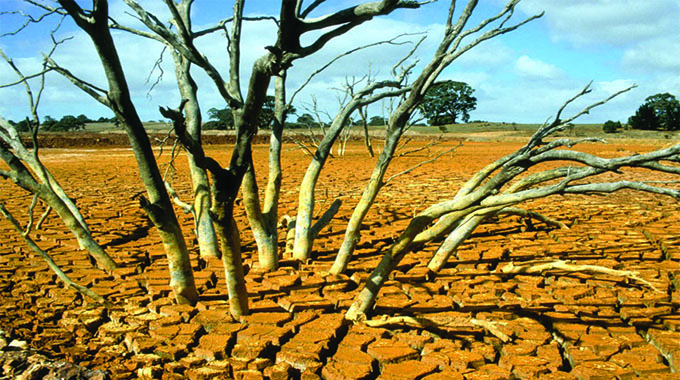
Mkhululi Ncube, [email protected]
GOVERNMENT in conjunction with its partners is working on a National Anticipatory Action roadmap to help educate and guide communities on how to combat the effects of the predicted El Nino-induced drought ahead of the 2023/2024 summer cropping season.
According to a recent forecast by meteorological experts from Sadc, most parts of the country are set to receive normal to below-normal rainfall over the forthcoming summer due to an El Nino phenomenon.
Speaking during a two-day workshop in Bulawayo, stakeholders drawn from the Department of Civil Protection, Food Agriculture Organisation (FAO), World Food Programme (WFP), International Federation of the Red Cross Society, and several Government ministries, said they are working on producing a National Anticipatory Action roadmap document for Zimbabwe.
The policy document will assist the country in preparing in advance on how to deal with natural disasters likely to hit the country during the rainy season.
The country has in the past experienced a number of disasters such as cyclone-induced floods which have resulted in the destruction of public infrastructure and homes.
Already some parts of the country have recorded disasters following the recent rains which have been accompanied by strong winds.
Acting director in the Department of Civil Protection in the Ministry of Local Government and Public Works (disaster response and coordination), Mr Farai Hokunya said the country should be ready to deal with imminent disasters following the onset of the rainy season.
“Let us find a mechanism to cascade early warning information to our communities. Let us train them on how they can combat the El Nino season. I know the Ministry of Agriculture is already talking about issues of drought-resistant crops and irrigation,” he said.
“We need to inform our communities with correct information so that the impact of the season will not be felt as much as would be anticipated. It is a duty and clarion call to each and every one of us to have a role to play during the course of the season.”
Mr Hokunya said some parts of the country have started experiencing thunderstorms, and strong winds, with some districts already reporting disasters and destruction of critical infrastructure, especially schools.
The first rains have caused damages in Beitbridge Gwanda, Matopo, and Insiza districts where some schools had had their roofs blown off.
“We are already starting from a response point of view rather than anticipating. So we need to start to balance the way we are going to interpret the response to the season,” said Mr Hokunya.
He said it was important to plan and come up with contingent measures ahead to avert the devastating effects of disasters in different parts of the country.
Mr Hokunya said it was crucial that traditional leaders be included in the plan.
“We know during the El Nino seasons we get quite a number of emergencies and disasters and we have to deliberate on all of them. We have had dry spells, hail storms, dry spells, cyclones, and droughts so we need to use the past experience to plan accordingly and allocate resources to directly respond to these,” he said.
“The issue of early warning systems for early action remains the integral component of the Anticipatory Action during the course of the season.”
FAO regional early warning specialist Dr Quraishia Merzouk said the adoption of Anticipatory Action will help create a humanitarian action before disaster strikes to reduce the suffering by vulnerable communities.
“When we say Anticipatory Action we mean that we should be acting as a humanitarian community before disasters negatively impact livelihoods. We do not just mean agriculture livelihoods, but also the livelihoods of vulnerable households, the last mile community, and all vulnerable households,” he said.
“Every time we have drought, floods, and cyclones, we all know that vulnerable communities lose their assets. They lose their livestock, farming equipment, and valuable items including important documents such as national ID documents.”
Dr Merzouk said it was crucial that a response is prepared in advance before communities lose their assets.
She said they are working on having the road map document finalised by October 20 before it is handed over to Parliament as part of the national contingency plan for approval. – @themkhust



 Online Reporter