Precious Manomano
Herald Reporter
Government is set to roll out 300 000 doses of the locally produced BOLVAC vaccine in cattle disease hotspots as it intensifies efforts to protect the national herd from Theileriosis, commonly known as January disease.
The vaccination drive is part of a comprehensive strategy that also includes intensive cattle dipping, increased stocks of acaricides, acaricide resistance monitoring and the rehabilitation of dipping infrastructure.
Persistent vaccination and disease management measures have helped contain the spread of Theileriosis, with cases of the tick-borne disease currently relatively low and stable.
Department of Veterinary Services deputy director for Epidemiology and Informatics, Dr Tapiwanashe Hanyire, said Government had put in place several measures to strengthen the control of ticks and tick-borne diseases.
“Three hundred thousand doses of BOLVAC vaccine have been rolled out to counter ticks and tick-borne diseases,” he said.
“The ministry is targeting the districts most affected by Theileriosis, also known as January disease, and carrying out Theileriosis BOLVAC vaccinations.”
Dr Hanyire said although the disease was currently under control, farmers and authorities should remain vigilant, particularly during the rainy season when tick populations increase.
“The current incidence of Theileriosis is relatively low and stable, but we must remain vigilant,” he said.
He said cases of the disease typically peak between February and March, making preventive measures critical.
“Consistent weekly dipping is the only way to combat cattle mortality effectively,” said Dr Hanyire.
Already, 60 000 communal cattle have been vaccinated against Theileriosis in identified hotspots, while an additional 40 000 cattle have been inoculated against Babesia and Anaplasma.
Government has also upscaled production of all three tick-borne disease vaccines to meet national demand.
The BOLVAC vaccine, which protects cattle against Theileriosis, is a key component of the Integrated Tick and Tick-Borne Disease Control Strategy, which combines vaccination, intensive cattle dipping and acaricide resistance monitoring.
Acaricide stocks have been increased to ensure consistent dipping, while pour-on acaricide has been procured for dip tanks facing water challenges to ensure that cattle continue receiving protection against ticks.
The National Dipping Programme is also being strengthened to support more than 800 000 families that depend on livestock for their livelihoods.
Of the country’s 4 211 dip tanks, 1 000 are being renovated to improve their functionality and ensure continuous dipping across the country. Efforts are also underway to drill 20 boreholes at strategic dip tanks to facilitate uninterrupted dipping throughout the year.
Under the Animal Health Act, cattle dipping is a legal requirement, making compliance mandatory for farmers.
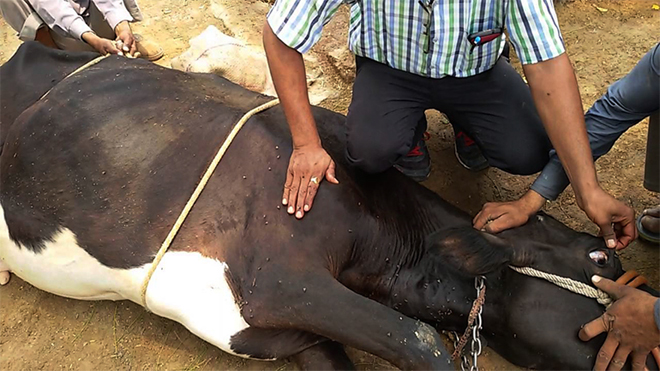
The directorate uses several treatment methods, including plunge dips and spray races, to ensure complete coverage of cattle. Knapsack sprayers can also be used for smaller herds, provided animals are properly restrained to ensure hard-to-reach areas are adequately treated.
Farmers have also been encouraged to recognise the symptoms of Theileriosis early and seek intervention before the disease causes further losses. Symptoms include high fever, weakness, loss of appetite and cloudiness of the eyes.
The intensified vaccination and dipping programme comes as Government seeks to safeguard a livestock sector that is critical to rural livelihoods, food and nutrition security.
More than 70 percent of rural livelihoods depend on livestock, which also provides an important buffer against climate shocks such as frequent droughts.
BOLVAC was first produced by Zimbabwe’s Central Veterinary Laboratory in 1989 using the country’s own Theileria parva vaccine strain. Production was gradually discontinued in the late 1990s, mainly because of high technical staff turnover and inadequate financing.
Production resumed in 2022 after Government, through the Department of Veterinary Services, received financial support from partners for training in Theileriosis vaccine production. The Central Veterinary Laboratory produced its first batch of about 20 000 doses on August 20, 2022, marking the resumption of local production of the vaccine.
With the rollout of 300 000 doses, Government is seeking to strengthen protection of cattle in disease-prone areas, reduce losses from January disease and build the resilience of livestock-dependent communities.