Nyore Madzianike-Herald Reporter
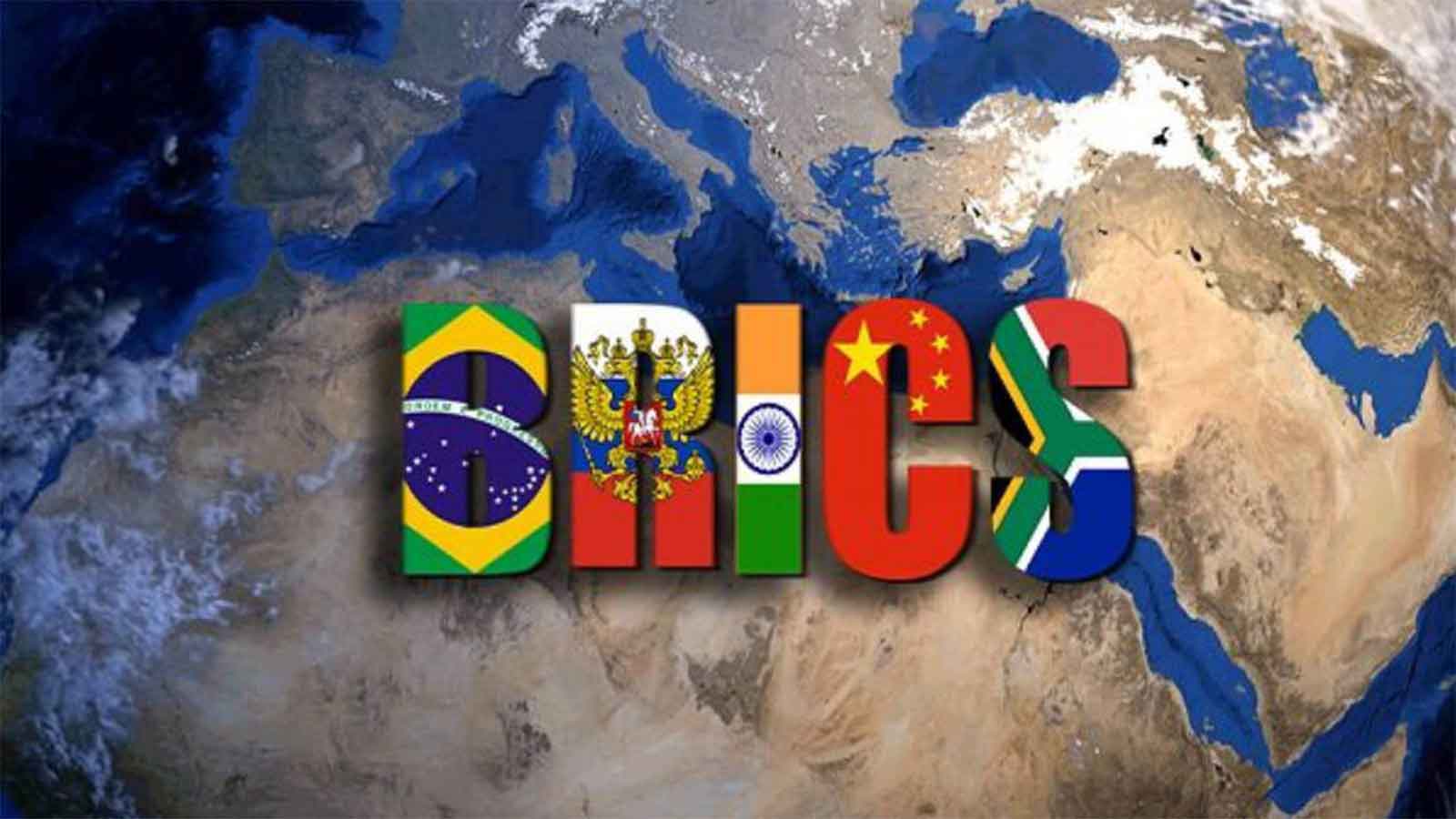
ZIMBABWE is pushing for full membership of the BRICS bloc, with preparations underway to formally submit its instruments of accession in Brazil.
Through President Mnangagwa’s engagement and re-engagement drive, the country has secured admission to the BRICS New Development Bank (NDB) as a borrowing member.
Foreign Affairs and International Trade Minister Professor Amon Murwira revealed the latest milestone in the Senate recently, while responding to questions on when Zimbabwe would start accessing concessional loans from international financial institutions.
“You would appreciate that in terms of integrating Zimbabwe into the global economy, being part of the financial architecture of the world is very important.
“So that question is very important. We have started engaging, for example, in the arrears clearance process with our debtors so that we are transparent in the way we are doing our things and we are succeeding along those Established in 2015 by Brazil, Russia, India, China and South Africa, the NDB was created to fund infrastructure and sustainable development projects in emerging markets.”
It operates with an authorised capital of US$100 billion and an initial subscribed capital of US$50 billion.
As opposed to traditional multilateral institutions where Western nations hold veto-level voting rights, founding BRICS members each held equal shareholding (18,72 percent voting power each) at inception.
To date, the NDB has approved over $30 billion in funding across more than 80 infrastructure, clean energy, transportation, and water development projects.
Economist Prof Gift Mugano highlighted the strategic significance of the move, noting that the NDB serves as a crucial alternative to Bretton Woods institutions such as the International Monetary Fund (IMF) and the World Bank.
Zimbabwe is currently unable to access long-term concessional funding from key multilateral lenders due to outstanding debt.
Under the strict rules of global financial institutions, a country cannot access new concessional financing or loans if it has outstanding, unresolved arrears with its lenders.
Beyond the mathematical default, geopolitical restrictions further complicate the borrowing landscape.
Laws enacted by Western nations—most notably the Zimbabwe Democracy and Economic Recovery Act (ZDERA) passed by the United States—legally require their representatives at institutions like the IMF and World Bank to vote against extending any new loans or debt relief to Zimbabwe unless prescribed political, economic and governance benchmarks are met.
Zimbabwe’s long-standing inability to access cheap (since 1999-2000), concessional multilateral finance has severely constrained its economic development, infrastructure modernisation and rollout of social safety nets, but this is about to change.
Ultimately, the absence of affordable, long-term funding has constrained faster economic growth, despite the country’s extensive potential for rapid expansion.
Professor Mugano pointed out that traditional Western financial institutions have long been influenced by Western political interference, particularly from the United States, which holds roughly 17 percent of voting rights in those organisations.
“You are aware that through ZDERA, the World Bank and IMF were abused by the Americans to prevent offshore lines of credit to Zimbabwe,” Prof Mugano explained.
“Even though ZDERA was repealed, it created historical residual baggage with Western multilateral financial institutions.”
He underscored the paradox facing Zimbabwe, which cleared its financial arrears with the IMF but remains locked out of new concessional funding due to rules requiring countries to clear all multilateral debt simultaneously—a total currently standing at about US$10 billion.
“How do you expect a country to clear about US$10 billion before they can get fresh capital?” he asked.
“If you are given fresh capital, it will raise production, finance infrastructure, increase export capacity, substitute imports and expand fiscal space to generate revenue to clear those debts.”
Prof Mugano observed that while Zimbabwe has implemented macroeconomic blueprints—including the Transitional Stabilisation Programme and National Development Strategy 1—and earned seals of approval under IMF Staff-Monitored Programmes, progress within the traditional debt resolution framework has moved at a “snail’s pace.”
As such, full membership of BRICS and the NDB places Zimbabwe as an equal alongside non-Western partners, mirroring the concessionary credit lines the country currently accesses from international African lenders and bilateral partners in China and the Middle East.
Development economist Mr Enock Musara expressed optimism that the NDB will provide direct impetus for Zimbabwe to secure patient capital tailored towards South-South cooperation, focusing on industrial retooling, water infrastructure, and green industrialization.
He noted that accessing alternative funding sources will build the national economic capacity required to settle outstanding external obligations, while urging the country to maintain its economic and ease-of-doing-business reforms.
Finance Minister Prof Mthuli Ncube noted, upon Zimbabwe’s NDB admission, that the growing credit facilities will serve as a vital source of financing for the industrial sector.
Accession TO BRICS also aligns Zimbabwe with a rapidly growing global trade force. The expanded BRICS bloc represents over 45 percent of the global population (about 3,5 billion people) and accounts for over 35 percent of global GDP.
According to a report by the United Nations Conference on Trade and Development (UNCTAD), intra-BRICS merchandise trade expanded more than 13-fold over the past two decades, reaching US$1,17 trillion in 2024.
Driven by resource complementarities among members—Brazil, Russia, India, China, South Africa, Egypt, Ethiopia, Indonesia, Iran and the United Arab Emirates—average bilateral tariffs have dropped from double digits in 2003 to mostly single digits by 2021.
However, intra-BRICS trade accounts for only about 20 percent of total South-South trade, leaving substantial untapped potential.
Seven of the 10 member nations rely on primary commodities for over 60 percent of their exports to other members, while China and India lead intra-bloc manufactured exports.
For Zimbabwe, expanding cooperation with the bloc offers clear strategic advantages.
The country can leverage strong demand for its resources across the 10-member group to diversify its export destinations for key mineral and agricultural commodities, while importing higher value-added technology and machinery from manufacturing giants like China and India to drive domestic industrial transformation.
Zimbabwe can also exploit its formal admission as a borrowing member of the BRICS New Development Bank (NDB) and full-membership application to pivot towards sustainable economic growth.
This scenario provides an alternative framework to circumvent long-standing Western-backed credit constraints and directly monetise its heavy trade ties with the Global South, with the UAE, South Africa and China already key trading partners.
The UAE has emerged as Zimbabwe’s top export destination, driven heavily by precious minerals—especially gold, which is refined or traded through Dubai.
Enhanced diplomatic ties and engagement policies under President Emmerson Mnangagwa have cemented the UAE as a primary buyer of Zimbabwe’s gold and a key source of direct investment.
South Africa is Zimbabwe’s leading source of imports (accounting for roughly 30 to 38 percent of total imports)—supplying vital goods like mineral fuels, electricity, machinery, and consumer products. It also remains one of Zimbabwe’s top regional export markets for commodities like tobacco, chrome, and other minerals, supported by shared borders and deep regional integration.
China is a major dual partner, ranking as a top-tier export destination (absorbing significant amounts of Zimbabwe’s minerals such as nickel ores, chromium, and tobacco) and the second-largest source of imports (providing machinery, electrical equipment and industrial goods), backed by extensive infrastructure and mining investments.
BRICS bloc will bring significant economic and financial benefits to Zimbabwe, with its recent admission to the Shanghai-headquartered New Development Bank, marking a major milestone in that journey, economic analysts said.