Chronicle Editor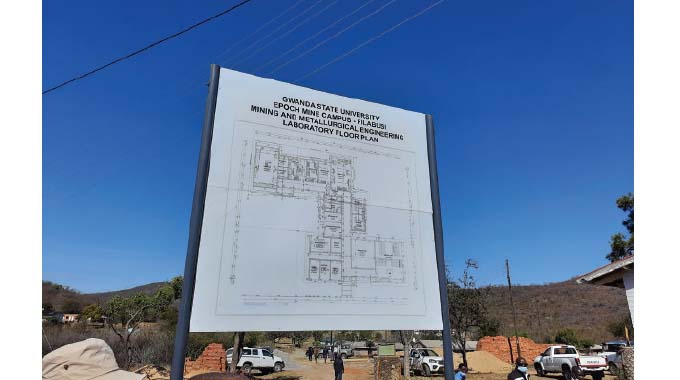
Thupeyo Muleya, [email protected]
THE Second Republic has invested more resources towards the expansion and growth of the Gwanda State University (GWASU) in Matabeleland South in line with Vision 2030.
The university was established in 2015 as a college of the National University of Science and Technology, and became a separate university a year later. In its latest report for projects implemented between 2018 and 2023, the Government said it introduced a Heritage-Based Education 5.0 philosophy to address shortcomings and deficiencies in the architecture of the Zimbabwean higher and tertiary education.
The university is temporarily operating from former Epoch Mine premises in Insiza District while construction of the main campus will be in Gwanda.
The opening of the facility is part of Government efforts to spread higher and tertiary education to all corners of the country as it moves to ensure no place and community is left behind.
According to the report, an engineering laboratory and innovation complex has been constructed at the university. The facility is set to spur mineral beneficiation and exploration initiative as the country moves towards attaining a US$12 billion mining milestone by the end of 2023.
“The Second Republic also funded the establishment of an Agro-Innovation Hub and Industrial Park Construction of an Agro-Innovation Complex and the rehabilitation of Epoch Mine Campus infrastructure at the Gwanda State University,” read part of the report.
“Other projects include; the construction of a state-of-the-art Engineering Laboratory Innovation Complex Agricultural College Technology Transfer project in Umzingwane District, which is aimed at improving participatory research is still ongoing.”
Gwanda State University’s first graduates were capped by President Mnangagwa in 2022 and these were from the Faculty of National Resources Management and Agriculture.
These graduates were capped with undergraduate degrees in Bachelor of Science Honours Degree in Animal Science and Bachelor of Science Honours Degree in Crop Science.
The Government also reported that its investment in education has resulted in the construction of 23 new classroom blocks and rehabilitation of 40 schools during the period under review across the province.
Six schools that had roofs blown off by the storm and were repaired under devolution funds, and five were still ongoing. Most of the projects were implemented by various Government schemes including the use of constituency development funds and devolution funds.
“In an endeavour to bridge the digital gap and widening learning materials resource base, schools in remote areas were connected to the internet,” reads the report.
“The internet society will give students the capacity to understand and appreciate how best to exploit the environment and available resources.
“A total of 32 schools were connected to the internet as part of promoting e-learning, 89 ICT labs were established, four schools were digitalised, 14 base stations were deployed, seven PFMS were established and three Post Office Points (POPs) were deployed in Matabeleland South Province.” — @tupeyo



 Online Reporter