Vusumuzi Dube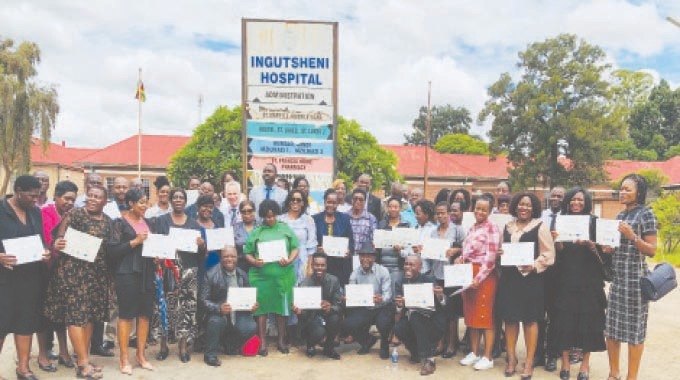
Andile Tshuma, [email protected]
THE Government is intensifying efforts to mainstream mental health and wellness support services for frontline health workers following revelations that more than 100 medical practitioners across the country are battling drug and substance abuse-related challenges.
Health authorities say doctors, nurses and other professionals have been operating under sustained pressure — long working hours, high patient volumes and emotionally taxing environments — often compounded by resource constraints.
While many affected practitioners are receiving outpatient care, structured counselling and rehabilitation support, some have required admission to mental health institutions.
Speaking on the sidelines of the World Health Organisation’s Mental Health Gap Action Programme (mhGAP) graduation ceremony in Bulawayo, Ingutsheni Central Hospital chief medical officer Dr Nemache Mawere said substance abuse among health professionals is a growing concern.
“According to the health committee of the medical and dental practitioner’s council, they’ve got almost 100 practitioners who are being supervised around the country, with alcohol and substance abuse problems. Here at Ingutsheni, we have admitted several health care workers,” he said.
“Doctors, nurses, physiotherapists and many others across the board have all been affected one way or the other with substance abuse problems. So, here we try to detox them so that they are better able to recover. We try to rehabilitate them so that they are able to go back and function as health workers again.”
The mhGAP programme trains health workers to deliver mental health support services and equips trainers to cascade knowledge across institutions and communities.
Dr Mawere said the number of health workers affected by drugs and substance abuse underline the urgency of embedding mental health and wellness systems within the health sector itself.
He said the situation must be approached with empathy as it requires structural solutions, noting that health professionals are routinely exposed to trauma, death, critical emergencies and high-stakes decision-making.
“Our staff are exposed to trauma and high-pressure situations daily. Strengthening mental health services is not only about patients, it is also about protecting the well-being of those who provide that care. Accessible counselling services, supervision and institutional wellness programmes are essential,” said Dr Mawere.
The Government efforts to mainstream support have gained momentum through capacity-building initiatives, including the recent graduation of health workers under the WHO mhGAP at Sally Mugabe Central Hospital in Harare and Ngomahuru Hospital in Masvingo before the Bulawayo leg where health workers graduated yesterday.
The programme is being implemented through a partnership between the Ministry of Health and Child Care and the East London NHS Foundation Trust of the United Kingdom’s National Health Service.
It seeks to decentralise mental health services by integrating them into primary healthcare and strengthening referral systems.
Bulawayo Provincial Medical Director Dr Maphios Siamuchembu said the province is enhancing referral pathways, peer support mechanisms and structured debriefing sessions, particularly for staff in high-pressure departments such as emergency and critical care.
However, he acknowledged significant resource constraints.
“The shortage of specialist mental health professionals means we must maximise available resources and integrate services at primary care level,” said Dr Siamuchembu.
He said training non-specialist health workers through mhGAP is critical to expanding access to care and reducing the burden on specialist institutions.
He also urged a shift in professional culture to reduce stigma.
“These are trained professionals working under strenuous conditions. Acknowledging mental health challenges and seeking support must be seen as strength, not weakness,” he said.
Providing a global outlook, Director of Global Health at the East London NHS Foundation Trust, Dr Nick Bass said the mental well-being of health workers has become an international priority, particularly in the aftermath of the Covid-19 pandemic, which exposed vulnerabilities in health systems worldwide.
“Across the world, health professionals work in highly strenuous environments. The psychological burden of dealing daily with trauma, emergencies and systemic pressures cannot be underestimated,” he said.
Dr Bass noted that countries are increasingly institutionalising structured staff support systems, including peer counselling models, confidential employee assistance programmes and preventive wellness frameworks.
He said building resilient health systems requires proactive investment in workforce well being, not only to safeguard individual practitioners but also to ensure continuity and quality of patient care. — @andile_tshuma



 Online Reporter