Nqobile Bhebhe, Zimpapers Business Hub
THE Government is targeting 558 335 new household electricity connections in 2027, raising national electricity access from about 54 per cent in 2026 to 65 per cent as it accelerates rural electrification and expands opportunities for rural economic development.
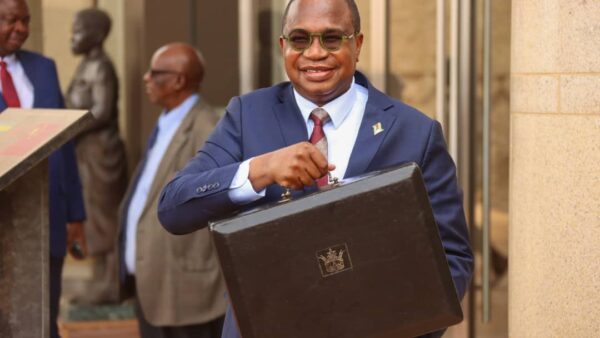
Presenting the 2027 National Budget, Finance Minister Professor Mthuli Ncube said the Rural Electrification Agency (REA) was making progress in extending electricity infrastructure to underserved and marginalised communities, particularly in rural areas.
“The Rural Electrification Agency (REA) is making inroads by improving access to electricity through expansion of the national distribution network to underserved and marginalised communities, particularly in rural areas,” he said.
The planned expansion underscores Government’s commitment to closing the rural-urban electricity access gap while positioning reliable energy as a catalyst for productivity, investment and industrialisation.
Increased electricity access is expected to transform rural economies by supporting agro-processing, irrigation development, small businesses and other electricity-dependent enterprises, while improving service delivery at schools, health facilities and Government institutions.
The 2027 Budget also provides financial support for the broader energy infrastructure development programme, with Government allocating US$28,8 million, equivalent to ZiG803 million, towards key electricity projects.
Of this amount, US$25 million represents an initial equity contribution by the Government towards implementation of the Batoka Hydro-Power Project, while ZiG55,2 million has been earmarked for the Rural Electrification Programme.
“In furtherance of some of the above initiatives, the 2027 Budget is therefore, allocating US$28.8 million (ZiG 803 million) of which US$25 million is initial equity contribution by the Government of Zimbabwe towards implementation of the Batoka Hydro-Power Project whilst ZiG55.2 million is earmarked for the Rural Electrification Programme,” said Professor Ncube.
The allocation towards rural electrification is expected to sustain the rollout of electricity infrastructure in communities where limited access to modern energy has constrained economic activity and the delivery of essential public services.
Beyond household connections, REA’s programme is increasingly targeting productive infrastructure, including business centres, small-scale farms, irrigation schemes, Government extension offices and village homesteads.
Meanwhile, development partners are expected to complement Government’s investment in the energy sector.
Professor Ncube said the sector was expected to receive approximately US$8,6 million from development partners in 2027 to support electricity access, renewable energy development and energy efficiency.
“In addition, the sector is expected to receive approximately US$8.6 million from Development Partners in 2027 to strengthen electricity access, promote renewable energy and energy efficiency and enhance long-term sector sustainability through targeted investment and technical assistance,” he said.
Under the rural electrification model, REA develops and constructs distribution infrastructure before handing over completed grid networks to the Zimbabwe Electricity Transmission and Distribution Company (ZETDC) for operation and maintenance.
This arrangement ensures that infrastructure developed through the rural electrification programme becomes part of the national electricity distribution network, with ZETDC assuming responsibility for its ongoing operation.