Online Reporter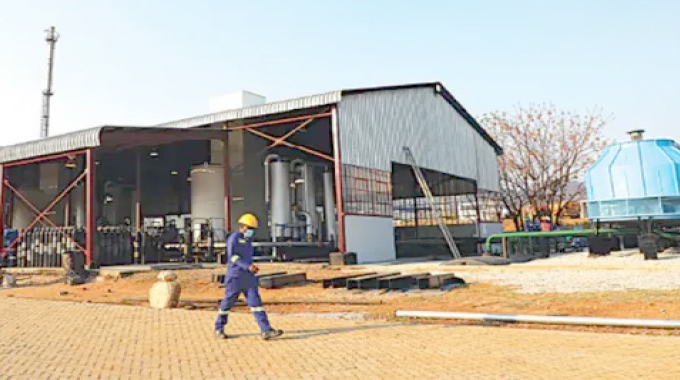
Mashudu Netsianda, [email protected]
THE Government is establishing an oxygen production plant in Lupane, Matabeleland North Province, as part of efforts to strengthen national capacity for medical oxygen supply while notable progress has been registered under the mid-cycle priority projects for the Second 100-Day cycle of 2025.
Speaking during a post-Cabinet media briefing yesterday, Information, Publicity and Broadcasting Services Minister Dr Jenfan Muswere said the Lupane oxygen plant alongside another in Chinhoyi will support a long-term strategy to ensure national control and sustainable bulk oxygen supply, especially during emergencies like disease outbreaks.
“Medical oxygen is a critical supply for patient care in all public health facilities. Progress has already been made in developing oxygen supply systems at several hospitals, including Masvingo, Chipinge, Chivhu, Gokwe North and Victoria Chitepo,” he said.
“Furthermore, in collaboration with partners, the Government of Zimbabwe is establishing oxygen production plants in Chinhoyi and Lupane, supporting a long-term shift towards national control and bulk supply capability.”
Dr Muswere said by investing in oxygen infrastructure and production capacity, the Government is taking a proactive and sustainable approach to addressing the country’s medical oxygen needs.
“This initiative has the potential to make a meaningful difference in the lives of patients and healthcare workers alike, and demonstrates the Government’s commitment to improving the healthcare system and promoting the well-being of its citizens,” he said.
As part of the Second 100-Day Cycle mid-term review, the Cabinet also noted significant progress on several infrastructure and housing projects across the country.
In Bulawayo, 92 percent of servicing work on 650 medium-density residential stands in Mahatshula East has been completed, paving the way for future housing development in the city while the construction of the Gwanda State University Agro-Innovation Centre in Matabeleland South is at 60 percent completion, a project expected to boost agricultural research and innovation in the region.
In Bulilima District, also in Matabeleland South, the construction of Nyabane Clinic has been completed. The clinic is the result of a successful partnership between Bulilima Rural District Council, the local community, the diaspora and the Church of Jesus Christ of Latter-day Saints.
Under the Beitbridge Redevelopment Project, two blocks of garden flats and two blocks of double-storey duplex flats, previously stalled, are now 71 percent complete, with procurement of materials underway to fast-track completion.
In Gweru, Midlands Province, the servicing of 432 Sheasham housing stands has reached 53 percent completion.
Also in the Midlands, two major housing projects are progressing under the Ipmali Project in Shurugwi and these include 502 housing stands, serviced by Masimba Holdings, which are 52 percent complete, including road drainage and water reticulation works. Another 602 stands, being serviced by CGM Engineering, have reached 32 percent completion on sewer works.
Cabinet also approved principles for amending the Medicines and Allied Substances Control Act, which was originally enacted in 1969.
Dr Muswere said the amendment is intended to enhance regulatory oversight on the quality, safety and efficacy of all medical products and allied substances, aligning Zimbabwe’s laws with international best practices.
He said the amendment is guided by the African Model Law, which provides a framework for protecting the public against substandard and falsified medical products. It also offers guidance to African Union member states on building effective regulatory mechanisms.
“African Model Law is a non-prescriptive legislation that gives guidance to African Union Member States on how to develop effective regulatory mechanisms and frameworks within their jurisdictions,” said Dr Muswere.
“Furthermore, the amendment is in accordance with the Medicines Control Authority of Zimbabwe’s vision to be an effective and efficient regulator of medical products and allied substances.”