Online Reporter
Muchaneta Chimuka
THE Good Seed and Food Festival has roared to life with several farmers exhibiting indigenous seeds, live music, Gule dance, cooking experiences, inspiring people and reminding them of the African culture of loving their food and seeds, especially the small grains.
The two-day event, which is taking place at Harare Botanical Gardens, ends on Saturday.
The festival is Zimbabwe’s premier celebration of local biodiversity, food sovereignty and indigenous agricultural heritage is being co – hosted by the Participatory Ecological Land Use Management (PELUM), SWISSAIDS, Seed and Knowledge (SKI), among others; it highlights climate-resilient crops.
This year’s featured crop is the cowpea, which Agriculture, Mechanisation and Water Resources Development Minister Dr Anxious Masuka termed the African pea to dispel the notion that the crop is meant for cattle.
The festival brings together seed custodians, chefs, and smallholder farmers for traditional food tasting, cooking battles, seed swaps, and live cultural music.
The 2026 National Seed Fair is held under the theme: “Our Life: Safeguarding Indigenous Seeds and Food Diversity.”
Minister Masuka, who was represented by Agricultural Development Advisory Service’s chief director, Mrs Medlinah Magwenzi, said climate change is real, but communities should create shock absorbers by introducing innovation mechanisms for sustainability.
“This year’s theme reminds us that seeds are much more than agricultural inputs. Seeds are life, seeds are culture, seeds are knowledge, seeds are livelihoods, and seeds are an important foundation of our food sovereignty and resilience,” he said.
He said, farmers gather not only to display and exchange seeds, but also to celebrate the knowledge, traditions and practices that communities have developed over generations to conserve, select, exchange and use indigenous seeds.
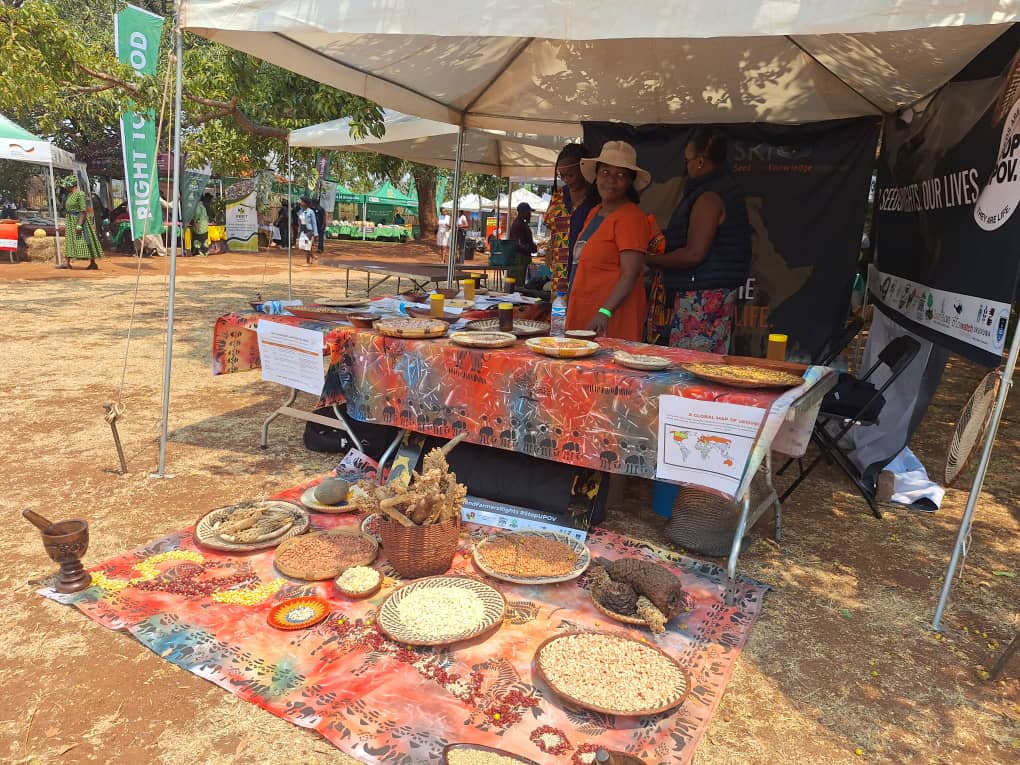
“Zimbabwe has a rich diversity of indigenous crops and varieties that have sustained communities for generations. Crops such as Cowpeas/African pea (seed of the year), sorghum, finger millet, pearl millet, Bambara nuts, indigenous vegetables, and many other locally adapted varieties have played an important role in our food systems, particularly in areas where climatic conditions can be challenging.
He said these crops and seeds carry valuable characteristics and many are adapted to local environments, can withstand periods of drought or variable rainfall, and contribute to dietary diversity.
“Events such as this National Seed Fair are of utmost importance. This initiative is closely aligned with the aspirations of Zimbabwe’s National Development Strategy 2, which places agriculture, food and nutrition security, sustainable natural resource management and climate resilience at the centre of our national development agenda,” he said.
“It is also important to recognise the strong alignment between this Seed Fair and the Comprehensive Africa Agriculture Development Programme (CAADP) Strategy and Action Plan 2026–2035 in particular, CAADP Strategic Objective 3, on Ensuring Food and Nutrition Security, calls for the diversification of agricultural production, including increased production and consumption of nutritious traditional and indigenous African crops.”
He added that the CAADP Strategic Objective 5 on Building Resilient Agri-Food Systems emphasises building resilient and sustainable agri-food systems that are responsive to climate change and other emerging challenges.
“I would also like to acknowledge the 22nd CAADP Partnership Platform taking place herein Harare,” he said.
“The platform, which concludes today, has brought together African union Member States, Regional Economic Communities, development partners, farmers’ organisations, civil society and other stakeholders to focus on translating the commitments of the Kampala Declaration and the CAADP Strategy and Action Plan into implementation, financing, accountability and measurable results.”
Minister. Masuka said communities should confront the realities of climate change in the wake of the much-predicted El Niño for the 2026/2027 farming season.
“Food insecurity and environmental degradation, agricultural biodiversity is becoming increasingly important,” he said.
“Protecting seed diversity is therefore not only about preserving our heritage; it is also about strengthening the resilience of our communities and our food systems.”