Chronicle Editor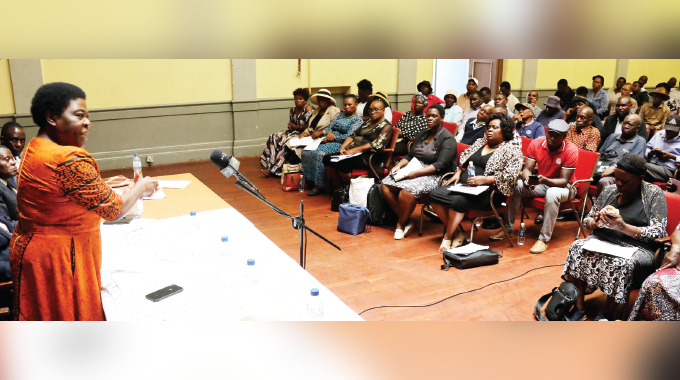
Sukulwenkosi Dube-Matutu and Amos Mpofu, Chronicle Writers
STAKEHOLDERS from Bulawayo and Matabeleland South have hailed the Government’s proposed policy on the management of post-conflict mass graves and human remains, saying it has the potential to bring closure to grieving families and foster national healing and reconciliation.
The Ministry of Home Affairs and Cultural Heritage, through the National Museums and Monuments of Zimbabwe, is crafting a national exhumation policy aimed at locating and managing mass graves from the liberation struggle (1890–1979) and post-independence political disturbances. This initiative seeks to regulate the exhumation process while ensuring the preservation and protection of mass graves, many of which lack legal safeguarding under current legislation.

The Second Republic saw it fit to come up with the policy as part of the peace-building architecture which is in sync with Vision 2030. Despite the post-independence history of exhumations, there is no policy concerning the exhumations and reburials of liberation war victims and post-independence disturbances. Mass grave sites are not specifically protected by any of the existing laws.
The policy is in line with the Constitution of Zimbabwe, especially Section 23.1, which states that the State and all Government institutions and agencies at every level must accord due respect, honour and recognition to veterans of the liberation struggle.
Bulawayo Provincial Affairs and Devolution Minister Judith Ncube described the policy as a critical component of national peace-building efforts aligned with Vision 2030.
“This exhumation policy aims to guide the process of locating mass graves, regulating their opening, and prescribing standard procedures for the exhumation and identification of victims buried therein,” said Minister Ncube during a consultation meeting at the Bulawayo City Hall.

“The development of this policy will provide families the right to recover the remains of their loved ones and accord them a dignified burial. It also demonstrates the Government’s commitment to resolving long-standing issues surrounding the exhumation and reburial of liberation war heroes and victims of post-independence conflicts,” she added.
The consultation meeting brought together a broad spectrum of stakeholders, including war veterans, traditional leaders, academics, law enforcement agencies, local authorities, and cultural institutions. Discussions centred on the need for accountability in exhumation processes, with participants advocating for the return of remains to families for dignified reburial or the establishment of secure shrines to honour the deceased.
Suggestions centred on either protecting these burial sites or exhuming the remains and returning them to their homes for proper reburial, providing closure for grieving families. Participants agreed that the discussion should focus on pre-independence conflicts, which have the unresolved issue of mass burials of liberation fighters.
It was agreed that the ongoing dialogue between President Mnangagwa and the chiefs on Gukurahundi should continue without interference, as the process will determine how the country handles these issues.
In Gwanda, the Ex-Political Prisoners, Detainees and Restrictees Association (ZEPPDRA) provincial chairperson for Matabeleland South, Cde Linnos Sibanda said the exhumation process will go a long way in healing families.

“In our African culture, it’s important for families to give their departed relatives a dignified burial so that they can be at peace. There are many people who up to today don’t know where the remains of their loved ones are,” he said.
“We, therefore, welcome this policy as it will bring the much-needed healing and closure. Let the remains of our departed comrades be located and laid to rest in a dignified manner.”
Cde Sibanda said the exhumation will enable the relatives of the victims to recover the remains of their loved ones and be able to carry out the customary funeral rites.
“There are some people who believe that they have a dark cloud hanging over them because their loved ones did not receive a decent burial,” he said.
Chief Masuku of Gwanda District emphasised the policy’s overdue nature, while other attendees called for expedited action to address mass graves within Zimbabwe and neighbouring countries such as Zambia and Mozambique.
National Museums and Monuments of Zimbabwe regional director, Dr Paul Mupira, outlined the policy’s objectives during the meeting.

“We are conducting stakeholder consultations nationwide to create a comprehensive policy governing the exhumation of mass graves. The policy will prescribe standards for identifying, documenting, and reburying victims in accordance with scientific, cultural, and historical considerations,” he said.
Dr Mupira said the policy will also establish procedures for identifying mass graves, marking and rehabilitating sites, and constructing memorials, museums, or interpretation centres to preserve Zimbabwe’s liberation heritage.
It also seeks to prevent arbitrary exhumations while promoting scientific verification of the cause of death.
The policy will regulate the process of opening the graves or mass graves of victims of pre and post-independence violence and protect them against random exhumation and exploration.
It will prescribe standards for the exhumation and identification of the victims buried in mass graves and their return to their next of kin where possible, with ceremonies befitting their sacrifices and cultural beliefs.
The policy will enhance the documentation, exhumation, identification and reburial procedures of deceased victims of the liberation struggle and violence.
The procedure which will be followed will include identification of the mass graves, acknowledgement of the dead, marking and rehabilitation of mass graves and erection of memorial sites, site museums or interpretation centres for conserving and promoting the liberation heritage of Zimbabwe.
The goal of the exhumations is also to provide elements of scientific proof and to establish the cause of death.
There was a strong consensus that more urgent action is needed to identify and protect these burial sites, with some suggesting that graves located in foreign countries be exhumed and repatriated to Zimbabwe.
Additionally, the idea of securing these sites and transforming them into well-guarded shrines was widely supported.
Some attendees proposed that the Government acquire and secure these sites to ensure that they are treated with the respect and honour they deserve.



 Online Reporter