Dr Tapiwanashe George Hanyire
THE Government, through the Ministry of Agriculture, Mechanisation and Water Resources Development, has intensified Early Warning–Early Action interventions to protect Zimbabwe’s national cattle herd from the anticipated effects of the 2026–2027 El Niño-induced drought, with major investments being directed towards livestock water security, dip tank rehabilitation and implementation of the integrated tick and tick-borne disease control programme.
The interventions are part of Government’s drive to build a climate-resilient and productive livestock sector under the National Development Strategy 2 (NDS2) and advance Zimbabwe towards the aspirations of Vision 2030.
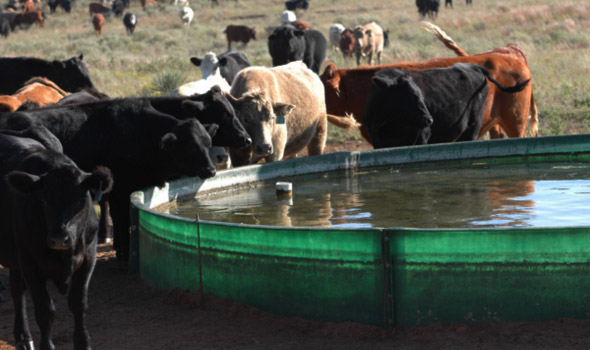
Through the Directorate of Veterinary Services (DVS), Government has installed 240 solar-powered boreholes at dip tanks nationwide, providing reliable water for livestock while ensuring that dipping services continue in communities affected by seasonal and prolonged water shortages.
The investment is particularly significant as Zimbabwe has 4 211 dip tanks serving approximately 5,7 million cattle. Beyond tick control, these dip tanks are strategic animal-health centres supporting disease surveillance, livestock identification, vaccination, farmer extension and early detection of disease threats.
Water availability remains a major constraint in providing dipping services in some provinces. Matabeleland South currently has 275 dip tanks experiencing water challenges, followed by
Midlands with 221 and Mashonaland West with 204. Equipping strategic dip tanks with solar-powered boreholes is therefore designed to maintain critical livestock health services even under drought conditions.
Government is simultaneously accelerating the rehabilitation of 600 dip tanks during 2026, with 198 facilities already been rehabilitated and a further 402 targeted for completion.
These infrastructure investments underpin the Integrated Tick and Tick-Borne Disease Control Programme, which combines strategic dipping, vaccination, disease surveillance, monitoring of acaricide resistance, dip wash concentration testing, farmer education, early diagnosis and appropriate treatment.
Tick-borne diseases remain among the greatest threats to cattle production in Zimbabwe. Theileriosis, commonly known as January Disease, together with Anaplasmosis, Babesiosis and
Heartwater, accounts for substantial cattle morbidity and mortality, particularly among smallholder and communal herds.
The National Dipping Programme remains the backbone of tick control, complemented by vaccination, surveillance, effective acaricide use and strong veterinary extension services. To compliment dipping, DVS is targeting the vaccination of 300 000 cattle against Theileriosis using the locally produced Theileria Bolvac vaccine in 25 hotspot districts nationwide. A further 100 000 cattle are targeted for vaccination against Anaplasmosis and Babesiosis by October 2026.
The anticipated El Niño conditions make these measures increasingly important. Drought reduces water and grazing availability, compromises livestock nutrition and immunity and forces animals to travel longer distances and congregate around limited water sources. These stresses can increase vulnerability to disease and amplify livestock losses where preventive animal-health measures are disrupted.
Government is therefore shifting emphasis from responding to livestock losses after they occur towards anticipatory action based on identified risks.
Solar-powered boreholes, rehabilitated dip tanks, vaccination, disease surveillance and sustained dipping services represent practical Early Warning–Early Action investments aimed at protecting livestock assets before drought conditions intensify.
Farmers remain central to the success of these interventions. Livestock owners are urged to consistently present cattle for scheduled dipping, report sick or dying animals early, support adequate water and nutrition where possible, monitor animals for ticks and seek veterinary advice before using acaricides or medicines.
Communities are also encouraged to safeguard dip tanks, boreholes and associated infrastructure as strategic public assets that protect livestock-dependent livelihoods.
With 240 solar-powered boreholes installed, 198 dip tanks rehabilitated towards the 600-target for 2026, 4 211 dip tanks serving 5,7 million cattle and strategic vaccination being intensified,
Government is strengthening the resilience of Zimbabwe’s livestock sector ahead of predicted climatic challenges.
These investments prove the practical implementation of NDS2 and Vision 2030, where resilient agricultural production, strengthened rural livelihoods and improved national food and nutrition security remain central to Zimbabwe’s development trajectory.
The message to livestock farmers is simple: prompt action protects livestock, livelihoods and national food security. Government and farmers must therefore work together to ensure Zimbabwe’s cattle herd enters the predicted drought period healthier, better protected and more resilient.
Dr Tapiwanashe George Hanyire is Deputy Director Epidemiology and Informatics in the Department of Veterinary Technical Services.