Vusumuzi Dube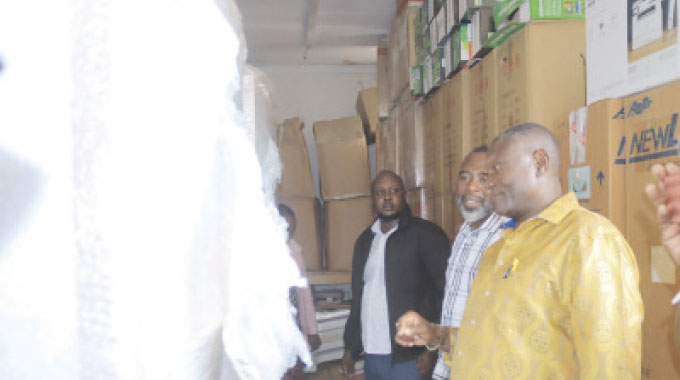
Thupeyo Muleya, Beitbridge Bureau
Service delivery has started to improve at the Beitbridge District Hospital, where the Government has undertaken to upgrade the facility to meet the growing service delivery needs in line with the town’s population growth and its transformation into a modern city.
Through collaborations and partnerships, the Government has been able to mobilise critical resources and consumables at the 170-bed health facility that serves Beitbridge, Gwanda South, Mwanezi, Chiredzi and part of Mberengwa districts and the transit population.
The district hospital is also a referral centre for the 250 000 people from more than 17 primary health care clinics.
In addition, the hospital has received an automated antiretroviral (ARVs) drug dispensing machine whose installation is in progress and will be in full use at the end of this month.
The District Medical Officer, Dr Lenos Samhere, said the automated ARV machine will offer convenient services and privacy to those patients on Antiretroviral Therapy (ART) around the clock.
Under the new setup, patients will get Short-Messages-Sending (SMS) notifications with an access pin code for them to collect the drugs from the machine.
“We received this machine from the Aids Health Care Foundation (AHF) who are helping us to set up our Opportunistic Infection clinic which will be open for services in the next few weeks,” said Dr Samhere.
“This automated ARV dispensing machine is the first of its kind and we are going to be a centre of excellence in terms of HIV/Aids treatment in the country”.
Dr Samhere was speaking during a tour of the hospital by the Minister of State for Provincial Affairs and Devolution in Matabeleland South, Albert Nguluvhe, yesterday.
The minister who was accompanied by Beitbridge Senator Tambudzani Mohadi, Beitbridge West legislator Thusani Ndou, Beitbridge Mayor, Councillor Peter Mafuta and other senior Government officials, visited the hospital to track progress on the Government interventions and expansion of the facility.
The town has tremendously developed in terms of population and infrastructure growth and hence the Government is expanding health services facilities in phases.
It is understood that although other facets are growing in the town, the health facility is currently operating with a 1990s staff establishment.
This has resulted in human and material resources to cater for patients being overstretched as the hospital is located in a border town.
“Since most people started paying for service here last year, we have been able to stock drugs which can last us for up to six months. These are critical drugs and consumables for us to respond to any kind of emergencies,” said Dr Samhere.
“We have deliveries in the maternity ward in the range of about 350 babies per month and of these 16 percent (56 babies) are being done via Caesarean section.
“I am pleased to report that our X-ray machine, dental unit and eye clinic are now working to capacity and the Government is also renovating our laboratory to fit the volume of service delivery needs and are only left with a few fittings so we may open it to the public”.
He said health officials are still struggling with the autoclaving services (sterilisation) in the theatre as the current machine keeps breaking down due to ageing.
As a result, they are taking the equipment for sterilisation to Gwanda three times a week at a cost of US$92 per trip (US$276 weekly), which he said was not sustainable.
Dr Samhere also highlighted that there was a strong need to attend to the state of infrastructure at the theatre, mortuary and the incinerator which have outlived their lifespan.
In his remarks, Minister Nguluvhe said he had noted the operational challenges at the hospital and that he will be visiting all the major hospitals in Matabeleland South to assess operations as part of the build up to the hosting of the National Independence celebrations in Maphisa, Matobo district this year.
“We are pleased to note the improvements at this hospital since our last visit in October last year. As the Government we have made some huge interventions here as we get into full swing implementing the National Development Strategy 2 (NDS2),” said Minister Nguluvhe.
“Public health care is one of the key services we want to see improve in both urban and rural settlements. I am visiting all the major referral hospitals in the province to check on operations and how best we could build the capacity for them to offer quality health services to community members.
“With regards to Beitbridge hospital, it is prudent that we lobby for the deployment of all or major specialist services considering its location and workload in the North to South Corridor. I am pleased to see the level of commitment by the health staff here. They need our full support as the Government, community and corporate world”.
The minister said the expansion of the hospital will also see more material and human resources being deployed to Beitbridge soon.
He emphasised that it is important for the hospital to be equipped with critical manpower and the necessary equipment to handle any amount of pressure that comes with its location.



 Online Reporter