admin
admin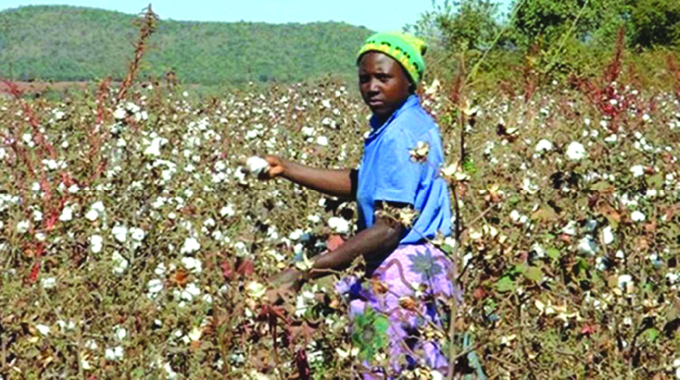
Obert Chifamba Agri-Insight
IT is not going to be a ‘one-size-fits-all’ affair in the distribution of the Pfumvudza/Intwasa inputs for the 2022/23 cropping season, as Government moves to ensure farmers get packages best for their various agro-ecological regions.
Essentially, the move will capacitate farmers to produce to optimal levels, tapping into the advantages availed by the natural soil and climatic conditions at their disposal.
It is important to note that issuing our appropriate varieties for specific agro-ecological regions this move will increase productivity and resource-use efficiency given that crop and animal diversity, for instance, reduces the risk of failure in the face of climate change.
Zimbabwe is divided into five agro-ecological regions, commonly referred to as natural regions on the basis of the rainfall regimes, soil quality and vegetation among other factors.
The quality of the land resource declines from Natural Region 1 through to Natural Region 5 (Moyo, 2000; Vincent and Thomas, 1961).
This, therefore, makes it critical for farmers situated in the various agro-ecological regions to produce crops suitable for conditions prevalent there.
Maize, for instance, is a dominant crop across all regions, taking up 50 to 70 percent of the cropped area in Natural Regions 1, 2A and B and 40 to 50 percent of the cropped area in Natural Regions 3, 4 and 5 so distribution of inputs should also take such disparities into account.
A crop like cotton grows to optimal levels in Natural Region 3, while traditional grains in the class of sorghum and pearl millet, are dominant in Natural Regions 4 and 5.
It is, therefore, only logical for farmers in those regions to grow crops that do well there to maximise yields.
It is this astute perception that has motivated the Government to do away with the ‘cut and dry’ approach that was being used in the distribution of inputs.
The most dominant grain crops nationally are maize, which occupies 45 to 50 percent of the cropped area, followed by pearl millet with 15 to 20 percent, sorghum with 10 to 15 percent and cotton with seven to 10 percent.
The dominance of maize and traditional grains reflects the crops’ importance as food crops for communal area households.
On the one hand, finger millet and sunflowers are widely grown in all natural regions although the area for sunflower in Natural Region 1 is relatively small, accounting for a single figure percentage of the cropped area.
Finger millet is grown for home use while sunflowers are essentially a cash crop.
On the whole, the area under maize may be fairly uniform countrywide in zones under Natural Regions 2A and B with an average hectarage of 1, 75.
Areas falling under Natural Regions 2A, B and 3 form the biggest hectarage cropped under maize while cotton is predominant in relation to other crops in Natural Region 3.
Traditional grains areas are largest in relation to other crops in Natural Regions 4 and 5 while yields of all crops decrease from Natural Region 2 to 4 and 5.
The input distribution system is this time around paying close attention to all these details to make sure farmers utilise those comparative advantages for the good of both household and national food security.
At least three million households will benefit from the Pfumvudza/Intwasa programme, up from last season’s 2,7 million households comprising communal, A1, small-scale commercial, old resettlement and peri-urban farming sectors for cereals, oilseeds and legumes.
Of course, the input support from Government will not make sense if the beneficiaries do not play their part effectively, which they can do by working closely with their agricultural extension officers for technical assistance.
They will also need to plan their activities properly to guarantee maximum productivity through scoring optimal yields from the various crops they will be producing.
For now, farmers across the country face a common challenge — more than 70 percent of the soil has been adjudged to be acidic and requiring liming to correct the pH levels.
Soil pH is a chemical indicator of soil condition (quality and its ability to avail both macro and micro nutrients to the crop) on top of other soil structural quality properties.
It affects microbial activities in the soil, which can impact crop growth and yield.
For most crops grown in Zimbabwe a target soil pH value of 5,0 is a good compromise, but the soil always needs to be tested to determine the amount of lime to apply per unit land area.
For sandy soils, as a rough guide, 150 kilogrammes per ha of lime should be applied for each 0,1 unit that the pH needs to be increased.
Split applications over two years are better because sandy soils are weakly buffered.
A rate of 300-500 kilogrammes lime per hectare should be safe to apply every three to five years.
Liming will improve soil physical structure by reducing soil crusting or capping, which promotes better emergence of small seeded crops and ultimately result in better crop stands.
Farmers should also realise that lime should be applied at least three to six months before crop establishment since it takes a significant amount of time to dissolve and react with the soil to cause the desired adjustments in pH.
A week after harvesting may be the best time to apply lime although this can still be done even during crop establishment with the lime acting as a ‘buffer’ that serves as a duct for nutrient uptake from soil to crop through the roots and adjust the pH during the later stages of the crop cycle.
Frequency of subsequent liming should be determined by soil tests.
Generally, soils with a pH measure of less than seven on a Calcium Chloride Scale are deemed to be containing high levels of active hydrogen and or aluminium in relation to calcium and magnesium levels and are therefore acidic.
The quality of acidic soils can be improved through liming to adjust pH to the levels needed by the crop to be grown.
Soil pH is the measure of the acidity or alkalinity of the soil. The degree of acidity or alkalinity is determined by measuring the concentration of the hydrogen ions in the soil solution. This is expressed in terms of a scale with a range of 0 to 14. A soil with a pH of seven is considered neutral while less than six is considered acidic and a soil with pH greater than seven is considered alkaline.
Usually soils become more acid as a result of harvested crops removing bases such calcium and magnesium from the soil.
This makes it imperative for farmers to periodically check their soil’s pH levels especially after seasons with lavish rains like 2020/21 and 2021/22 that had the potential to wash away nutrients through leaching.
Nutrients such as calcium and magnesium are pushed beyond the root zone into drainage water replacing them with acidic elements such as hydrogen, manganese and aluminium and thereby acidifying the soil.
Locally, farmers can use dolomitic lime (magnesium carbonate), which is ideal for adjusting pH in magnesium deficient soils or calcitic lime (calcium carbonate) for adjusting pH in calcium deficient soils.
This makes it important to sample soils for analysis to determine pH and also the liming agent to be used.
Farmers must not blindly apply lime without qualification of the liming agent from soil analysis results, as this can affect soil and crop productivity or result in preferential uptake instead of a balanced uptake of bases.



 Online Reporter