Chronicle Editor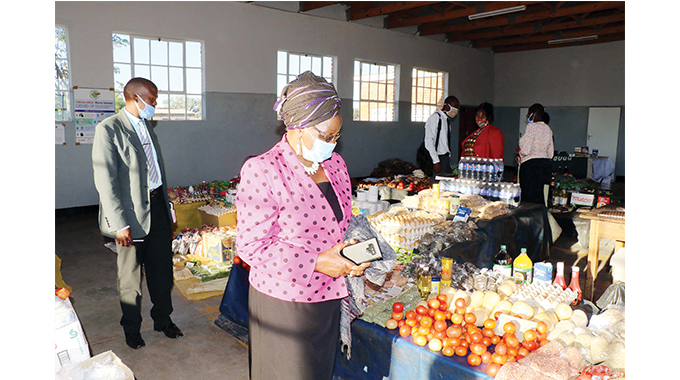
Patrick Chitumba, Midlands Bureau Chief
A SURVEY conducted by Government has shown that life expectancy for many people in the small to medium enterprises (SMEs) category is short when compared to other sectors because of inhuman conditions they operate under.
These include long hours in the sun and dust in unserviced areas without ablution facilities and adequate infrastructure. Thousands in the informal sectors are normally allocated vending bays or allowed to operate on open streets and pavements where they inhale dust.The vendors are then forced to make temporary structures to protect themselves and their wares from the harsh weather conditions.
The Minister of Women’s Affairs, Community, Small and Medium Enterprises Development Dr Sithembiso Nyoni expressed concern over the challenges facing SMEs during her engagement with informal sector players in Gweru last week. She said a new Government policy demanded they register and have a proper working environment.
“A survey by Government has shown that life expectancy for many people in the small to medium enterprise category is short as compared to other sectors because of inhuman conditions characterised by long hours in the sun and dust in unserviced areas they are forced to operate from,” said Dr Nyoni.
As the informal sector is preparing to reopen after being disrupted by Covid-19, traders are expected to follow the new normal that requires the wearing of masks, registering with council, maintenance of high levels of personal hygiene and social distancing, as spelt out by President Mnangagwa recently.
The minister said Government was working with local authorities to avail land for the construction of vending malls instead of open vending stalls. She said her ministry was looking at many sites to accommodate all SMEs.
“We won’t allow you to trade where there are no ablution blocks. Mupedzanhamo in Harare for example has over 1 500 people with one toilet which doesn’t work. We can’t have that for our people we value a lot. Let us unite, it’s for your good that there is dignity for the traders and their families,” said Dr Nyoni.
She also said the Government was working on a new law that will restrict foreigners from working in reserved sections of the economy. Other countries like Nigeria, she said, have regulations specifying the sectors where foreign nationals are not allowed to participate in.
“Informal sector and retail should be for locals. We can’t have a situation where locals are pushed out of the CBD in towns making way for Chinese, Nigerians who start selling wigs, food, and clothing.
“Our locals are seen in pavements where conditions are inhuman as they are characterised by lack of running water or ablution facilities,” said Dr Nyoni.
She said support mechanisms have been put in place by the Government for a new state of the vending facilities aimed at decongesting them.
“We need you vendors to register with the ministry. So far, temporary structures will be put in place as we wait for local authorities to give us the land for new buildings.
“Here we are talking of skyscrapers, centres, malls for SMEs and some one stop centres,” said Dr Nyoni.
She said in Gweru over 3 000 vendors will operate in groups of 50 and will be allowed to operate on different days.



 Online Reporter