Nyore Madzianike
Senior Reporter
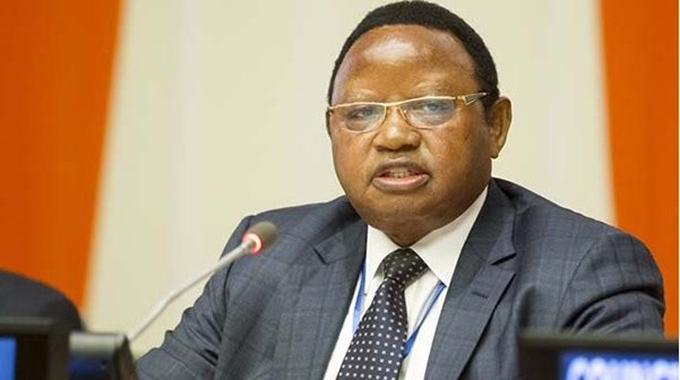
GOVERNMENT has scrapped mathematics as a prerequisite for people who wish to train as secondary school teachers for indigenous languages, Higher and Tertiary Education, Innovation, Science and Technology Development Minister Dr Frederick Shava has said.
Speaking at the Hwange College of Education graduation ceremony yesterday, Minister Shava said the policy shift sought to widen access into the teaching profession and strengthen the pool of indigenous trainee teachers.
About 143 students graduated, with 73 pursuing STEM subjects. Minister Shava was represented by his deputy, Simelisizwe Sibanda.
“As part of the ministry’s policy to train secondary teachers for indigenous languages, I am pleased to announce that Mathematics is no longer a prerequisite.
“This deliberate policy shift is designed to widen access into the teaching profession and to strengthen the pool of trainees who can carry forward the teaching of our indigenous languages,” he said.
Minister Shava said the language policy was initiated in Matabeleland North Province for ChiNambya and ChiTonga-speaking communities.
He said the Ministry has since extended it across all indigenous languages in the country as stipulated in the Constitution of Zimbabwe Amendment No. 20, Act 2013.
It states that the State must also promote and advance all languages used in Zimbabwe, including sign language, and create conditions for their development.
“It is encouraging to note that since inception in 2019, to this graduating cohort, the college has made significant inroads towards this language niche, producing the following statistics -ChiNambya, 13 males and 124 females, totalling 137 graduates and in ChiTonga, 77 males and 112 females, totalling 189 graduates, a combined 326 graduates across both languages.
“This much-needed human capital is set to significantly impact the quality of instruction and the preservation of culture in ChiNambya and ChiTonga speaking communities,” he said.
Minister Shava indicated that plans are already afoot to introduce a secondary teacher training specialising in indigenous languages.
The secondary schools programmes will run alongside the existing primary teacher training programme.
“As a Ministry, we have set a benchmark for all institutions of higher learning to prioritise research, innovation and industrialisation. His Excellency, President Mnangagwa, always remind our institutions of higher learning that research must move beyond the classroom and into practical solutions.
“It is against that background that we appreciate this institution’s efforts to use research and innovation to solve community problems.
“We are delighted that collaborative research between Hwange College of Education and the National University of Science and Technology has resulted in a Memorandum of Understanding addressing human-wildlife conflict.
“We encourage more such collaborative efforts among our universities, industry and colleges. We further encourage the patenting of any breakthroughs arising from this institution’s research efforts. Our research goal should be the production of goods and services that solve community problems in real time,” he said.
Minister Shava reaffirmed the Government’s commitment to widening access to higher education by procuring assistive devices for all tertiary education institutions, ensuring that no student is left behind.
“Furthermore, the Work for Fees programme complements other initiatives such as student loans and is intended for needy but capable students. This is one way we can ensure student retention and enhance enrolment. The programme is the Ministry’s direct response to the President’s guiding principle of leaving no one and no place behind.”
He said Government will release Work for Fees funds to complement institutional funding in the third quarter of this year.