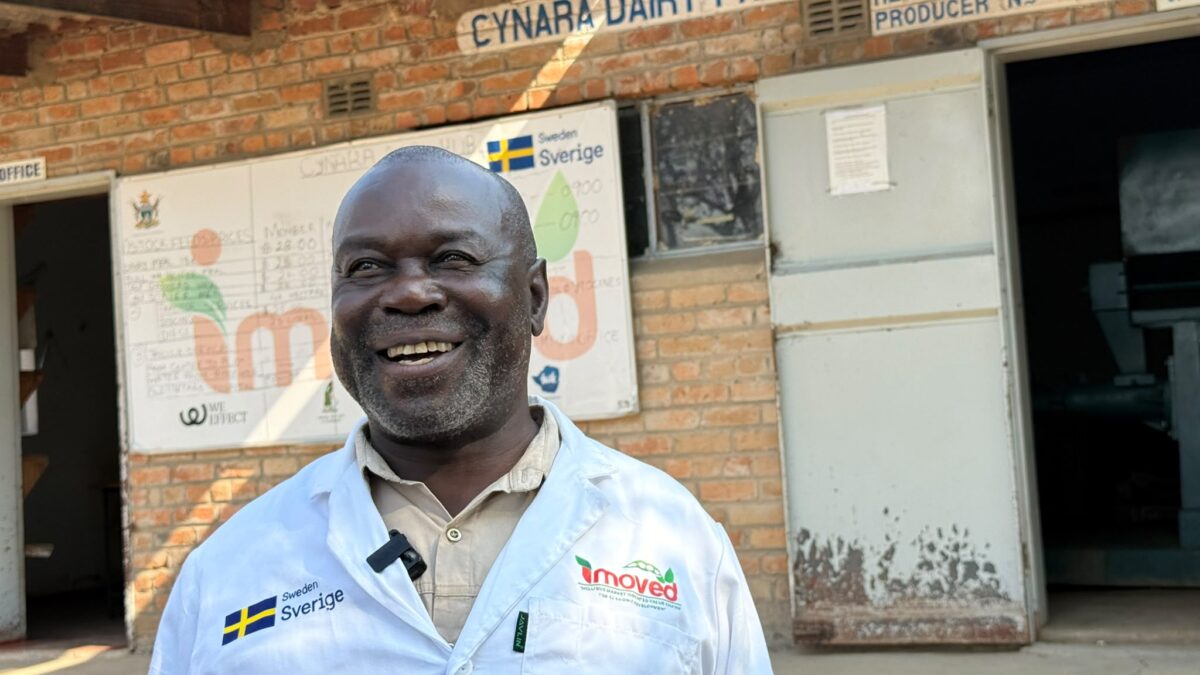
Nyasha Simbisai in Mutare
Smallholder dairy farmers have been hailed as key drivers of the livestock value chain and national dairy self-sufficiency.
This comes as Government support, collective investment and improved herd management have driven the country to dairy self-sufficiency.
This came out during a recent visit by the Permanent Secretary for Agriculture, Mechanisation and Water Resources Development, Professor Obert Jiri, to Cynara Dairy Farmers Cooperative in Ward 23, Mutasa South, Manicaland, where 62 smallholder farmers have excelled in milk production.
The cooperative has grown from a modest venture producing 4 000 litres of milk annually in 2018 to 84 000 litres in 2025 and is targeting to increase production to 300 000 litres by 2030.
Prof Jiri said the country had attained general self-sufficiency in raw milk production, with national output expected to surpass 150 million litres as production continued to increase.
“Smallholder dairy farmers are critical players in the expanding livestock value chain. Currently, as a country, we are generally self-sufficient in raw milk. We need about 130 to 150 million litres annually, and we are producing enough,” he said.
Prof Jiri said commercial dairy farmers contributed approximately 115 million to 120 million litres annually, while smallholder producers had significantly expanded their contribution, producing more than 30 million litres last year.
He said the country’s 31 collection centres were instrumental in aggregating milk from smallholder farmers, enabling them to participate meaningfully in formal dairy markets.
Prof Jiri, however, noted that Zimbabwe continued importing milk powder owing to inadequate domestic processing capacity.
“What we do not have as a country is the capacity to produce milk powders, which we are still importing,” he said.
He expressed optimism that increasing raw milk production would create opportunities for investment in local powder manufacturing, potentially reducing dependence on imports.
Prof Jiri said safeguarding dairy productivity against the anticipated El Niño-induced drought remained a Government priority, with interventions targeting livestock feed, water availability and animal health.
“The livestock sector is affected in three main ways: feed availability, water availability and livestock health,” he said.
He explained that dairy farmers were generally better prepared through silage production, while beef cattle farmers in vulnerable communal areas required additional support.
Government, he said, was strengthening ward drought mitigation centres to provide livestock with water and supplementary feed where necessary.
Cynara Dairy Farmers Cooperative chairperson, Mr Farana Francis Musunzuru, attributed the enterprise’s growth to collective determination and financial support from the Women’s Microfinance Bank.
“A US$48 400 financing facility enabled the cooperative to purchase 24 in-calf heifers, significantly strengthening its breeding herd,” he said.
“Those animals have now calved for the second time, and our herd from the Women’s Microfinance Bank has grown to more than 50 cattle.”
The cooperative has 62 members, including 26 women and 21 youths.
Mr Musunzuru said women participating in the project had opened personal bank accounts, strengthening their financial independence.
He said the farmers were also producing their own livestock feed and improving access to water, aligning their operations with the fourth pillar of the Government’s drought mitigation strategy, which prioritises livestock protection.
For cooperative beneficiary Mr Deluxe Choto said, the project has translated into tangible improvements in household livelihoods.
“I received one cow through the Women’s Microfinance Bank support last year, and I am now milking 15 litres per day. The income helps me meet everyday household expenses, while the milk also improves our family’s nutrition.”
Mr Choto said collective milk marketing enabled members to consolidate production, access established buyers and receive payments through the cooperative.
The Cynara success story illustrates how organised smallholder production, affordable financing and climate-resilient livestock management can transform rural livelihoods while strengthening Zimbabwe’s domestic dairy industry.