admin
admin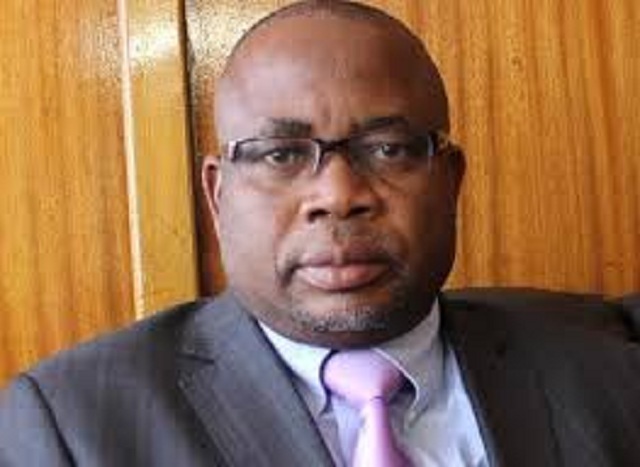
Nozibelo Maphosa, Sunday News Reporter
THE Ministry of Primary and Secondary Education has started constructing schools in the country’s provinces and is targeting 100 schools up to next year as it moves to curb the deficit of educational infrastructure.
This comes amid revelations that Mashonaland West Province has the least number of schools contrary to the belief that Matebeleland provinces were the worst in terms of educational infrastructure and development in general.
Deputy Minister of Primary and Secondary Education, Professor Paul Mavhima said they have started building 30 secondary and 70 primary schools countrywide targeting provinces with the least number of schools.
“The country has a deficit of 2 000 schools, as we are embarking on this project, we will be using a pro rata ratio to pick the province which needs many schools, for instance Bulawayo together with the two Matebeleland Provinces needs 700 schools.
However, in this case we figured that Mashonaland West has many satellite schools, and because of the resettlement programme the province needs more schools than other provinces.
“We have already started the preparation of building the first schools in Mashonaland West and we have set a budget of $20 million,” said Prof Mavhima.
Prof Mavhima said per every 17 schools that they would build, 12 would be primary schools and five secondary.
“Out of every 17 schools, 12 will be primary and five will be secondary schools, which is the typical situation in the country where out of the 8 500 schools over 5 000 are primary schools,” said Prof Mavhima.
Prof Mavhima said the project was a joint venture between the ministry and private partners.
“The project is a joint venture between the Government and private partners. The construction is being run by private partners, they will fund the construction of schools and hand them over to the ministry upon completion under a Build and Transfer arrangement,” he said.
Prof Mavhima said the schools would be built in both rural areas and urban areas.
“We want to shorten the distances travelled by children in the rural areas. We will be constructing the schools in both urban and rural areas, we also realised that it’s because of these distances that there are more drop outs from rural areas compared to urban areas.
“Also in urban areas schools are congested, we want to decongest the schools and cover the entire country,” said Prof Mavhima.
Prof Mavhima said the ministry was starting at the first phase of 100 schools and if the model works out they were going to use it to build the other remaining schools.
“We are going to start at the first phase and build 100 schools, and if this model works we are going to implement it to build the other schools,” he said.
Prof Mavhima said the Government was making commendable efforts to provide school infrastructure to cater for the unprecedented increase in enrolment as the existing infrastructure remains inadequate while in resettlement areas it is unsafe and not conducive to quality learning.
Prof Mavhima said the 100 schools would include small schools with an expected enrolment of up to 500 pupils; medium schools with an enrolment of up to 1 000 pupils as well as large schools with a capacity of 1 600 pupils.
The construction project would be based on models that have been developed by the Ministry of Primary and Secondary Education as well as the Ministry of Local Government, Public Works and National Housing.



 Online Reporter