Trust Freddy
Herald Correspondent
GOVERNMENT is targeting to tap into approximately 1 500 megawatts (MW) of captive power generated by private companies, mining giants, farming estates, and educational institutions as part of a robust strategy to climate-proof the economy and shield industries from an impending El Niño-induced energy deficit.
The private generation pool—built up through heavy private sector investments—will be integrated into the national grid under flexible regulatory frameworks to ensure seamless industrial production and domestic supply.
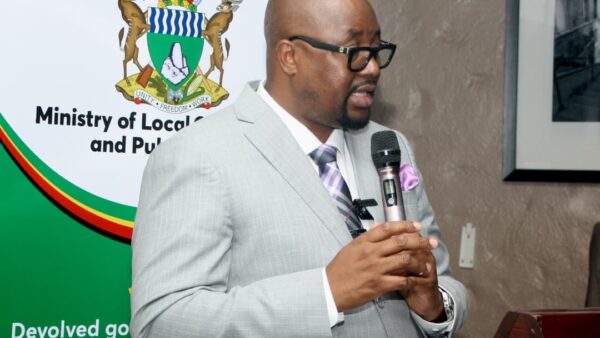
Speaking at the direct agreement signing ceremony for the 115MW Centrachine Solar PV Project in Selous recently, Energy and Power Development Minister July Moyo said Government planning has identified massive potential in off-grid captive power to offset weather-induced hydro shortfalls.
“We are saying even those who have captive power, and I understand in our special arrangement when we were planning last week, we were told captive power is plus or minus 1 500 megawatts,” Minister Moyo said.
“You can imagine if we take some of that captive power into the national grid, we can go through this super El Niño without putting true pressure on the industries that will need to continue to power the growth of the economy.”
A major pillar of the nation’s captive energy pool is the US$1,5 billion Dinson Iron and Steel Company (Disco) Manhize Steel Plant in Mvuma. Disco has already established its own power plant generating over 40MW of electricity to support its massive steelworks, with concrete arrangements to feed excess output into the national grid as part of the Second Republic’s industrialisation drive.
Several other mining and industrial giants have answered President Mnangagwa’s call for self-reliance by constructing independent thermal, solar, and biomass plants.
Mining enterprises include Zimplats with a 35MW Solar PV plant at Selous, Caledonia Mining Corporation with 12.2MW Solar PV at Blanket Mine, Anglo American’s Unki Mine with 10MW Solar, Sabi Star Mine with 15MW Thermal, and Bikita Minerals with 12MW Solar.
In manufacturing and agro-processing, Triangle Limited Sugarcane Mill is generating 35MW from cogeneration/biomass, while Tanganda Tea Company is producing 3.1MW across its estates, alongside Schweppes Zimbabwe / Beitbridge Juicing, Sunny Yi Feng, and National Foods Limited.
Under the Government’s expanded Net-Metering Regulations, agricultural enterprises and learning institutions are also positioning themselves to feed excess daytime generation into ZESA’s distribution network.
Agricultural farms include Nottingham Estate in Beitbridge with 4.5MW, Surrey Group / MD De Chassart & Son with 1.8MW, Kefalos Cheese Farm with 600kW, Sun Valley Farm (Charles Stewart Day Old Chicks), and Rapako Farm.
To support private generation and address power transmission constraints, Minister Moyo announced that the Government is opening up power transmission and distribution infrastructure to private investment under National Development Strategy 2 (NDS2).
Borrowing from successful public-private road concession models, private investors will be granted long-term concessions to partner with ZESA in building interconnectors, evacuating power from generation nodes, and strengthening regional transmission links across Southern Africa.
Minister Moyo said if Zimbabwe’s supply curve is above the demand curve, the country will be safe, but evacuation remains the major problem.
He said the Zimbabwe Energy Regulatory Authority (ZERA) will issue licenses to streamline power-sharing partnerships and urged developers and project financiers, including PowerChina and FBC Bank, to fast-track ongoing generation projects and target commissioning ahead of the peak winter demand period.