Online Reporter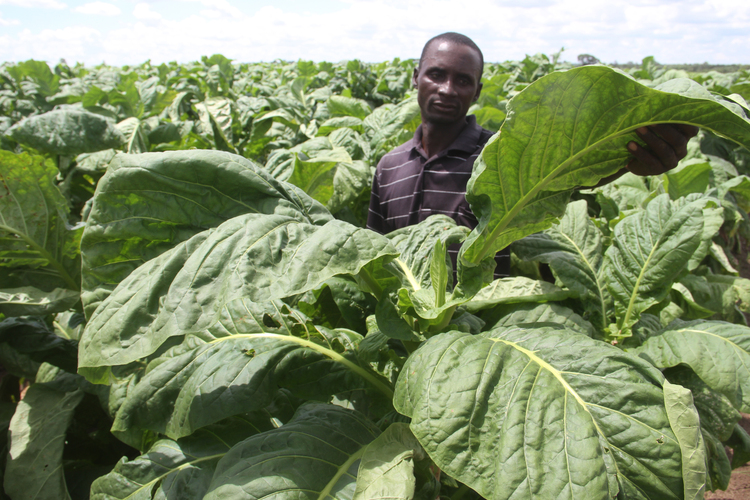
Michael Tome
Business Reporter
GOVERNMENT says National Development Strategy will accelerate the transformation of Zimbabwe’s tobacco industry by prioritising value addition, domestic financing and downstream processing, as the country seeks to retain more economic value from the crop.
Under NDS2, authorities seek to implement the Tobacco Value-Chain Transformation Plan, which targets increased output and higher economic returns through expanded local processing, including cut-rag, cigarette manufacturing and nicotine extraction.
According to the Government, the key focus of the strategy is to raise the share of domestically financed tobacco production, reducing reliance on foreign funding arrangements and export of raw leaf.
This shift will allow Zimbabwe to move from low-margin exports to higher realisations through value-added tobacco products.
The thrust is to reduce dependence on raw tobacco exports and move up the value chain, in line with Vision 2030, which aligns with broader aspirations of transitioning from exporting raw materials to producing finished, high-value goods.
Investment initiatives under the Tobacco Special Economic Zone are expected to play a central role, with plans to establish nicotine extraction plants that convert tobacco waste into nicotine products and organic fertilisers.
These projects are projected to lift value addition in the sector from about two percent to more than 30 percent.
In addition, existing tobacco processing facilities will be upgraded to enhance domestic production of value-added tobacco products and finished cigarettes, marking a significant milestone in the country’s industrial transformation and economic development.
The renewed investment momentum across tobacco value chains shows the impact of pro-business reforms and policy stance.
NDS2-backed investments in state-of-the-art cigarette manufacturing plants are also expected to create new employment opportunities in processing, packaging, logistics and engineering, contributing to broader economic growth.
“The NDS2 Tobacco Value-Chain Transformation Plan targets increasing both the output and economic value of the crop through value-added local processing.
“Investment in tobacco value addition aligns with Vision 2030 aspirations of transitioning from exporting raw materials to producing value-added goods, transforming Zimbabwe’s potential in tobacco manufacturing and positioning the country as an exporter of high-value finished products,” says the novel five-year economic blueprint.
The Tobacco Value-Chain Transformation Plan builds on a strong production base as Zimbabwe recorded a bumper 355 million kilogrammes of tobacco in 2025, valued at about US$1,2 billion, consolidating its position as the world’s sixth-largest tobacco producer.
Minister of Lands, Agriculture, Fisheries, Water and Rural Development Dr Anxious Masuka, is on record saying the Government’s objective is to transform the local tobacco industry and contribute immensely towards the vision of becoming a diversified, empowered and prosperous economy.
“Tobacco value chain transformation strategy is a bold and radical transformative plan; it is meant to capture some of the value that we should be getting while producing more because the market for Zimbabwean tobacco is there,” said Minister Masuka.
Tobacco remains a cornerstone of the economy, accounting for more than 25 percent of foreign currency earnings.
Benefiting from an organised marketing system, the crop holds a strategic position due to its contribution to gross domestic product and export receipts.
Since the land reform programme of 2000, tobacco production has expanded beyond large-scale commercial farms, with indigenous farmers now playing a central role.
The Government estimates that more than three million people derive their livelihoods directly or indirectly from the tobacco industry.
With NDS2 placing value addition at the centre of policy, authorities believe the sector can shift from volume-driven growth to higher-value industrial output, positioning Zimbabwe as an exporter of finished tobacco products rather than raw leaf.