admin
admin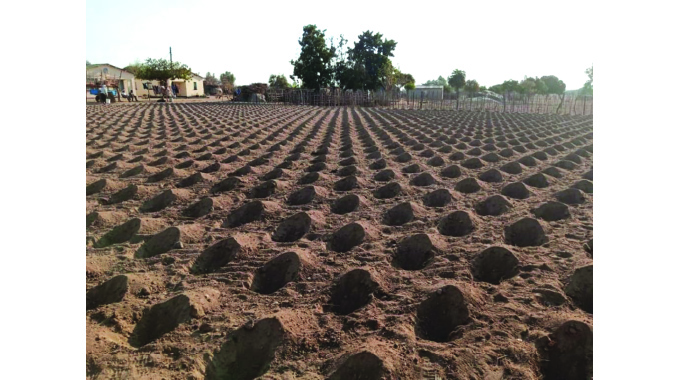
Edgar Vhera
Agriculture Specialist Writer
BESIDES implementing strategies that boost food security, Government has moved to ensure citizens eat healthily, by introducing the Pfumvudza/Intwasa 4 concept, which incorporates sources of protein, oil and fodder in the inputs packages.
The concept is set to debut in the 2024/25 cropping season to bolster the starch component being availed through cereal products like maize and traditional grains that are part of the staple diet.
Speaking on the sidelines of the recent national biofortification policy dialogue (NBPD) hosted by the Smallholder Irrigation Revitalisation Programme (SIRP) in Harare, Lands, Agriculture, Fisheries, Water and Rural Development’s training and information director Mr Sibangilizwe Dlodlo said the traditional Pfumvudza/Intwasa programme would be overhauled into Pfumvudza/Intwasa 4.
“We are no longer only concerned about staple food security but healthy-eating through production of protein and oil rich crops for household consumption and sale.
“Starting mid-May, we will be training about 2 000 extension officers from Mashonaland provinces on all the aspects of the Pfumvudza/Intwasa 4 under the foundation for farming module to allow the programme to be implemented in the upcoming summer season,” he said.
Mashonaland provinces are generally regarded as the country’s food basket provinces.
“We will also train extension supervisors from all the zones of the country and mandate them to train their extension workers through internal training,” Mr Dlodlo said.
Mr Dlodlo said the Pfumvudza/Intwasa 4 concept involved cultivation of at least four plots with the first one focussing on staple food security under white maize or traditional grains, the second one targeting protein security.
Under plot two, farmers can plant either groundnuts or sugar beans or any other protein crop. The third plot is for oil security with focus on sunflower which is also drought tolerant.
He said the fourth plot was a cover/fodder plot to ensure that the ground was with crops like lab lab and velvet beans being suitable for production especially in agro-ecological regions one to three.
“For Matabeleland and Masvingo provinces or other places under agro-ecological regions 4 and 5, we recommend fodder crops for purposes of feeding livestock,” he said.
To address the hidden hunger problem, Mr Dlodlo said Government can make a deliberate policy to incorporate the distribution of biofortified seeds in its Pfumvudza/Intwasa programme to promote their production and consumption.
Biofortification is the process of increasing the density of essential nutrients in food crops through conventional plant breeding, genetic engineering or agronomic practices. This aims to improve the nutritional quality of food and reduce nutrient deficiencies in populations that rely on staple crops for their diet.
In Zimbabwe, various stakeholders are involved in the biofortification value chain.
These include plant breeders (who develop biofortified varieties of crops such as maize, wheat and sweet potatoes) and farmers (cultivating and harvesting these biofortified crops). Government agencies and development partners also provide support in terms of training, seeds and market access. Retailers and consumers create demand for biofortified foods.
Global biofortification research started in 2004 with breeding starting in Zimbabwe in 2006 and by 2010 the country released the first variety NUA45.
The country now has biofortified seed varieties of orange maize and orange fleshed sweet potato which are rich in Vitamin A as well as the iron rich NUA 45 beans.
By 2023 the country produced 9,6 tonnes orange maize and 4,8 tonnes of iron beans. To climate-proof agriculture for the 2023/24 season, Government unveiled the input distribution and crop suitability map that compelled farmers in agro-ecological 4 and 5 to establish two mandatory sorghum and/or millet plots plus one mandatory sunflower plot and two optional plots comprising any of African peas or groundnuts.
Pfumvudza/Intwasa beneficiaries in regions 1 and 2 were provided with inputs to plant three mandatory maize fields and two plots comprising any of the following — sunflower, sorghum, pearl millet, groundnuts, African peas or sugar beans.
Agro-ecological region 3 Pfumvudza/Intwasa beneficiaries were provided with inputs to plant two mandatory maize plots and three other plots with any of these options — sunflower, sorghum, pearl millet, groundnuts, African peas or sugar beans.



 Online Reporter