Online Reporter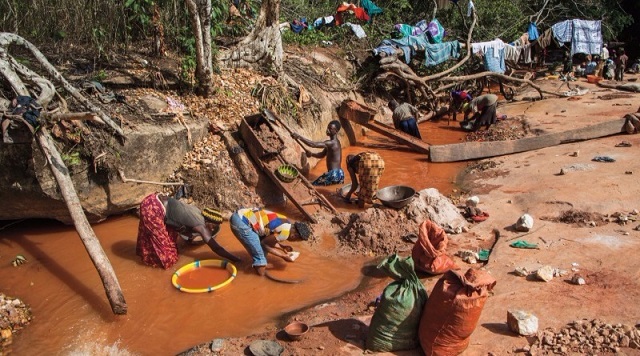
Nqobile Bhebhe
Zimpapers Business Hub
The Government has been commended for demonstrating strong leadership in the ongoing drive to formalise the artisanal and small-scale mining sector, a key initiative aimed at promoting sustainable mining practices, enhancing transparency and strengthening strategic partnerships across the mining value chain.
Speaking at the just-ended planetGOLD Zimbabwe Annual Stakeholders Conference in Harare, Eng Mollen Siwella of PlanetGOLD Zimbabwe said the ASM sector continues to face numerous challenges that require shared responsibility and collective action.
“This is why effective partnerships with Government ministries, international organisations, financial institutions, technical training bodies, the private sector, civil society and local communities are all essential for a sustainable project,” said Eng Siwella.
She said collaboration was critical in addressing key issues affecting the sector.
“This helps to complement our strengths and address the critical issues, including policy and regulation, training, market access and financial inclusion,” she said.
Eng Siwella noted that within the PlanetGOLD Zimbabwe framework, several key actors drive this partnership approach — with Government playing a central and unifying role.
“The role of Government partners is very pivotal. We have ministries like the Ministry of Mines and Mining Development, the Ministry of Environment, Climate and Wildlife, the Ministry of Health and Child Care, the Ministry of Lands, Agriculture, Fisheries, Water, and Rural Development, and the Ministry of Women Affairs, Community and Small and Medium Enterprise Development as our valued Government partners,” she said.
She applauded Government’s commitment to promoting responsible mining operations through the ongoing formalisation of the ASM sector.
“The Government has actually demonstrated leadership in the drive towards formalising the ASM sector as well as having sustainable mining practices,” said Eng Siwella.
On market access, Eng Siwella said Fidelity Gold Refineries continued to play a vital role in connecting artisanal and small-scale miners to formal markets.
“Financial partnerships are vital, especially in bridging the gap that frequently hinders miners from accessing equipment or working capital,” she said.
“Fidelity Gold Refineries connect artisanal miners in remote areas to formal markets through gold buying centres distributed across Zimbabwe’s mining regions.”
She said such collaborative efforts were crucial in ensuring that small-scale miners fully benefit from the gold value chain while promoting responsible and sustainable mining practices across the country.
Latest statistics from the Fidelity Gold Refinery (FGR) show that total gold deliveries for the first nine months of 2025 jumped 37 percent to 32,98 tonnes, compared to 24,02 tonnes in the same period last year.
Small-scale miners delivered 24,45 tonnes of that total through September — a massive 67 percent growth from the 14,6 tonnes produced in the corresponding period of the previous year.
The sector now accounts for nearly 75 percent of the country’s total output, cementing its position as the primary engine of the industry.
In contrast, deliveries from the large-scale miners fell to 8,54 tonnes in the first nine months of 2025, a decline from the 9,55 tonnes produced a year earlier.
The Government’s provision of complementary policies, notably allowing small-scale miners to retain 100 percent of their foreign currency earnings, has been key in supporting and driving the upscaling of the gold sector.
Meanwhile, collaboration and coexistence between large-scale and artisanal miners have also been identified as key to reducing conflicts and boosting productivity in the mining sector.
Addressing delegates at the same conference, Dr Cheidza Chipangura, representing the International Council for Artisanal and Small-Scale Mining (ICASM), said Zimbabwe could benefit from adopting proven global strategies, such as infrastructure sharing and jointventures.
“Artisanal and small-scale mining is forever. Artisanal and small-scale mining is the first to respond to local conditions. Where the geology of any environment might not find it profitable for a large-scale mining operation to continue operating profitably,” said Dr Chipangura.
She stressed the importance of knowledge and skill transfer between large and small operators, saying collaboration was vital for the sustainability of the mining industry.
“Therefore, it is important for a transfer of skills or knowledge to small-scale miners; there is no point in communities or nations working against each other and experiencing conflict,” she said.
Dr Chipangura noted that globally, partnership models have proven effective and sustainable.
“Strategy number one is partnerships. Small-scale miners need to partner with large mining firms because they have the funds.
“In some cases, small-scale miners have the mining land. They are sitting on resources that they are not extracting for the good of the country.
“So we encourage joint ventures or co-operatives between small-scale and large-scale miners,” she said.
Dr Chipangura also called for continued capacity building within the artisanal and small-scale mining sector.
“There is a need for capacity building of small-scale miners. We cannot just leave it to the Government alone,” she added.