Online Reporter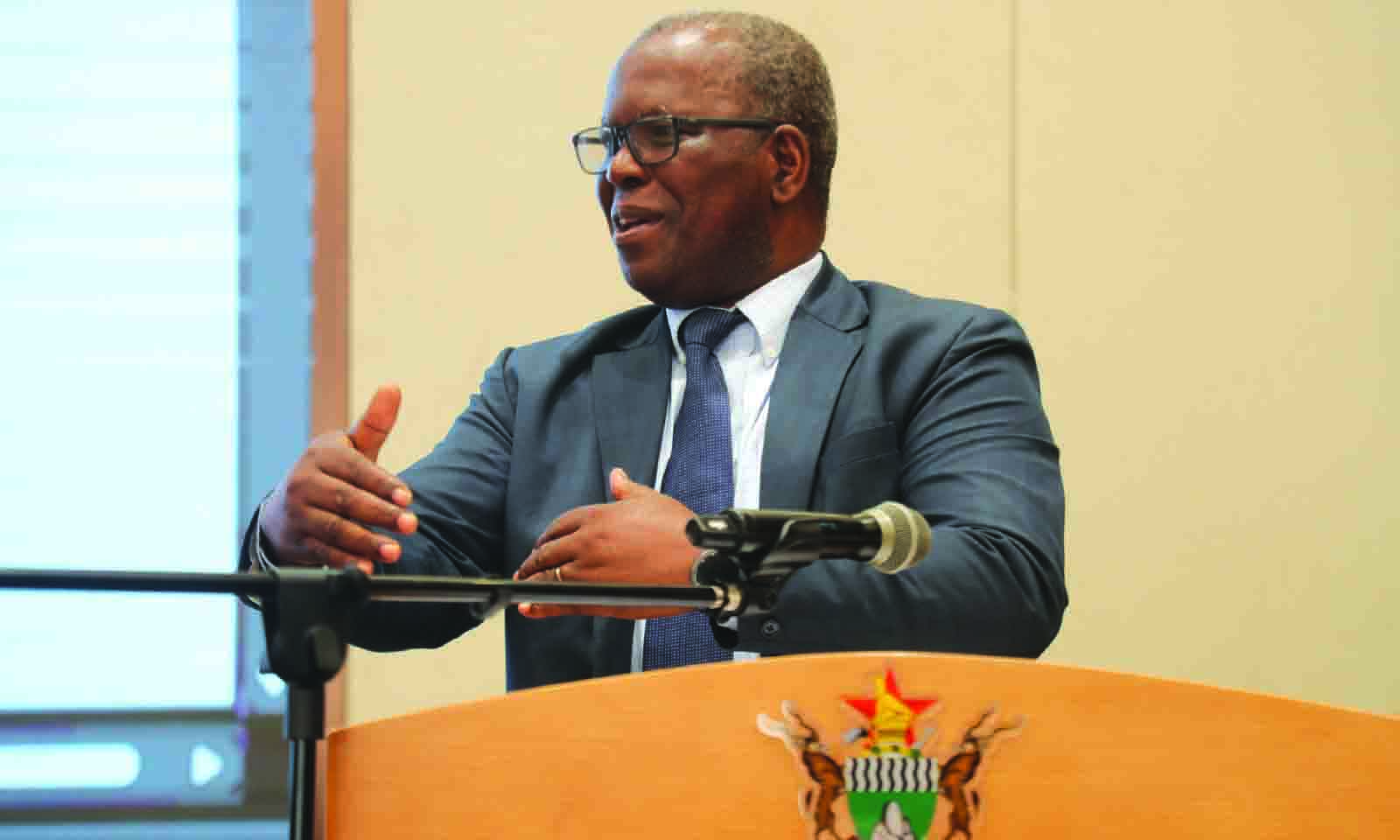
Trust Freddy
Herald Correspondent
THE Government has thrown its weight behind the University of Zimbabwe’s transformative teacher education curriculum, particularly its successful integration with public-private schools.
This came out at a validation ceremony held on the UZ campus last Thursday, where educators, policymakers and private‑sector partners unanimously agreed that the Education 5.0 framework was already bearing fruit and called for fresh, innovative ideas to sustain the momentum.
The workshop was attended by representatives from Mutare Teachers’ College, Seke Teachers’ College, Marymount Teachers’ College, Morgan ZINTEC and other institutions with which the UZ has been partnering to implement teacher-centred curriculum.
In a speech read on his behalf, Higher and Tertiary Education, Innovation, Science and Technology Development Permanent Secretary Professor Fanuel Tagwira said: “Today, we gather not merely to celebrate an academic milestone, but to witness a defining step in the transformation of our education system into one that is inclusive, technological, innovative, and future-oriented.
“For too long, our curriculum delivery was fragmented, teacher-centred, and overly mechanistic. Today, we embrace new pedagogies that are participatory, discovery-driven, problem-solving and experimental in nature.”
Equally transformative, Prof Tagwira said, is the expansion of the curriculum to include over 20 modules across all colleges.
“These include college-wide and core modules for a specific programme, which constitute 80 percent level of similarity across colleges; then Specialisation modules and Electives, which constitute 20 percent unique features of a particular college.
“This harmonisation ensures that students are fed with comparable core materials, creating a unified standard of academic excellence,” he said.
“It levels the playing field and strengthens academic unity. Such a structure makes student mobility easier, allowing for seamless transfer between institutions offering the same programmes.”
He also stressed the importance of collaboration between tertiary and primary and secondary education.
“A further milestone is the incorporation of college graduates into Public–Private Schools, enhancing the quality of education and ensuring a seamless flow of the Heritage-Based Curriculum across all levels.
“This synergy between ministries reflects a collaborative spirit, leaving no learner behind.”
The chief director for Curriculum Development and Technical Services in the Ministry of Primary and Secondary Education, Mr Cyprian Kent Masocha, said:
“Our tertiary institutions are no longer just consumers of our secondary graduates, but they are now active partners in shaping the foundation.
“They provide critical feedback on the preparedness of our students, allowing us to refine our curriculum and teaching methods in real time.
“Conversely, our primary and secondary schools inform tertiary education of the evolving needs, aptitudes, and challenges of the modern learner.”
Some of the teachers’ colleges, including Marymount Teachers’ College, lauded the partnership, with the college having constructed two new schools in line with Education 5.0, which speaks to problem-solving.
UZ Vice‑Chancellor Professor Paul Mapfumo warned that it is long past time for Zimbabwe’s colleges to abandon curricula fashioned by former colonisers.
He cited a TikTok clip showing children being taught to memorise obscure facts—such as the names of countries with three capitals or those without armies—while neglecting practical, problem‑solving skills.
“During our era we spent most of our time learning how many rivers, how many countries without capitals, how many this,” he said.
“In these circumstances, do we really need anyone to convince us that the curriculum must change? If we keep this kind of syllabus, we will end up with graduates who are ‘educated’ yet crying for employment because they are not equipped to solve real problems.”
He also stressed that education should prioritise innovation and real‑world application rather than rote memorisation, which does not put food on the table.