Online Reporter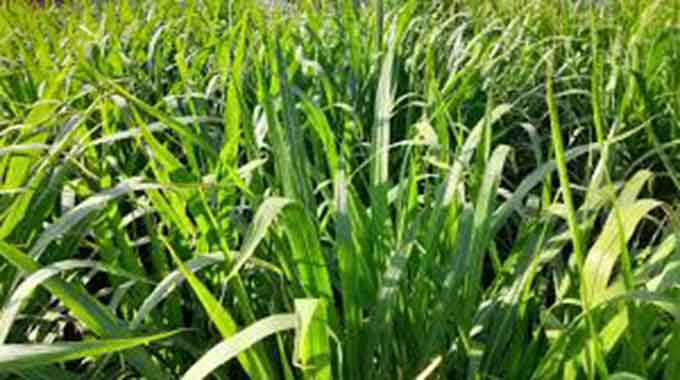
Walter Nyamukondiwa-Mashonaland West Bureau Chief
GOVERNMENT has initiated the drafting of standards to certify producers of Juncao grass seedlings and cuttings to pave the way for the mass propagation and distribution of the fast-growing grass across the country.
Regulatory procedures to check for its potential to spread pests, including viruses such as lethal necrosis, which affects other grasses such as maize, have been undertaken.
According to studies being undertaken at the Chinhoyi University of Technology, it has since emerged that the Juncao grass technology could serve as a pest control measure when interspaced with maize plants.
The highly nutritious grass for livestock feed and mushroom production substrate is sweet and attractive to pests while creating conditions that short-circuit their lifecycle.
In an interview, Ministry of Agriculture, Fisheries and Rural Development chief research scientist Mr Tinashe Runyanga said the Government was in the process of drafting standards for the increased uptake of the technology.
“Government, on the regulatory side, is in the process of drafting some standards to certify potential Juncao seedlings or cuttings producers in the country,” said Mr Runyanga.
“As the Government, we hope that very soon we will be able to do mass propagation and distribution through normal regulatory procedures.”
He said all the necessary biosafety checks have been undertaken before importation of the grass with thorough tests and monitoring at the Gwebi Agriculture College, which was chosen as the Centre of Excellence.
Pest risk analysis was undertaken with initial conditions for importation being the introduction of the grass as tissue culture plantlets. This was, however, discarded after it emerged that the process only had a 10 percent success rate.
A decision was made to issue permits for the importation of an initial 250 cuttings. “Most of the tests focused on the viruses such as lethal necrosis, which affects maize, also a type of grass,” he said.
“We did everything and managed to officially clear the distribution of the grass to potential farmers who wanted to adopt the technology, and everything went well.
”The Government expressed satisfaction with the level of interest among farmers for the adoption of the Juncao Grass technology.”
Mr Runyanga said more research, through tapping into the country’s universities and innovation hubs, to improve outcomes with the tissue culture.
CUT director of research on postgraduate studies Professor Robert Musundire, preliminary investigations had shown that pests could not complete the lifecycle after infesting the plant.
“When pests infest the Juncao grass, they are not able to complete their lifecycle. It acts more like a trap crop that diverts the pests from our crops, such as maize. They lay their eggs but fail to thrive,” said Prof Musundire.