admin
admin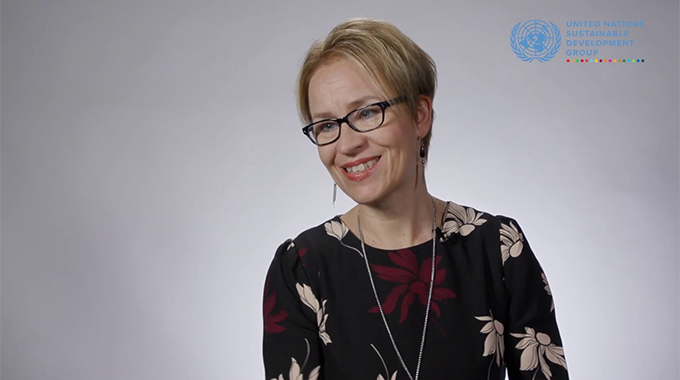
Trust Freddy Herald Correspondent
A three-year programme funded with £12 million, almost $10 billion, to assist vulnerable rural communities in adapting to climate change through climate resilient water supplies and renewable energy infrastructure has been launched by Government, the British Foreign, Commonwealth and Development Office and the United Nations Development Programme.
Called the Climate Adaptation Water and Energy Programme ( CAWEP), it will invest in Binga, Chipinge, Chivi, and Insiza districts and is being coordinated by the Ministry of Environment, Climate, Tourism and Hospitality Industry, although several ministries are involved.
The targeted communities will have continuous access to water for productive and household use, including during droughts and floods and improved access to clean and affordable energy to support economic activities.
Upon completion, CAWEP will have connected 12 500 people to electricity on a solar micro-grid in Hakwata in Chipinge and at least 150 000 people will access water in Mlibizi in Binga, Wanezi in Insiza and Gororo in Chivi.
Speaking during the launch of the programme in Harare, UNDP country representative Ms Mia Seppo said climate resilient agriculture would be pivotal in improving livelihoods in the country.
“Through this three-year project, UNDP and FCDO aim to support the Government of Zimbabwe attain its climate goals and support vulnerable communities and institutions’ adaptation and resilience capacity to climate shocks.
“The programme will support the development of climate resilient and multiple-use water and renewable energy infrastructure in vulnerable communities of Zimbabwe.
“This support will enable continued access to water for productive and household use, including during droughts and floods, and improved access to clean and affordable energy to support economic activities with the intention of supporting more sustainable livelihoods outcomes.”
This launch comes soon after the world met in Egypt at COP27 to discuss climate action.
In order to achieve climate resilience, Zimbabwe has already started implementing recommendations of the COP27.
Permanent Secretary for Environment, Climate, Tourism and Hospitality Industry Mr Raphael Faranisi appreciated efforts that are being put by partners in support of Government programs.
“My Ministry appreciate continued support that has been provided for climate action and calls upon development partners to continue supporting the Government programmes within the framework of local level development plans, the Nationally Determined Contributions, the Low Emission Development Strategy, and the National Adaptation Plan upon its conclusion, in order to enhance the country’s compliance and sustainability profile.
“Building the requisite capacities of local authorities and communities for climate action should be an integral part of the sustainability plan.
“This Climate Adaptation, Water and Energy Programme proposal, together with its feasibility studies, are a result of collaborative inter-ministerial work particularly with the climate change management department and the Ministries responsible for energy, water and women affairs,” he said in a speech read on his behalf by the chief director in the Ministry, Mr Prosper Matondi.
FCDO deputy development director Martin Alsop hailed the Zimbabwe Government for embracing this project and pledged to offer support.
“CAWEP is the latest UK partnership with Zimbabwe on climate. Together with our UN partners, UNDP and Unicef, we are pleased that the Government of Zimbabwe through different ministries has fully embraced this programme.
“Esteemed colleagues, we would like to express our sincere gratitude for the policy and technical support that your ministries provided in designing this programme, ensuring it aligns with Zimbabwe’s national climate adaptation priorities.”
CAWEP will be implemented by UNDP in collaboration with Ministries of Environment, Climate, Tourism and Hospitality Industry, of Women Affairs, Community, SMEs Development, of Lands, Agriculture, Fisheries, Water and Rural Resettlement and of Ministry of Energy and Power Development and other partners.
The mitigation component of this project will complement Government efforts to meet the Paris Agreement obligations to lower carbon emissions.



 Online Reporter