Online Reporter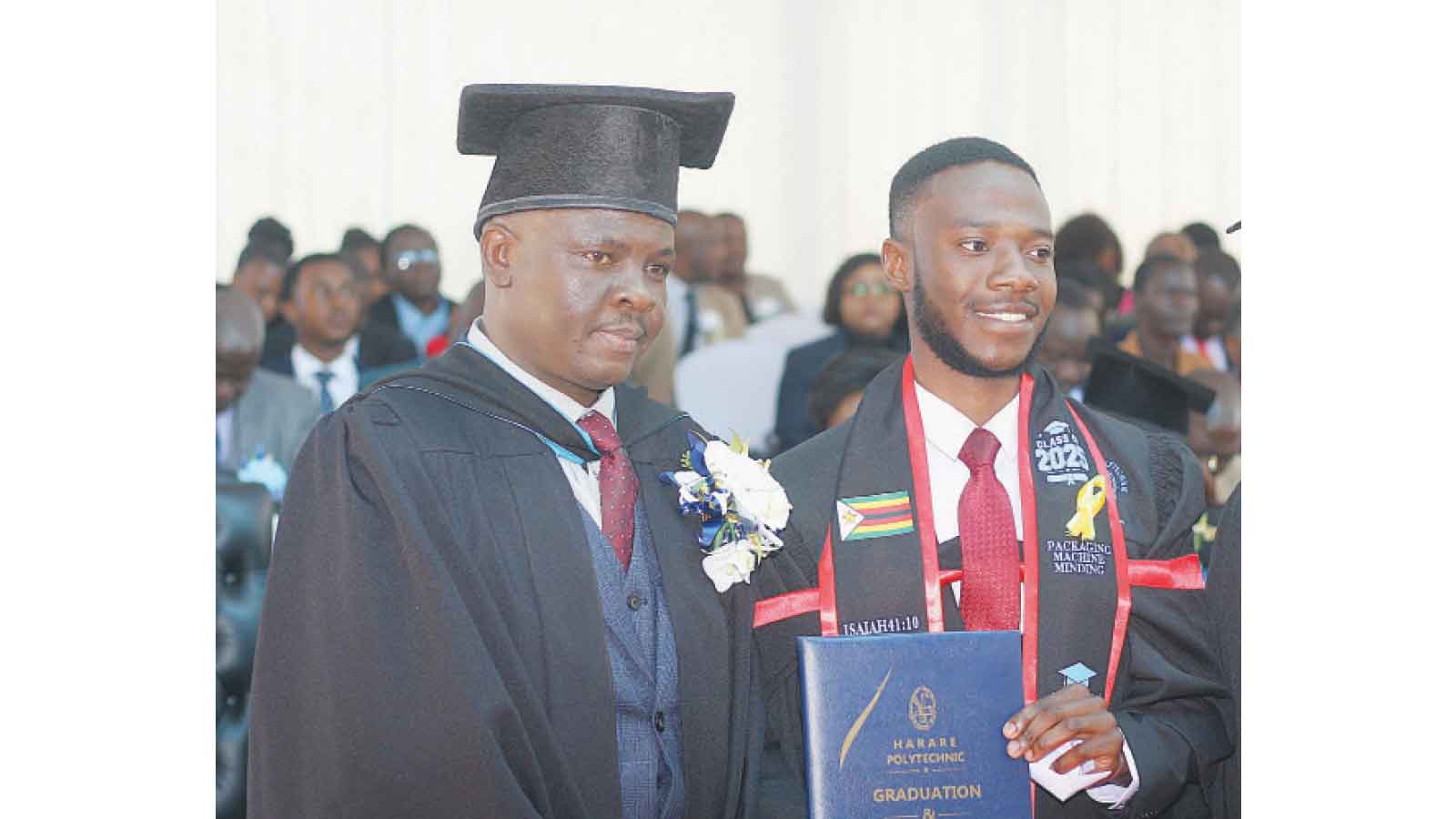
Herald Correspondent
THE Government has intensified calls for higher and tertiary institutions to produce innovators, entrepreneurs and industrialists capable of driving the country’s industrialisation and economic transformation agenda.
This came out at Harare Polytechnic’s 46th graduation and prize-giving ceremony last Friday, where 4 788 students graduated.
The ceremony was held under the theme, “From learners to innovators: Powering national industrialisation through technopreneurship.”
Higher and Tertiary Education, Innovation, Science and Technology Development Minister Dr Frederick Shava, who was represented by his deputy, Simelisizwe Sibanda, presided over the ceremony.
Of the graduates, 2 377 were female while 2 411 were male, with 60,4 percent completing Science, Technology, Engineering and Mathematics (STEM) programmes.
In a speech read on his behalf, Dr Shava said the strong STEM representation and near gender parity reflected deliberate Government efforts to build a skilled workforce for a knowledge-based, innovation-driven economy.
“The Government of Zimbabwe, under the leadership of His Excellency Dr ED Mnangagwa, placed human capital development at the centre of our national transformation agenda,” said Dr Shava.
“It is impressive that Harare Polytechnic has aligned itself fully with the national drive to build a knowledge-based, technology-driven economy.”
He said the graduation theme resonated with Vision 2030 and the National Development Strategy 2 (NDS2), which place innovation, industrialisation and modernisation at the centre of national development.
Dr Shava commended the institution for embracing the Education 5.0 philosophy and producing innovations that contribute to industrial growth and import substitution.
He cited the institution’s production of electric vehicle golf carts through reverse engineering, with confirmed orders already secured, as well as the establishment of an Automotive Centre of Excellence in partnership with industry players including Autoworld, Isuzu, CFAO and ZIMOCO.
“The Government is committed to assist with the re-tooling of workshops in automotive, mechanical, electrical, and science engineering to ensure sustainability of the industrialisation initiatives.
“This is technopreneurship in action: turning knowledge into infrastructure, and infrastructure into opportunity for national development,” he said.
Dr Shava challenged graduates to become job creators and innovators.
“. . . as you leave today, remember you are the engineers, innovators, and entrepreneurs who will industrialise Zimbabwe.
“Vision 2030 needs your energy. Go and build the Zimbabwe we all dream of.”
Acting Principal Mrs Deborah Ruziwa said enrolment at the institution had risen to 10 145 students, with 7 341 enrolled in STEM programmes, representing a 7,2 percent increase from last year.
She said the overall pass rate had improved from 78,4 percent to 83 percent, reflecting the institution’s commitment to academic excellence and skills development.
Mrs Ruziwa said Harare Polytechnic was also supporting Government’s rural industrialisation drive through community outreach programmes in Murombedzi and Muzarabani.
The institution has adopted Murombedzi as a rural industrialisation hub under NDS2, where students are constructing a classroom block through live project training.
She also said 77 students had gained international exposure this year.
“Twenty-four students are studying Mechatronics and Metallurgical Assaying at Shanxi Vocational College in China, while 30 Mechatronics students are expected to graduate from Ningbo Polytechnic in September.
“The polytechnic also hosts 69 international students from Zambia and Equatorial Guinea,” she said.
Mrs Ruziwa said the institution had received six national awards during the year, including the Platinum Award for Excellence in Transport and Logistics Education and the Zimbabwe National Chamber of Commerce’s Best Overall National Tertiary Institution award.
She also announced the introduction of three new STEM programmes — the National Certificate in Terrazzo Mosaic Floor and Wall Tiling, National Diploma in Biomedical Engineering and National Certificate in Orthopaedic Technology.