admin
admin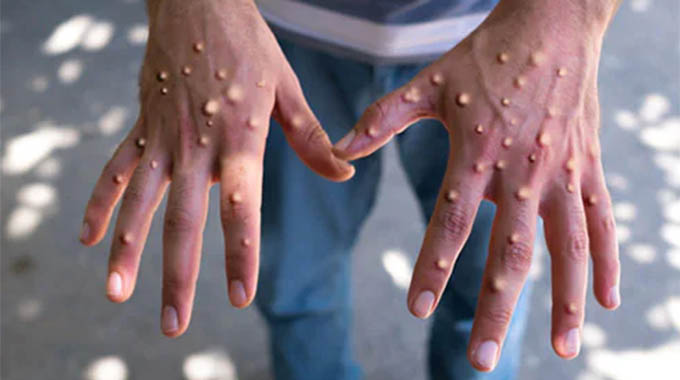
Rumbidzayi Zinyuke in KADOMA
Government is taking proactive measures to prepare healthcare workers to deal with any potential cases of Mpox, while health communicators are being capacitated to effectively educate communities about the viral infection.
Although Zimbabwe has not yet reported a confirmed case of Mpox, there have been reports of suspected cases being recorded, particularly in Manicaland, where refugees from the DRC and other countries are received on a daily basis.

The Ministry of Health and Child Care has confirmed that a number of suspected cases have been tested at the National Reference Lab and were all negative.
Addressing participants at the infodemic management workshop underway here, Ministry of Health public health officer Mr Jose Phiri said the Government had already begun rolling out strategies to combat Mpox and any misinformation that might come with it.

“We need to capacitate the frontline workers on safety protocols because these are the people who will have close contact with the community,” he said.
“They are the people who are aware of what is happening on a daily basis. Fortunately, the Ministry of Health has already started capacitating the health care workers in terms of how to handle people suspected of having Mpox who might present at the health facility.”

The World Health Organisation says over 120 countries have reported Mpox between January 2022 and August 2024, with over 100 000 laboratory-confirmed cases reported and over 220 deaths among confirmed cases.

In Zimbabwe, the Ministry of Health has since activated its response pillars, the surveillance pillars that include ports of entry, he added.
“We are talking about case management, infection prevention control, logistics as well as risk communication and community engagement (RCCE).

“All these pillars have been activated and this has allowed the ministry to respond to and test the suspected cases which have come out negative,” said Mr Phiri.
Mpox, previously known as monkeypox, is a viral zoonotic infection that can spread from animals to humans, between humans, mainly through close contact of any kind, including kissing, touching or sexual intercourse with an infected person.

It has been reported in a number of countries, including the DRC, for more than a decade.
The number of cases reported each year has increased steadily over that period.



 Online Reporter