

 Online Reporter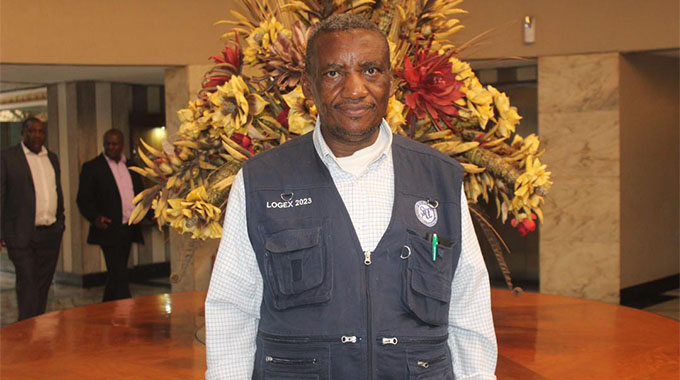
Precious Manomano
Herald Reporter
THE Government is adequately prepared for the rainy season and is ready to respond to disasters .
Like other Sadc countries, Zimbabwe is set to receive normal to above-normal rains, raising the risk of floods and other rain-induced disasters.
Civil Protection Unit chief director Mr Nathan Nkomo said the level of preparedness for the season was high, but emphasised the need for funds to address issues associated with the rainy season.
“What we need are the funds, especially this time. If you look at our multi-hazard contingency plan, it takes care of the residual effects of the disasters that happened in previous years, and we have not attended to the structures. Instead, they envisaged the destructive nature of the current rainfall, given its characteristics.
“We are capturing all the events, but we are not providing a permanent solution. We are only giving relief so that after the rainfall season, after the eight months, we should then be able to address some of the issues,” he said.
He noted that temporary structures have been put in place as relief in some affected areas, adding that some in the private sector have indicated their willingness to assist with equipment.
He also highlighted the need to increase awareness programmes regarding marooning and other flood-related issues.
“I am sure on marooning, if we intensify our awareness programme, that will reduce drastically the number of people to be marooned, so we will continue to make people aware,” he said.
Government has crafted the National Multi-Hazard Contingency Plan, which is still waiting for Cabinet approval. The overall aim of this plan is to strengthen capacity for preparedness and response from national and sub-national levels down to the village level, enhancing timely and coordinated responses to emergencies by the Government and its partners. Nearly US$47 million is needed from the Government and its stakeholders to mobilise the necessary resources for the rainy season.
Statistics from the CPU indicate that rains have so far killed 41 people, damaged 15 schools and affected 51 households.
In Harare Metropolitan Province, the Department of Civil Protection (DCP) and Chitungwiza Municipality conducted a rapid assessment exercise following flooding that occurred on November 25, 2025.
The assessment, conducted on November 26, highlighted that if the rains persist, the Chitungwiza community is highly susceptible to waterborne diseases such as cholera and dysentery, and may even experience property destruction.
“Unit L Extension is the worst affected specifically; the road crossing the culvert is blocked with debris consisting of branches, leaves, plastic pampers, and human waste from blocked toilets,” he explained.
Mr Nkomo recommended unclogging stormwater drains, mapping flood-prone areas, deblocking culverts, enforcing development controls, and increasing education and awareness.
In Gutu District, a traffic accident occurred when a bus from Runanga Bus Services attempted to cross the flooded Chivake River on November 26, 2025. The bus was swept off a bridge, but all four passengers managed to escape through the window and were rescued by local community members using ropes.
In Manicaland Province, specifically in Mutasa District near Redwing Mine, on November 25, 2025, eight miners were killed in a shaft collapse caused by heavy rain the previous day. The Zimbabwe Republic Police and the Department of Civil Protection sent a rescue team that recovered the bodies on November 26.
In Matabeleland North Province, a child was reported missing along the Gwayi River.
As of December 3, 2025, Zimbabwe is on high alert, anticipating heavy rainfall exceeding 50mm across several provinces, including Manicaland, Masvingo, Harare Metropolitan, Mashonaland East, and Central.
The public is urged to take precautionary measures as directed by the Civil Protection Unit. The conditions pose serious risks, including flash floods and hazardous road conditions.
Residents are advised to avoid machinery and open vehicles during storms and to steer clear of open areas.
Additional measures include avoiding the use of taps and showers and refraining from entering flooded areas. Regular updates will be provided through official MSD platforms.
The Government has activated the Civil Protection Unit and its disaster management systems at all levels in anticipation of the heavy rains.
Farmers are also taking advantage of the rains to continue planting crops, although most have finished land preparations.
Statistics from Agricultural Rural Development Advisory Services (ARDAS) indicate that under the Presidential Input Support Scheme, 1 079 400 farmers have received maize seed against a target of 1 324 700, which is 81,5 percent of the target.
For sorghum, 602 500 farmers received seed against a target of 1 415 200, equating to 42,6 percent of the target.
In terms of fertiliser distribution, 790 520 farmers received basal dressing against a target of 3 million, which is 26,4 percent while 486 000 farmers received top dressing against a target of 3 000 000, amounting to 10,8 percent of the target. A total of 15 839 103 pfumvudza plots, equivalent to 989 944 hectares, have been prepared.



