

 Chronicle Editor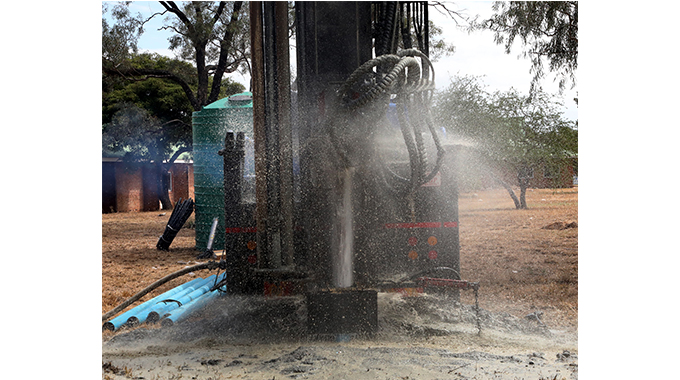
Sukulwenkosi Dube-Matutu, Gwanda Correspondent
GOVERNMENT has resumed its programme to drill boreholes in Matabeleland South Province under the Rural Water and Sanitation Hygiene (WASH) programme.
The programme had stopped last year.
Working in partnership with a Chinese Company, the Government last year launched a programme to drill 500 boreholes throughout the country with 150 to be sunk in Matabeleland South.
The project, however, came to an abrupt end in Matabeleland South after the Chinese Company, J.X International, had only drilled six boreholes throughout the province.
District Development Fund Matabeleland South provincial coordinator, Mr Moment Malandu, who is also chairperson of the provincial Wash committee, said the company had resumed its activities and was in the process of drilling boreholes in Insiza and Gwanda districts.
“Last year a programme to drill 150 boreholes in Matabeleland was launched in April. The programme was a partnership between the Government and a Chinese Company J.X International though I’m not aware of the total cost of the project.
The company started the drilling process end of April and they had drilled 15 boreholes in Matobo but only six of these were wet boreholes,” he said.
“They suddenly left the province and we heard that they were now drilling in another province. We are glad that the company is back and has resumed the project in the province. As I speak, they have drilled six wet boreholes in Insiza and they are now also drilling in Gwanda District.
We had to engage authorities over the matter so that the company would come back as they had just left without communicating. When this project started it brought hope to people and now that it has resumed people are relieved.”
Mr Malandu said under the project the Chinese company was expected to drill 150 wet boreholes in the province and any dry ones would not count. He said the project will go a long way in alleviating water challenges being faced in the province.
DDF, he said, has failed to drill boreholes for the past few months as their rig had broken down.
Mr Malandu said the water situation was bad throughout the province as most boreholes had dried up due to successive droughts. He, however, said that small dams now have water because of rains that were being received in the area, which would help save livestock.
The drilling of 150 boreholes was set to be completed by December last year. — @DubeMatutu



 Bongani Ndlovu
 Online Reporter