Online Reporter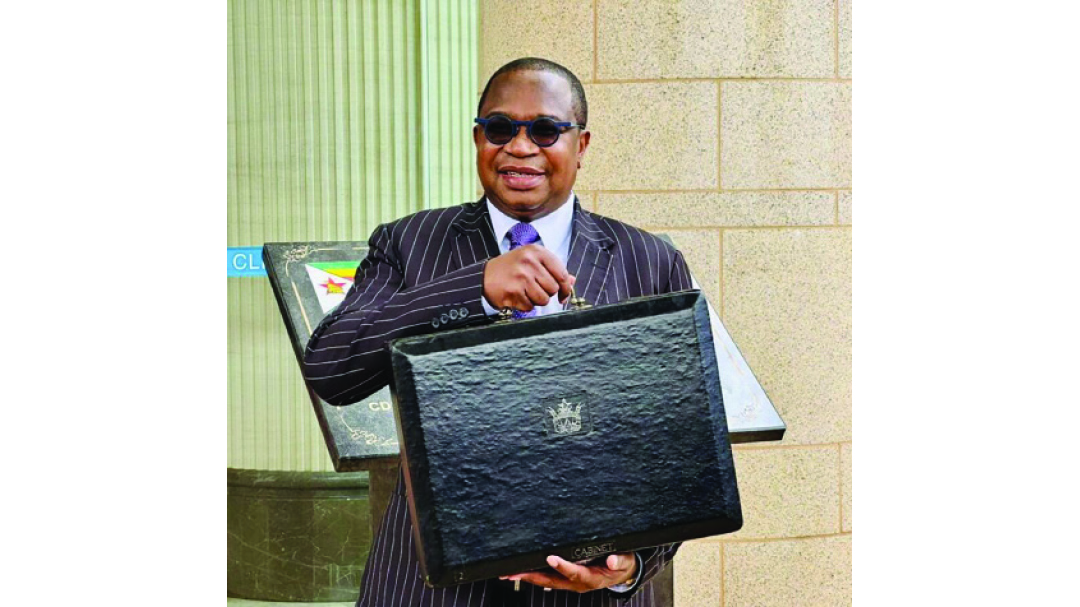
Tapiwanashe Mangwiro
THE Government doubled down on rural road development in the first half of 2025, with the bulk of the spending being channelled through the Rural Infrastructure Development Agency (RIDA).
Delivering the 2025 Mid-Term Budget Review on Thursday, Finance, Economic Development and Investment Promotion Minister Mthuli Ncube outlined achievements and upcoming plans aimed at expanding rural connectivity and stimulating economic activity in marginalised areas.
“The Rural Infrastructure Development Agency (RIDA) rehabilitated and upgraded various road projects across the country,” Minister Ncube told legislators and ministers at Parliament Building in Mt Hamden, emphasising the pivotal role of rural roads in linking agricultural producers to markets and facilitating service delivery.
To boost RIDA’s operational capacity, the Government secured a US$75 million loan facility focused on procuring critical road construction equipment. Additional financial backing included ZiG1,8 billion from the national budget and ZiG26,7 million from the Road Fund distributed by ZINARA.Much of the equipment, the Minister said, has already been delivered and deployed.
This support has translated into tangible outcomes on the ground. According to data in the budget review, RIDA managed to complete 8 453 kilometres (km) of grading, 35 km of graveling and spot dumping, and 439 drainage structures in the first six months of the year.Additionally, 1 547 km of pothole patching were carried out, surpassing the initial 600km target by more than double.
Economist Gladys Shumbambiri-Mutsopotsi praised the programme’s visible progress, saying, “Rural roads are the backbone of our economy. For smallholder farmers and rural entrepreneurs, road access means the difference between commercial viability and stagnation.”
However, she warned that success depends on consistency, “We have seen strong starts before that lose momentum when attention turns elsewhere. Continued funding and transparency in implementation will be key.”
The budget review highlighted feeder road developments in several provinces. In Manicaland, for example, the Chadzire Bridge in Buhera saw construction of Pier “A” and top slab casting, while the Samhutsa–Ngaone road in Chipinge was regravelled over a stretch of 2,6km. In Mashonaland East’s Mudzi district, the Kambanje Bridge saw progress with the construction of Approaches “A” and “B”. Other high-impact projects included the resurfacing of Imara Road in Masvingo (5km tacked and sealed) and 9km of work on the Rosa–Kakora–Belrock Road in Mazowe, including asphalt overlay and priming.
The Midlands Province also recorded significant infrastructure investments, with the Pohwe Bridge in Gokwe South and the Mabori Bridge in Mberengwa seeing foundational works.These developments fall in line with the Government’s rural industrialisation agenda, which aims to reverse years of underinvestment and marginalisation in Zimbabwe’s countryside.
Tinevimbo Shava, an economist, noted that the choice to prioritise feeder roads is strategic.“These are not vanity projects. They are economic arteries that drive commerce in low-income areas. When you open a rural road, you open trade, mobility, and access to public services,” he said.
However, Mr Shava also raised concerns about project durability, “The pace of work is encouraging, but we need to maintain the quality. Without proper maintenance frameworks, we risk reverting to square one in a few rainy seasons.”
The mid-term Review does flag this concern indirectly, with some projects, such as resealing and overlay, still stuck at the procurement stage. Out of 8km planned for such works, none had been completed by midyear.
The Government insists the upgrades are not just about road kilometres but also national development equity. Through easing transport burdens in rural Zimbabwe, authorities hope to unlock broader economic opportunities and reduce the urban-rural divide.
Minister Ncube told lawmakers, “The country’s rural roads programme includes opening up new arteries in underserved areas and other centres of economic activity.” He added that the programme aligns with Vision 2030, which targets upper-middle income status within the next five years.
Verge clearing covering 1 891km out of the 1 000km planned and drain construction covering 1 979km out of the targeted 1 200km were also highlighted among the overachievements, signs of improved implementation capacity, according to the Ministry.Looking forward, the 2025 Budget will maintain support for gravel road rehabilitation to continue improving accessibility across all provinces. The Treasury pledged that resources would be prioritised to ensure communities remain connected to markets and essential services.
Economist Ms Shumbambiri-Mutsopotsi says long-term success will require better project sequencing, performance-based contractor engagement, and citizen involvement. “We cannot afford to see substandard rural roads,” she said. “What we are building now must serve beyond this generation.”