admin
admin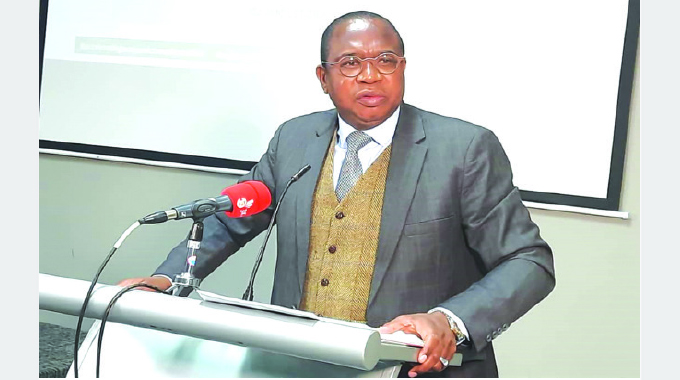
Elton Manguwo-Correspondent
THE agriculture industry is set to grow by a staggering four percent in the 2022/23 cropping season, thanks to the various support programmes the Government has introduced to boost the sector’s growth on the backdrop of a seasonal forecast of normal to above normal rains.
During his 2023 national Budget presentation, Finance and Economic Development Minister Professor Mthuli Ncube said the projected positive growth of the sector was anchored on the normal-to-above normal rainfall forecast and the restructuring and transformation of agriculture for viability and productivity.
“The various programmes and projects being undertaken by the Government seek to promote production and productivity, build resilience to climate shocks and transform agricultural activities into viable enterprises towards growth”, said Prof Ncube.
In addition to good rains, the envisaged growth and transformation is being anchored on Government-led programmes such as the National Enhanced Agriculture Productivity Scheme, Tobacco Transformation Plan and Presidential Cotton Scheme among others.
Prof Ncube added: “The growth of the sector through support for strategic crop production for this season is set to lay the foundation for the 8,2 percent and 7,9 percent projected growths in 2024 and 2025 respectively.”
Consequently, the Government allocated a US$154,6 million equivalent local currency guarantee to AFC Holdings to raise resources from the market in support of the agriculture sector through maize, soya beans, sunflower and traditional grains.
“Concurrently, the Government is capacitating CBZ Agro Yield to finance the 2022/23 summer cropping season through the payment of farmer commitments under the facility, which will be re-channelled towards financing the 2022/23 summer farming season,” added Prof Ncube.
To increase the business viability of the agriculture sector for growth the Government will issue 99-year leases based on farmer’s annual production and productivity returns in a move that will attract private sector financing to the sector.
“These interventions will be complimented by a review of the 99-year lease to improve its bankability features,” added Prof Ncube.
In line with the Government’s vision of rural development and industrialisation the Ministry is distributing inputs to 3,5 million households for this year’s Presidential input scheme Pfumvudza/Intwasa programming to ensure that small-scale farmers are both food secure and conforming to agro-business practices.
The Pfumvudza programme will be complemented by the National Enhanced Agriculture Productivity Scheme, which will address commercial production through easy access to funding.
Moreover, the Government through the policy of tying the private sector to fund 40 percent of its raw material needs has been able to support private sector contribution in primary production thereby empowering rural producers to produce that, which can be consumed by the industry.
Lands, Agriculture, Fisheries, Water and Rural Development Minister Dr Anxious Masuka chipped in saying the Government outcomes based interventions directly impacted the growth of the agriculture sector as causes, accelerators and multipliers.
“Climate-proofing agriculture is the genesis of taking farming as a business, as the country aims to develop the agriculture sector into an US$8,2 billion economy by 2025,” said Dr Masuka.



 Online Reporter