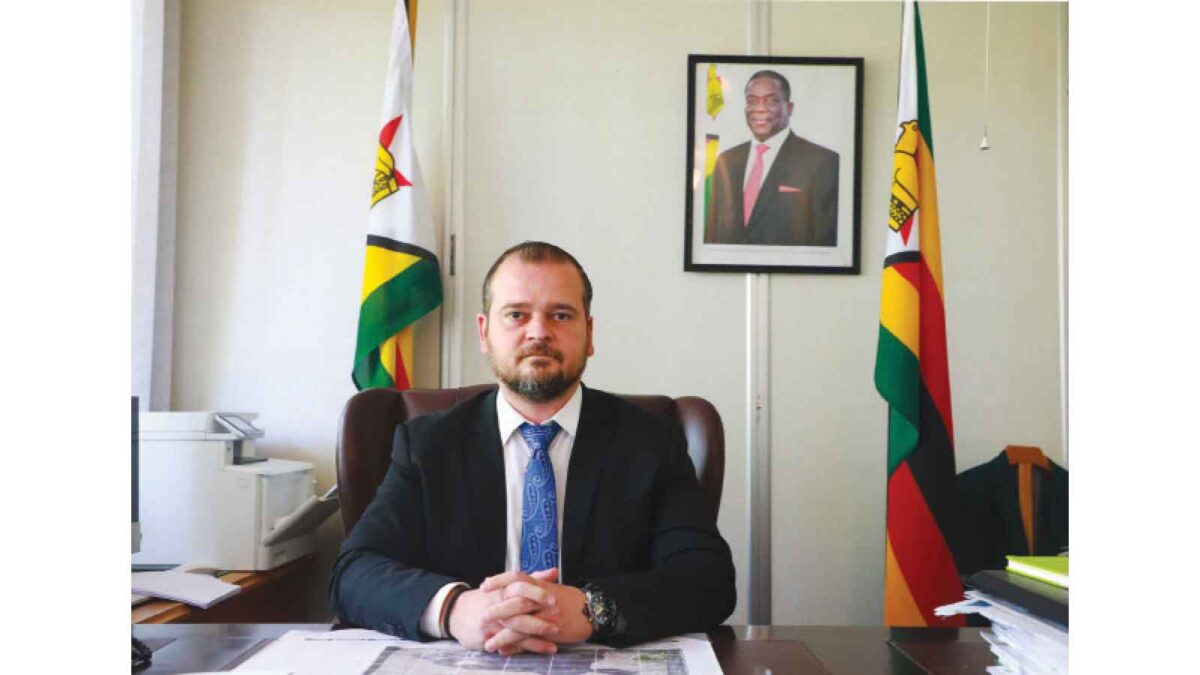
Theseus Mauruki Shambare in KADOMA
GOVERNMENT plans to set aside two million hectares of land to anchor a new rural development financing model through the Agricultural Finance Corporation Land Bank, aiming to unlock investment and accelerate rural industrialisation.
Established in April this year, the Ministry of Lands and Rural Development is mandated to oversee land administration and coordinate rural industrialisation programmes previously scattered across multiple ministries, departments and agencies.
Officially closing a five-day Strategic Planning Workshop in Kadoma under the theme; “Accelerating rural transformation through land”, Lands and Rural Development Minister Vangelis Haritatos said the initiative would strengthen institutional capacity and channel resources towards high-impact interventions.
He noted that Treasury had placed control of the rural development resource envelope under his ministry to streamline planning, monitoring and implementation.
“This is a significant vote of confidence in the ministry’s coordination role and an important milestone in the institutional development of our ministry,” Minister Haritatos said, adding that the arrangement demands strict accountability and efficiency.
He emphasised that rural transformation requires an integrated approach spanning infrastructure, production, enterprise creation, market expansion and human capital rather than isolated projects.
“The objective is not to replace existing efforts, but to strengthen collaboration, eliminate duplication, and maximise our impact,” he said.
Permanent Secretary Professor Prosper Matondi said the ministry intends to transform the AFC Land Bank into a full-fledged land and development bank to serve as the primary financing vehicle for rural growth.
“Our AFC Land Bank, which we strongly believe must be a land and development bank, must be able to anchor the two million hectares that we want to set aside,” Prof Matondi said.
He explained that the ministry will identify suitable land and structure mechanisms to place it within the financing facility, unlocking the economic value of local natural resources.
Prof Matondi added that the rural industrialisation drive will prioritise village business hubs, regional economic centres, equipment mobilisation and enterprise financing, alongside harnessing artificial intelligence and smart technologies to improve administration and create youth employment.
Concluding the workshop, Minister Haritatos said the ministry’s 2027–2030 strategic plan must serve as a practical delivery tool judged by tangible improvements in rural livelihoods.