Trust Freddy-Herald Correspondent
GOVERNMENT has launched the National Health Strategy 2026–2030, committing to increasing domestic health funding to 15 percent of total expenditure, creating 32 000 new health worker posts and connecting all health facilities to the internet by 2030.
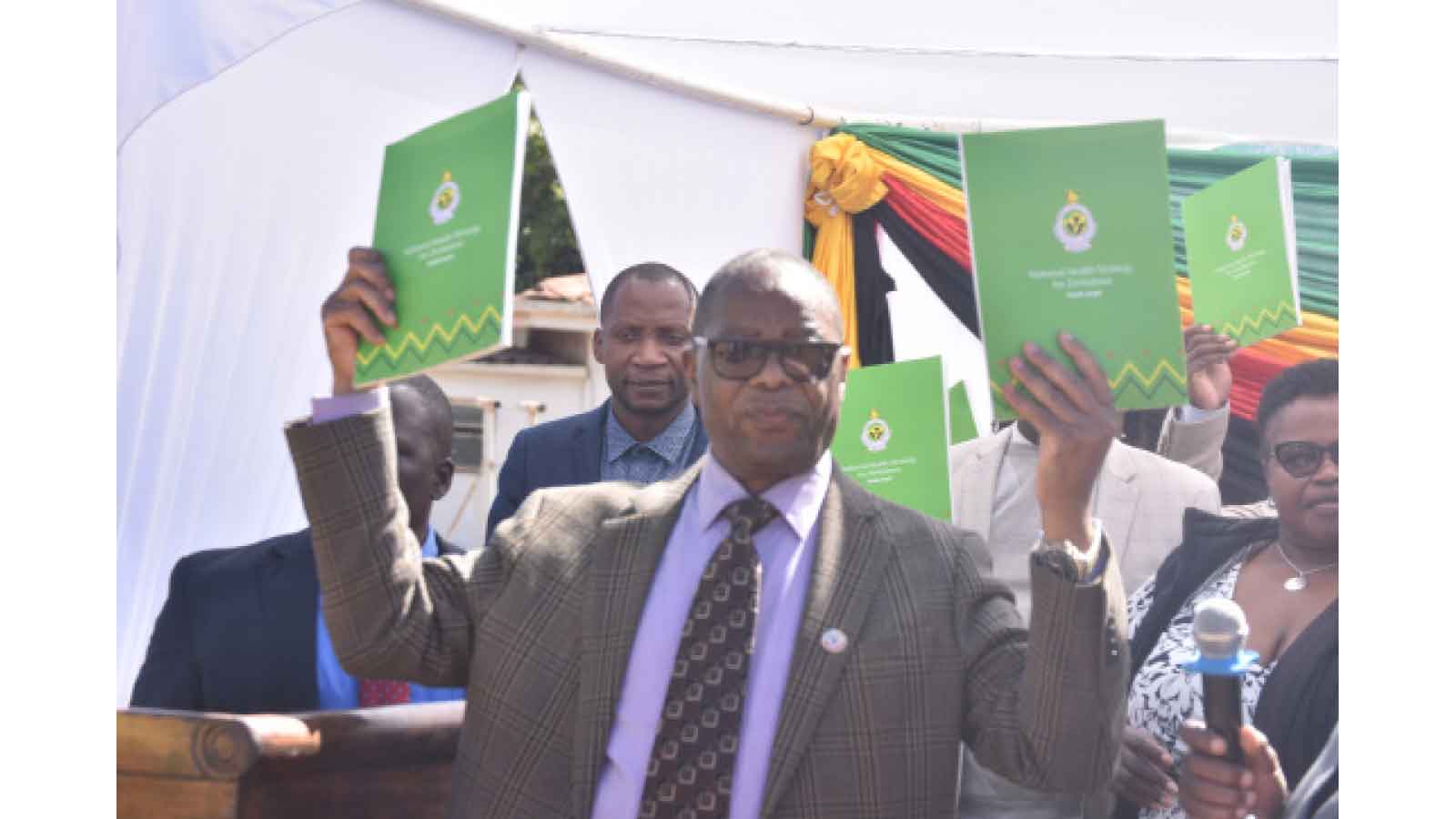
Health and Child Care Minister Dr Douglas Mombeshora unveiled the five-year roadmap yesterday at Norton Hospital, describing it as “a solemn commitment to the people of Zimbabwe” and a key instrument for achieving Vision 2030 and Universal Health Coverage.
“Today, we are not just launching a document. We are making a solemn commitment to the people of Zimbabwe,” Dr Mombeshora said. “This strategy represents a defining moment in our nation’s journey towards health and well-being, charting a transformative path that is both ambitious and, crucially, achievable.”
The event was also attended by the Minister of State for Provincial Affairs and Devolution for Mashonaland West, Marian Chombo, local legislators, councillors, heads of parastatals in the Ministry of Health and other senior Government officials.
Under the immediate digitalisation drive, Government intends to connect all remaining public healthcare facilities to the internet to rapidly expand the footprint of the Impilo Electronic Health Record system, which currently operates across 1 254 sites.
The move is aimed at eliminating manual paper-based tracking and significantly improving administrative accountability.
The strategy builds on gains recorded during the previous period.
The Minister noted that Zimbabwe has sustained the global 95-95-95 HIV targets, with 95,1 percent of people living with HIV knowing their status, 100 percent on treatment and 96,1 percent virally suppressed.
Maternal mortality dropped from 462 deaths per 100 000 live births in 2019 to an estimated 212 in 2024, while life expectancy rose to 65 years.
Infrastructure also expanded, with 200 new health facilities built between 2021 and 2025, bringing the total to 1 953.
However, Dr Mombeshora acknowledged that the public health system faced severe operational challenges, including high staff attrition rates and poor budget execution, with local clinics and hospitals currently receiving less than 50 percent of their allocated operational funds.
To address this, the strategy targets increasing domestic health expenditure to at least 15 percent of the total national budget, in line with the Abuja Declaration, while working to double the current medical workforce by 2030.
“Health financing remains a major constraint,” Dr Mombeshora said. “Heavy reliance on donor funding, which fluctuates, and high out-of-pocket payments by households, which stood at 27,8 percent in 2023, expose families to catastrophic health expenditures and impoverishment.”
To shield the system from external funding fluctuations, a new Health Financing Strategy is under development to guide the establishment of a National Healthcare Provision Programme.
The new roadmap inherits significant public health achievements alongside deep systemic deficits from the previous planning period.
On disease burden, the Minister said TB mortality among HIV-negative people had increased by 28 percent, while malaria deaths had spiked in some years.
HIV incidence remains high among adolescent girls and young women, with only 63 percent of children living with HIV aware of their status compared to 97 percent of adults.
To address these geographical disparities, Dr Mombeshora said his Ministry would enforce a strict public-sector accountability framework alongside infrastructure targets to ensure every district has a fully equipped hospital with reliable and independent water and power supplies.
“The era of planning without implementation is over,” Dr Mombeshora added. “Let us demonstrate collective accountability and unwavering dedication to improving the health and well-being of every Zimbabwean. With this National Health Strategy, we commit that a child born in Binga, a young woman in Epworth, a miner in Shurugwi and an elder in Bulawayo will all have a fair chance of living a healthy life.”
World Health Organisation (WHO) Country Representative Dr Desta Tiruneh said the strategy “affirms a shared national vision, a collective commitment and a bold roadmap for the future of health in Zimbabwe”.
“We are not simply launching a strategic document. We are affirming a shared national vision, ensuring that no one and no place is left behind,” Dr Tiruneh said.
He noted that WHO provided both technical and financial support during the development of the strategy, guided by the WHO Global Handbook on Strategising National Health Planning.
“This milestone reflects the determination of the Government and its partners to accelerate progress towards Universal Health Coverage and the SDGs,” he added.
Dr Tiruneh also said the true test would be implementation.
“The true value of any strategy lies not in the quality of the document itself, but in the tangible improvements it delivers in people’s lives. Success will be measured by healthier mothers and children, stronger disease prevention and control systems, and greater access to quality and affordable health services,” he said.