Online Reporter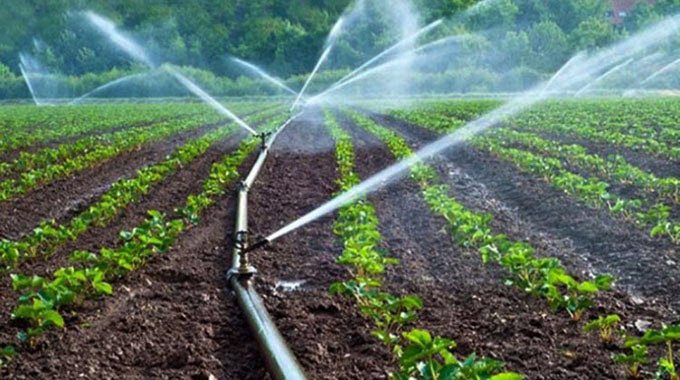
Theseus Mauruki Shambare and Precious Manomano
GOVERNMENT will expand land under irrigation by an additional 20 000 hectares as part of a broad package of climate adaptation measures aimed at safeguarding food production ahead of the forecast El Niño that will likely affect the 2026/27 summer cropping season.
International climate forecasting centres are predicting an 88 to 94 percent chance of the weather phenomenon developing this year.
Historically, El Niño has carried a 65 percent probability of below-normal rainfall in Zimbabwe. Permanent Secretary in the Ministry of Agriculture, Mechanisation and Water Resources Management Professor Obert Jiri said Government’s preparedness is anchored on 22 agricultural production enablers covering crop and livestock production, irrigation, mechanisation, financing, insurance, cloud seeding, as well as input supply and marketing.
Farmers are being encouraged to adopt short-season, drought-tolerant crop varieties and traditional grains suited to their agro-ecological regions.
“What works in Mashonaland may not necessarily work in Masvingo. Farmers must produce according to their agro-ecological zones,” he said.
Prof Jiri urged farmers to produce hay, conserve fodder and diversify livestock feeding systems while taking up agricultural insurance.
He also cautioned against assuming that El Niño automatically means drought.
“These weather patterns come and go. Even when there is a prediction of an El Niño, it doesn’t mean it will happen exactly as predicted — local weather variability will happen from place to place,” he said.
Agricultural Development Advisory Services (ADAS) chief director Mrs Medlinah Magwenzi last week said: “As I speak right now, we have already started executing some of these interventions. We are expanding irrigation facilities so that we have an extra 20 000 hectares under irrigation. We also want high-producing farmers located around reliable water sources to increase production so that we close any potential production gap.”
Government, Mrs Magwenzi said, was also accelerating the dissemination of early warning information to farming communities while ensuring agricultural inputs are procured on time.
“We have already started giving early warning messages to farmers right down to village level. What is important is not to panic but to plan early, execute early and work with the information that is being provided,” she said. She also said the growing threat of climate change, as manifested by the forecasted El Niño weather phenomenon, had reinforced the need to scale up climate-smart agriculture, including wider adoption of the Pfumvudza/Intwasa conservation farming model, expansion of irrigation and increased production of drought-tolerant traditional grains.
Farmers in Regions III, IV and V, she said, should prioritise traditional grains instead of maize, while those in higher rainfall areas should plant short-season maize varieties capable of maturing within shorter rainfall windows.
“We don’t expect to see farmers growing maize in Regions III, IV and V. We are encouraging agro-ecological production, where farmers grow crops best suited to their environments,” she said. Data compiled by Government shows Zimbabwe has experienced nine El Niño events since 1980, with their frequency increasing over the years. The data indicates that maize production has declined by an average of 51 percent during El Niño years, resulting in average farmer losses of about US$325 million.
During the 2023 El Niño season alone, maize output fell by 72 percent, with estimated losses exceeding US$607 million.
More than 44 700 cattle died during the 2023/24 El Niño drought, while the devastating 1991/92 drought resulted in the loss of over one million cattle nationwide. Mrs Magwenzi said Government was therefore integrating crop and livestock interventions by establishing fodder reserves, improving water availability at village business units and strengthening extension services across the country. She said farmer field schools, master farmer training programmes and drought mitigation centres would be used to accelerate farmer education, while communities would also be encouraged to harvest rainwater, conserve soil moisture and insure their crops and livestock against climate-related risks.
“We are communicating until everyone is on the same page. We want every household, every village and every district to be prepared so that, regardless of the season, Zimbabwe remains food secure,” she said.
While Zimbabwe has experienced El Niño seasons, it has often performed better than regional projections suggested.
During the 1996/97 and 2015/16 El Niño events, the country escaped some of the worst impacts experienced elsewhere in Southern Africa. Even during the severe 2023/24 regional drought, Zimbabwe’s agricultural losses were comparatively lower than those recorded in several neighbouring countries due to increased climate adaptation measures and improved preparedness.
This year, Zimbabwe harvested 2 824 110 tonnes of maize from more than 1,9 million hectares, allowing the country to build significant strategic grain reserves ahead of the next production season.
The bumper harvest is expected to provide an important food security buffer as Government intensifies preparations for the 2026/27 summer cropping season while awaiting the official seasonal forecast in August.