admin
admin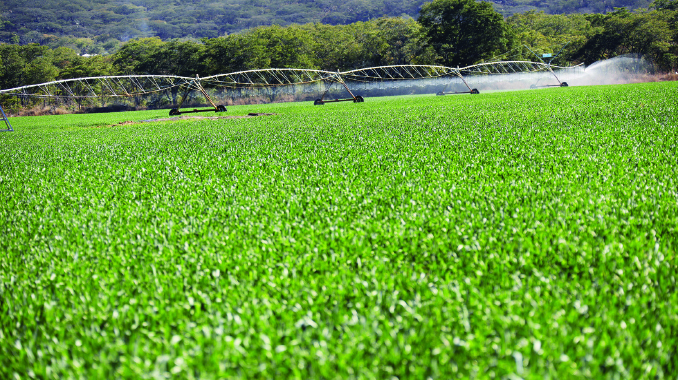
Thupeyo Muleya-Beitbridge Bureau
GOVERNMENT is targeting to put 700 hectares of land under winter wheat in Beitbridge during this year’s planting season as it moves towards boosting food security through increasing wheat supplies.
Ideally, wheat cultivation requires cool climate and medium rainfall and in some instances temperature needed for the production of this crop is 10 degrees to 15 degrees Celsius.
During the summer cropping season, wheat does well with temperatures ranging between 21 degrees to 26 degrees Celsius, experts say.
In Zimbabwe, wheat takes about 125-140 days to maturity depending on variety, altitude and weather conditions.
In an interview, Agriculture Extensions Services Officer for Beitbridge District, Mr Masauso Mawocha, said this year they started preparations early and were now waiting for inputs.
He said last year they planted 300 hectares mostly at major irrigation schemes both communal and Government-run.
“This year we are also embracing micro irrigation projects and these have offered an additional 400 hectares against our projected 300 hectares this year,” said Mr Mawocha.
“So, we have a total of 700 hectares ready, with the Agricultural and Rural Development Authority (ARDA) through major irrigation projects providing 300 hectares while the community through micro irrigation is offering 400 hectares.
“The whole idea is to carry along all those who are able to plant the wheat under irrigation-based farming and we are happy with the state of affairs on the ground.”
Mr Mawocha said community members should embrace Government projects that seek to improve their way of life from the grassroots level.
Major irrigation projects earmarked for the wheat production include Shashe, Khwalu, River Ranch and Tshikwalakwala, among others.
Smallholder farmers using mostly solar-powered irrigation systems around the Sita, Tshaswingo and Lesanth areas, among others, have also registered to take part in the winter wheat growing initiative.
“We are looking forward to a successful season this year, provided we have inputs on time. The usual planting time is between April and May and the farmers are ready,” said Mr Mawocha.
He said the hectares at most major irrigation projects were being determined by the availability of water and the farmers’ capacity to irrigate.



 Online Reporter