Trust Freddy
Herald Correspondent
GOVERNMENT and UN Women have challenged communities to break the silence surrounding gender-based violence, stressing that justice for survivors must move beyond awareness campaigns to concrete action, protection, and accountability.
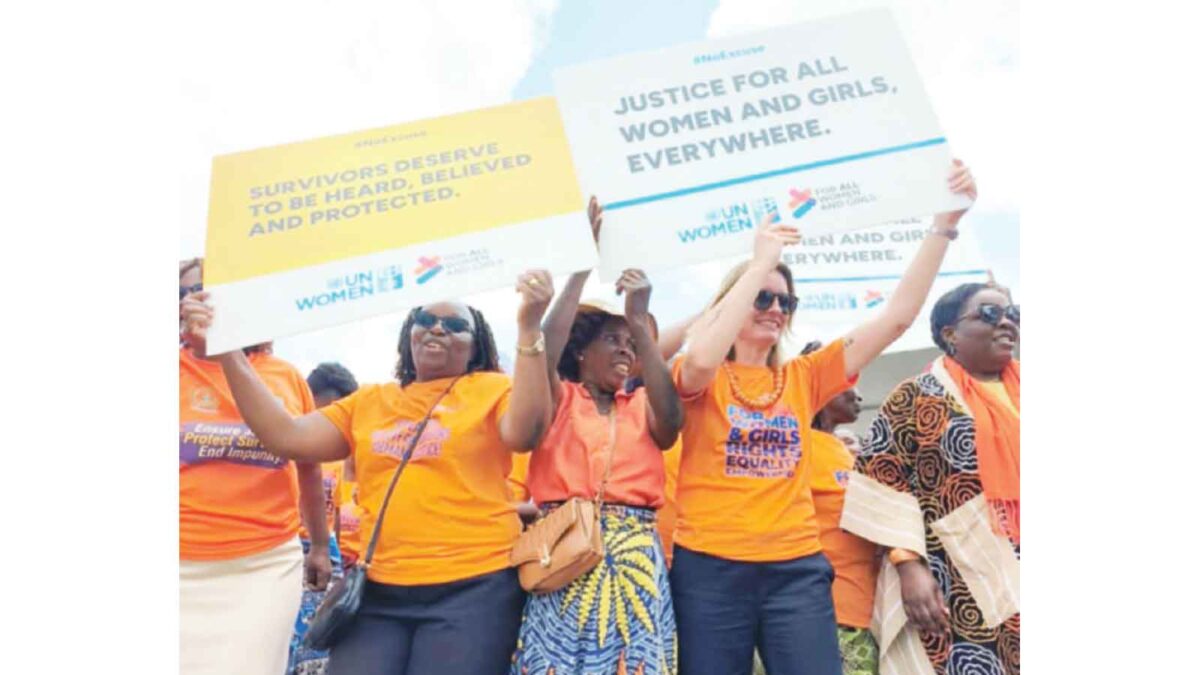
Hundreds of residents marched through Epworth on Friday to mark the 16 Days of Activism Against Gender-Based Violence, joined by officials from the Ministry of Women Affairs, Community, Small and Medium Enterprises Development, development partners, and civil society organisations.
Held under the global theme “Unite to End Violence against All Women and Girls: Ensure Justice, Protect Survivors, End Impunity”, the event underscored the need for community-wide solidarity.
Delivering remarks on behalf of Women Affairs, Community, Small and Medium Enterprises Development Minister Monica Mutsvangwa, the ministry’s Gender Director Ms Agnes Nhengo said Zimbabwe was sending an unmistakable message to perpetrators and communities alike.
“Today (Friday), as we march through Epworth, we are sending a clear message: Zimbabwe says no to violence, no to silence, and yes to equality and justice,” said Minister Mutsvangwa in her speech.
“The Ministry of Women Affairs remains committed to strengthening prevention, protection, response services, and accountability to ensure that no woman or girl is left behind.”
Minister Mutsvangwa emphasised that survivors must be met with compassion rather than stigma, while urging men and boys to actively champion the fight against abuse.
“Every survivor deserves to be heard, believed, protected, and supported. We must build communities where seeking help is met with compassion, not stigma,” she said.
“Men and boys are not spectators in this movement. They are critical partners and champions in creating a society free from violence. Let this march be more than a symbolic act.
“Let it be a call to action that inspires lasting change across Epworth, across Zimbabwe, and across generations.”
UN Women Country Representative Ms Louise Nylin said the march demonstrated that violence against women and girls is entirely preventable, noting that while abuse occurs across homes, workplaces, schools, and digital spaces, each statistic represents a disrupted life.
“We walked together through the streets of Epworth. We marched in solidarity. We marched for survivors,” she said. “We marched for justice. And above all, we marched because violence against women and girls is not inevitable. It is preventable.
“Yet behind every statistic is a woman whose sense of safety has been shattered. A girl whose dreams have been interrupted.”
Ms Nylin added that improving access to justice remains critical, pointing out that survivors still face barriers such as long distances to service centres, financial constraints, stigma, fear of retaliation, and victim-blaming social norms.
“Justice means that a survivor can report violence without fear. Justice means that protection services are available and accessible. Justice means that survivors are treated with dignity and respect. Justice means that perpetrators are held accountable,” she said.
To strengthen institutional response, UN Women this year provided the National Prosecuting Authority of Zimbabwe (NPAZ) with a dedicated server for its GBV Case Management System to improve case tracking and monitoring.
“When women and girls are denied justice, violence is allowed to continue. But when justice systems work, when communities speak out, and when institutions respond, lives are transformed,” Ms Nylin said, concluding with a direct message to survivors: “We see you. We hear you. We stand with you. Violence is never your fault.”