admin
adminGOVERNMENT has been urged to work on the exhumation and repatriation of the remains of Zimbabwean liberation war fighters buried in foreign countries.
Among some of the country’s notable liberation war fighters whose remains lie on foreign soil is a member of the Zimbabwe People’s Revolutionary Army (Zipra) High Command Cde Sotsha Ngwenya who was buried in Zambia.
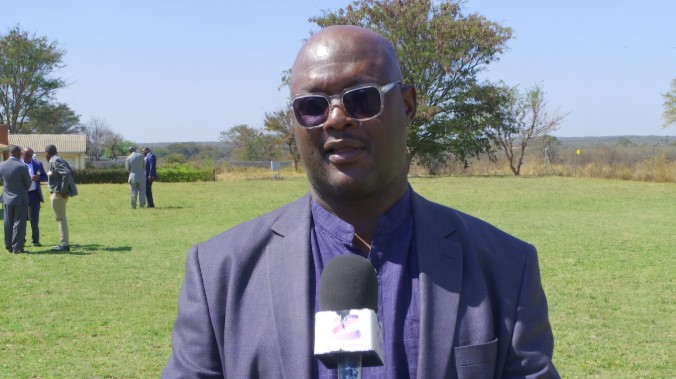
Speaking to Sunday News last week, national director of Mafela Trust, a Bulawayo-based NGO, Mr Zephaniah Nkomo said liberation war luminaries buried in neigbouring countries should be brought back to Zimbabwe for decent burials.
Mr Nkomo said burying the country’s liberation war fighters in their motherland would accord the fighters the honour they deserve for giving their lives for the liberation of the country.
He added that the gesture would also help relatives of the fighters find closure and heal from the loss of their loved ones.
“We have a number of our heroes who are lying outside the country. For example Sotsha Ngwenya’s remains are buried in Zambia. Our call is that those remains should be exhumed and repatriated to Zimbabwe for proper and decent burial befitting a liberation war fighter.
“We engaged Government departments over this issue about three or four years ago, but we have not seen much movement in that direction,” he said.
Cde Sotsha Ngwenya was the Zipra chief of operations.
Mr Nkomo said his organisation was also calling on Government to come up with a list of mass graves of liberation war fighters dotted around the country and in neighbouring countries, and declare the graves national monuments.
He said some of the mass graves were in a bad state and needed to be rehabilitated to accord those lying in them honour befitting the sacrifice they made for the country’s independence.
“We have mass graves of our colleagues. Some are in the country and some are in neighbouring countries where our fighters operated from. There are graves in Angola, Zambia, Mozambique and Tanzania. We also have mass graves in Tsholotsho, Hurungwe and other parts of the country. The outlook of some of these graves is not very pleasing.
“What we are urging Government to do is come up with a list of all these graves, spruce up the outlook and declare them national shrines. We would want to fully understand the processes involved in pronouncing these graves national shrines and we have been engaging Government over that,” he said.
Mr Nkomo also proposed that Government should come up with a roll of honour with names of liberation war fighters who died during the war, which will be displayed at the National Heroes Acre.
He said his organisation was compiling a register of the “war dead” which he said could be used in coming up with the proposed roll of honour.
National Museums and Monuments of Zimbabwe (NMMZ) executive director Dr Godfrey Mahachi said his organisation was willing to work with Mafela Trust on the proposals, urging the NGO to come forward and present its proposals.
He was, however, not in a position to say, off hand, how many liberation war fighters were buried outside the country, but said the proposal to exhume and repatriate their remains was welcome.
“If they have a specific request they should bring it forward and we take it up with the Ministry of Home Affairs. We have spoken with Mafela Trust before but I don’t think in recent times we have had much communication to the effect of what is being suggested.
“We encourage regular engagement with Mafela Trust, engagement that is necessary to work on a common agenda,” he said.
On the proposal to identify and rehabilitate mass graves and declare them national shrines, Dr Mahachi again encouraged Mafela Trust to provide Government with the information they have. He also acknowledged that NMMZ was assisted by Mafela Trust in identifying mass graves that are outside the country, which were rehabilitated last year.
“This is the information they must provide us to motivate processes. What we have done in the past is work on shrines that are outside the country which were identified by Mafela Trust. We expect the same for shrines that are within our borders.
“We are proposing that Mafela Trust comes to us and then we have physical inspection of the sites so that we come up with detailed reports of the places. Whenever they (Mafela Trust) are ready they can approach us and we will be more than happy to work with them,” he said.
Last year the National Museums and Monuments of Zimbabwe (NMMZ) embarked on a project to upgrade the country’s national liberation war monuments that are situated in neigbouring countries. Zimbabwe has more than eight liberation war monuments in Mozambique and Zambia, from where the country’s liberation war movements Zanla and Zipra organised the war to free the country from colonial rule.
There are also plans to reconstruct structures that were at Chimoio in Mozambique and Freedom Camp in Zambia, to turn them into museums which will tell how the country’s liberation war forces organised the war from those two centres.


 Online Reporter