Online Reporter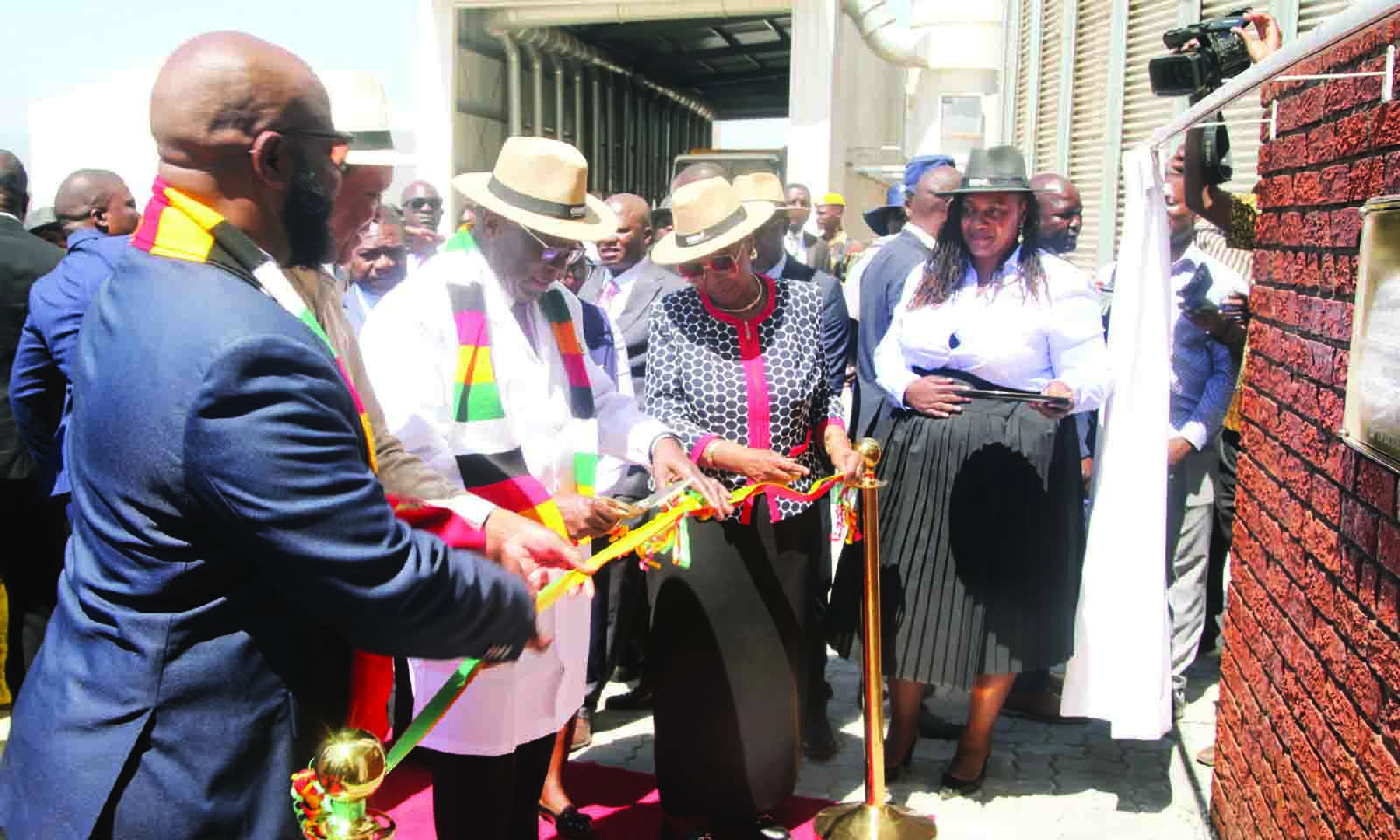
Samuel Kadungure
Mutare Bureau
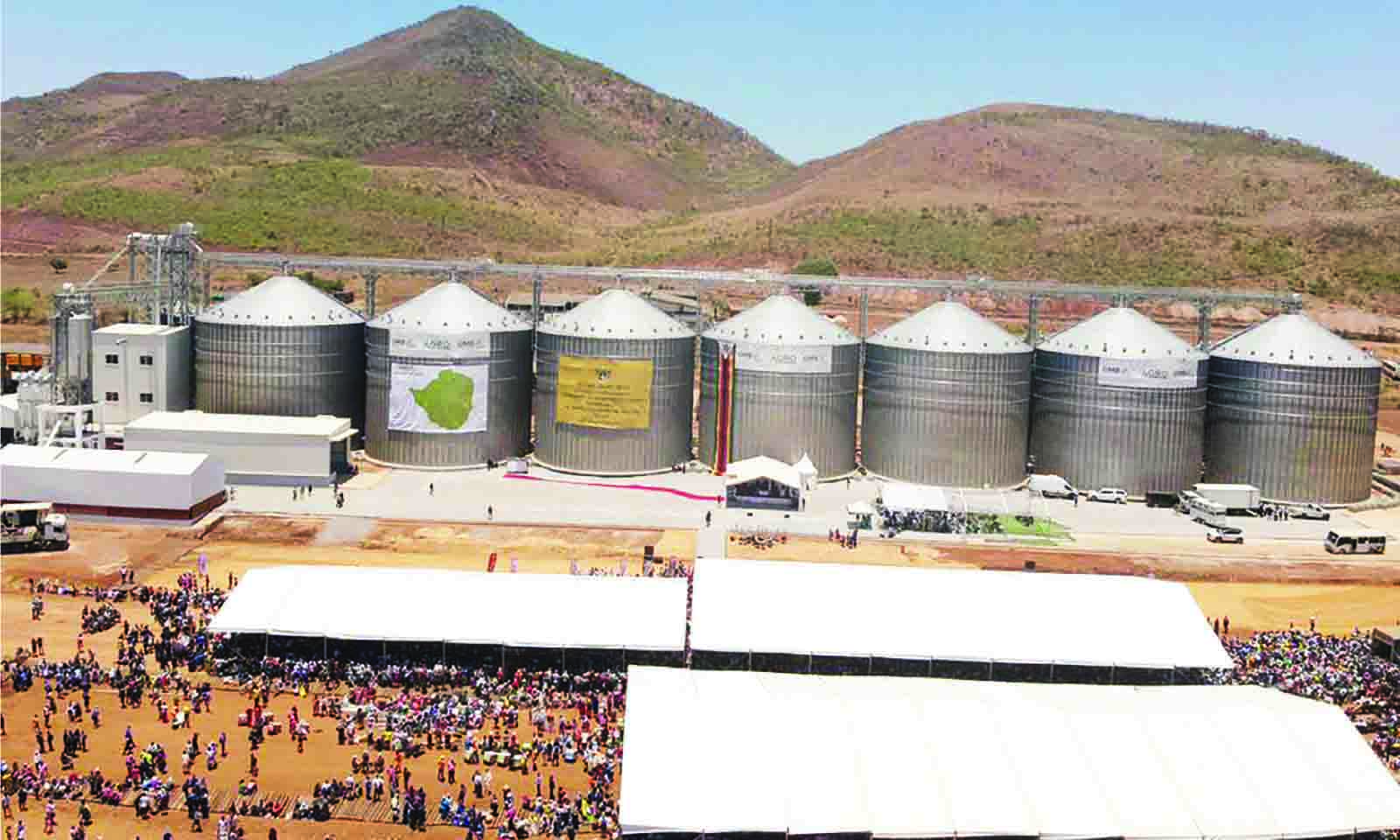
PRESIDENT Mnangagwa yesterday commissioned an Artificial Intelligence-powered Grain Marketing Board Silo Complex in Mutare, marking a pivotal milestone in the country’s pursuit of robust grain storage solutions and secure food supplies.
The newly-launched complex boasts a total capacity of 56 000 tonnes, ensuring that Zimbabweans have timely access to grain, particularly during periods of heightened vulnerability.
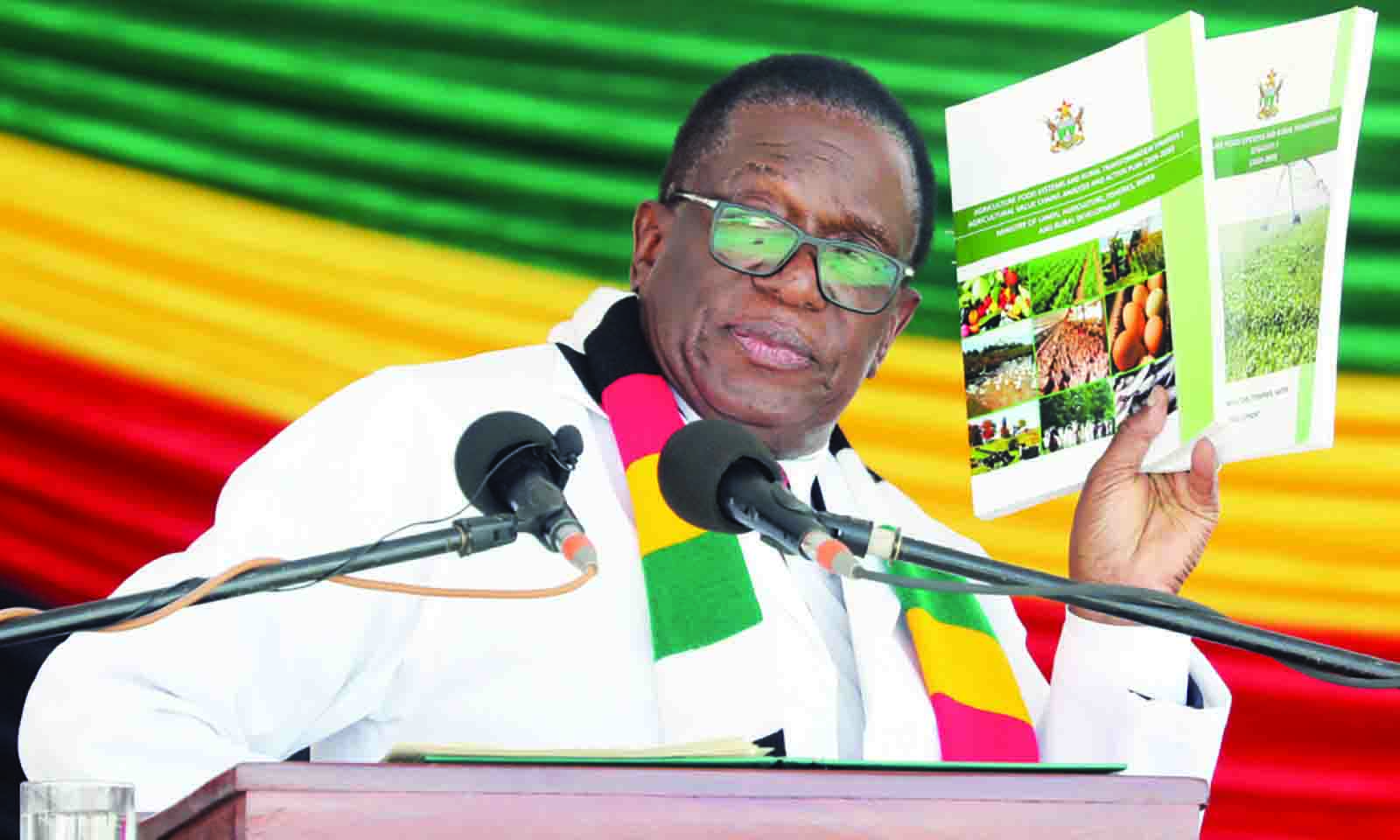
The President also unveiled the Agriculture, Food Systems and Rural Transformation Strategy 2 (2026-2030) — a comprehensive roadmap aimed at fortifying the sector’s resilience through climate-smart agriculture.
Aligned with the National Development Strategy (NDS2) and Vision 2030, the Agriculture, Food Systems and Rural Transformation Strategy 2 prioritises perennial food security, improved community nutrition and enhanced livelihoods through a holistic food systems approach to production.
This bolsters agriculture’s contribution to the country’s economic development and also steers the nation towards a more food-secure future.
“The impact of the Fourth Industrial Revolution towards reshaping industries, economic sectors and society as a whole cannot be overemphasised,” said President Mnangagwa.
“It is, therefore, pleasing that as we navigate this unavoidable new normal, our ministries, departments and agencies are harnessing the power of emerging technologies for the benefit of both current and future generations. To this end, these modern silos are equipped with digital monitoring systems, automated grain handling technologies and advanced quality control laboratories.”
He said such contemporary systems enhance grain storage efficiency, reduce post-harvest losses and ensure national food safety through improved risk monitoring and globally acclaimed management standards.
“It is further commendable that the new features, such as built-in dryers, dust and irrelevant material extraction, as well as improved ventilation, make these modern facilities suitable for longer-term storage of grain,” said President Mnangagwa.
He said the Mutare Silo Complex is one of the 14 new AI-powered silo sites being constructed by the Government towards increasing grain storage capacity by 750 000 tonnes.
“Under the philosophy of leaving no one and no place behind, my Administration continues to mainstream the Devolution and Decentralisation Agenda. This is designed to bring development, goods and services closer to the grassroots communities and ensure equitable distribution of resources and opportunities,” said President Mnangagwa.
“With regards to storage silo facilities, therefore, other sites are under construction in Masvingo, Rutenga, Marondera, Mhangura, Rafingora, Guruve, Mvurwi, Bindura, Gokwe, Lupane and Plumtree. Here in, Manicaland, another site, at Timber Mills (Headlands) is at an advanced stage of construction. The silo expansion project is set to expand storage space for all grain in our country, including surpluses for the strategic grain reserve.”
The President said increased grain storage capacity was part of strategic efforts by the Government to climate-proof national food and nutrition security. “Chirimai muzadze matura. Nzvimbo yekuchengeta zvirimwa zvenyu yavapo. It is pleasing and a source of pride that our national agriculture capabilities, logistical and storage capacity are having a positive impact on the overall economic development of our country. This is despite the challenges of the illegal, heinous economic sanctions and climate change-induced droughts,” he said.
President Mnangagwa said the World Food Programme has expressed readiness to collaborate with the Government in its quest to become a regional food production, storage and logistics hub. This, he said, would enable the country to play a key role in the seamless provision of the region’s food procurement and logistics needs, in line with international standards.
“In view of this development, my Government stands ready to facilitate the capacitation of the GMB to be able to efficiently manage complex storage and supply chains. This includes storing and distributing grain, inputs and other related items to destinations in real time, among other critical aspects.”
President Mnangagwa said the first phase of the Agriculture, Food Systems and Rural Transformation Strategy had delivered beyond expectations. “I am, therefore, pleased to be unveiling the Agriculture, Food Systems and Rural Transformation Strategy 2, for the period 2026 to 2030. The fact that emphasis is being put on building and consolidating the gains of our resilient agricultural sector is commendable,” he said.
“Agricultural production must now be assured, while national food sovereignty and improved nutrition should be enhanced for all communities, through the food systems and value chain approach.”
President Mnangagwa said the Agriculture, Food Systems and Rural Transformation Strategy 2, encompasses aspects that relate to an enabling policy, regulatory and coordination environment; sustainable production and productivity; research, innovation, technology and modernisation; climate adaptation, mitigation and resilience building; rural industrialisation and rural development; investment, finance and trade development; and infrastructure development, rehabilitation and management.
“These must anchor increased value creation for the sector and strengthen the intricate nexus between agricultural development, modernisation and industrialisation of the broader economy. It is my expectation that the valuable lessons learnt and experience gained from the first phase of the Agriculture, Food Systems and Rural Transformation Strategy will be brought on board to further improve our agriculture sector.
“These strategy papers should ultimately help scale-up agriculture production and productivity, as well as increased household incomes for a better quality of life of our people. I look forward to collaboration and synergies from stakeholders in the agriculture space, including farmers, the private sector and development partners, as we implement this strategy for shared benefits,” said President Mnangagwa.
In this spirit, I urge us to continue working with unity of purpose, to fully unlock and maximise the potential of the sector, riding on our God-given land and water resources, as well as the relatively good climate,” said President Mnangagwa.



 Bongani Ndlovu