Chronicle Editor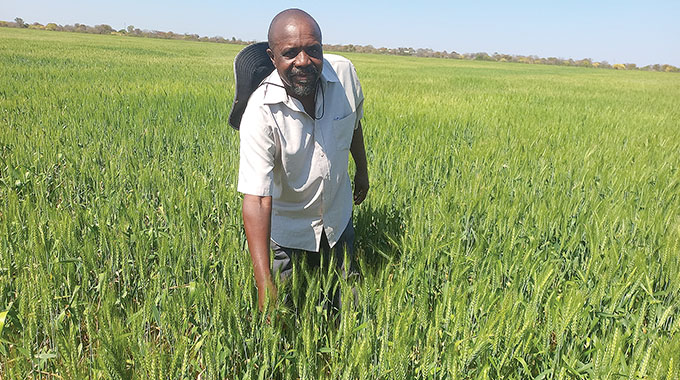
Sukulwenkosi Dube-Matutu, Matabeleland South Bureau Chief
THE country’s agriculture sector has recorded significant development post-independence.
Indigenous farmers have managed to maximise production in both crop and livestock production. The agricultural sector is the backbone of the economy and hence Government under the Second Republic has prioritised its revival.
Government, working with various partners, has rehabilitated irrigation schemes that had been lying idle in Matabeleland South Province and established new ones in order to improve food and nutrition security and ensure the attainment of Vision 2030. Some that were being underutilised have been capacitated and expanded.
Government is targeting to rehabilitate and develop 350 000 hectares of land by 2025 across the country to safeguard the country against the negative effects of climate change and ensure food security.
Government has also rolled out various agricultural schemes meant to transform subsistence agriculture at household level into commercial agriculture.
Furthermore, President Emmerson Mnangagwa under the agenda, “Zimbabwe is open for business” has given investors the green light to partner with local farmers to ensure enhanced production.
In 2021, President Mnangagwa launched the Presidential Livestock Scheme as part of efforts to grow the livestock sub sector. Under the scheme, farmers are receiving legume seeds, fertilisers and forage sorghum among other inputs.
The scheme falls under the Livestock Growth Plan, which is part of the Agriculture and Food Systems Transformation Strategy that is expected to turn agriculture into an US$8,2 billion industry by 2025 and contribute towards the achievement of Vision 2030.
In Matabeleland South, Mtshabezi Irrigation Scheme in Gwanda was last year established on a 200-hectare piece of land that had been idle. The irrigation scheme had remained a pipe dream for 87 years.
The irrigation scheme chairman, Mr Ndabezinhle Nyoni said the indigenous people now have access to huge tracts of land which they could only dream of owning during the colonial period.
“We now have 200 hectares of land where we can produce as a community. This piece of land will improve our livelihoods in a great way. It will also benefit generations to come. During the colonial period, black people were never owners of land but they were labourers of the white people who were owners of the land.
“Being independent has helped us gain ownership of our land. The land we got was developed by Government and we also received equipment and inputs free of charge. Our role is to work, maximise production and contribute towards the nation’s bread basket,” he said
Farmers operating at Artherstone Irrigation Scheme in Insiza District are running a lucrative enterprise of producing lucerne fodder plant which they are selling throughout the country.
The irrigation facility is one of the large-scale producers of fodder in Matabeleland South province. It has become a major source of fodder for livestock farmers.
Fodder production has been identified as one of the major ways to boost the national herd as it will help ensure that farmers have access to highly nutritive stockfeed at affordable costs.
A farmer at Artherstone Irrigation Scheme, Mr Zenzo Jele said their farming enterprise was a clear indication that indigenous farmers could transform the agricultural sector.
“At Artherstone Irrigation, we have taken a shift from the traditional farming where we produce maize and other common crops. We have successfully managed to produce lucerne which has brought relief to many farmers. Lucerne is a resilient perennial legume that is grown for grazing and hay forage in many countries around the world. It is high in protein which makes it ideal for stockfeed. It is planted once in seven years hence during the course of the time, we will be just harvesting it,” he said.
Mr Jele is one of five farmers who benefited from the land reform programme and were settled at Artherstone Farm, which has a total of 5 000 hectares of land. 800 hectares of the farm is for irrigation.
In 2019 an investor, CapeZim, approached the farmers and offered to assist with resources to ensure the land is fully utilised.
At Moza Irrigation Scheme, farmers in Gampu Village in Bulilima are producing paprika for export.
Under livestock production, Gwanda- based farmer Mr Thabani Sibanda who is one of the successful livestock farmers in the district has a herd of 400 cattle on his 800-hectare farm. He started building his herd in 2010.
“Having the portion of land has helped me to explore my interest in livestock farming. During the colonial era, black people were only confined to communal areas and they had limited land which made it difficult to expand their farming activities. Clearly, the case of the black people was that they were not given the opportunity to develop the agricultural sector and not that they couldn’t. Agricultural production is in our blood as our forefathers were farmers and they were producing remarkably,” he said.
Minister of State for Matabeleland South Provincial Affairs and Devolution, Cde Abednico Ncube said Government’s work to develop the agricultural sector has helped to unearth the full potential of indigenous farmers.
According to the Ministry of Lands, Agriculture, Fisheries, Water and Rural Resettlement, livestock is an important source of income for two thirds of rural households and contributes significantly to inclusive growth of the agriculture sector and the economy as well as food and nutrition security.
Plans are underway to earn significant foreign currency for the country through livestock. According to the Livestock Growth Plan, beef production is expected to grow from 50 000 tonnes to 90 000 tonnes per year. The transformation of the livestock sector through the Livestock Growth Plan is premised on improved animal nutrition and development of pastures. –@DubeMatutu



 Online Reporter