Chronicle Editor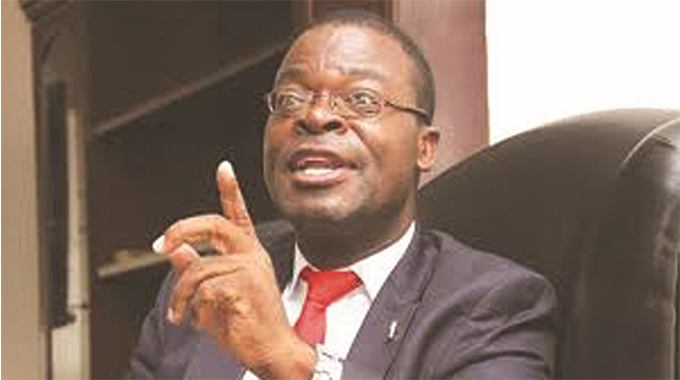
Nqobile Tshili, Chronicle Reporter
GOVERNMENT has given more academic freedom to polytechnic and teachers’ colleges in a bid to foster innovation and creativity within the institutions for them to contribute more towards modernisation and industrialisation of the country.
They will now be run by the Tertiary Education Council as opposed to the Public Service Commission whose regulations restrain academic freedom.
Higher and Tertiary Education, Innovation, Science and Technology Development Minister Professor Amon Murwira yesterday said by giving polytechnics and teachers’ colleges more room for creativity, Government is aiming to leverage free expression that comes with academic autonomy.
Government adopted Education 5.0 in 2018 whose thrust is to employ innovation and creativity to produce goods and services that solve national problems.
Universities have already started responding to national challenges through innovation.
Lupane State University is researching on dry land agriculture especially for the dry regions of Matabeleland while the National University of Science and Technology is expected to start producing polymerase chain reaction (PCR) test reagents which will see the country reducing imports.
All the universities are expected to respond to the country’s challenges in line with their national mandate.
Prof Murwira said the same is expected from the colleges hence Government’s decision to give them more academic freedom.
“We are now moving the polytechnics from the Public Service Commission as well as the teachers’ colleges to the Tertiary Education Council which was signed by His Excellency 21 May 2021 through the Manpower Planning and Development Act.
It tells that the colleges are going to have more functional freedom just like universities.
The difference was that all colleges were civil servants in the public service bound by Public Service Commission regulations rather than academic regulations,” said Prof Murwira.
“Instead of reporting to the PSC, they will report to the Tertiary Education Council just like universities report on academic matters to the University’s Councils. This will allow colleges to do their programmes, according to the general guidelines of Education 5.0.”
He said the colleges are expected to contribute more to national development.
“We are likely to get maximum out of them than constraining them with rules that have nothing to do with academic freedom. Academic freedom is confined to people that are in academia whereby they are allowed to think creatively without much circulars,” he said.
Prof Murwira said under the new system, Government will not be dictating how college lecturers are expected to teach as has been done in the past.
“We work on the governance and finances as Government but how teachers express themselves, how they teach their subjects it’s up to them so it fosters creativity.
If we have to have innovative and creativity for industrialisation, we have to let people think and give them space to think but within the parameters of regulation and the laws of the country.
So, this is a special attribute of universities which we are now giving to colleges,” he said.
“When we say autonomy, we are talking in academic terms.
When you want creativity to happen, you give regulations that enable people to think and be able to be creative.
It is an environment that His Excellency, the President, is creating that fosters innovation and creativity.”
Prof Murwira said academic freedom should however, be enjoyed within the dictates of the law.
He said the new policy direction will be supported by the construction of more colleges.
“We are building our teachers’ college for the first time in Hwange which is already having students in their third year, the first intake.
We are going to build infrastructure there.
We are going to build an industrial training college in Binga and we are also going to start another industrial training college in Plumtree and we have already started another industrial training college in Chivi,” he said.
“So, we are really busy and with focus we will do much more in terms of modernisation and industrialisation agenda.” — @nqotshili


 Online Reporter