admin
admin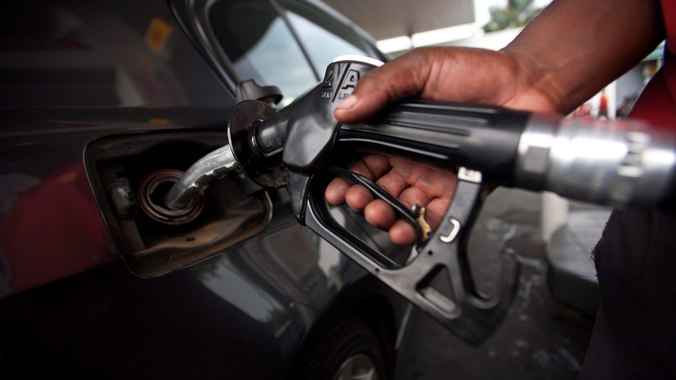
Nick Mangwana View From the Diaspora
It is a sad status quo when the national acquisitive streak knows no bounds and everywhere: when we just look at the person next to us, if they are rich, they want to be richer by taking from the poor.
The price of crude oil has been falling for the last few months.
This has led to the plummeting of fuel prices in Europe and elsewhere.
In Europe the price fell from an average of US$1,99 to US$1,66 per litre, the bulk of which are taxes; the lowest it has been in four years.
South Africa, Zimbabwe’s neighbour followed suit. Fuel prices fell by over R1.
These price cuts brought a lot of relief to the consumer, especially the deprived and vulnerable groups.
Unsurprisingly, there are a few countries whose business communities did not drop prices in response to this international windfall.
Zimbabwe is one such country.
Government has now been forced to ask fuel retailers in Zimbabwe to cut down their price by an arbitrary figure of 20 percent within two weeks.
While this is a laudable intervention to curb greed it should not have happened that way had Zimbabwean businesses not shown a rapacious desire to accumulate wealth at the expense of the struggling public.
Fuel prices affect everything in the economy from food, transport to tourism and being a landlocked country makes it even more pressing for Zimbabwe.
When the price of fuel drops then prices of other commodities should also drop.
The downside to all this is that there was no need for the situation to get to a point where the Government had to intervene in the market.
The last time when the profiteering reached avaricious scales the country ended up with the National Incomes and Pricing Commission and we all know what happened: arbitrary prices with no correlation to cost of production or cost of procurement, shortages and then of course a black market spiralling out of control.
One shudders at the mere thought of that happening again.
That time the intention was noble and the Government’s hand had been forced by cartels masquerading as business persons.
The current intervention by the Government while very welcome should not be viewed through rose-tinted glasses.
One hopes that this is the last time it should ever happen but, of course, we have to restrain destructive greed based on vain selfish desires of the cartels in the fuel industries and many other sectors of our society.
The greed and pervasive selfishness among Zimbabweans does not start and end with these quick-profit racketeers.
It’s pervading every stratum of our communities including the stewards and custodians of our culture, the chiefs and headmen.
These are the people that are meant to hold the composite fabric of our being (hunhu/ubuntu) together and should be loved and respected.
However, some of them end up being disappointingly profligate and greedy making demands, at local and fiscal levels that are unbelievable.
Reports of revered chiefs demanding cars, iPads, farms, and very high salaries are iniquitous.
How does an iPad help them hold our culture together? How about a farm which is likely to be miles away from the community they lead? Isn’t a chief supposed to live and be embedded in the people he leads?
If he lives at a remotely located farm and appears only when needed or starts holding surgeries for access by the community, does that not defeat their whole raison d’etre?
This is by no means picking on chiefs: the culture of selfishness is debasing our value system as a nation.
Greed also knows no political affiliation.
There may be so much polarisation and acrimony in the august National Assembly but if one wants harmony and unity of purpose, one should just broach the subject of MPs’ perks!
The MPs all rally and immediately attain consensus that they should be paid more, be given this that or the other.
At the top of it, are always cars! What is it with us Zimbabweans and cars?
A council borrows money from China for water reticulation but officials divert it to buy cars for the executives.
Someone borrows money from the bank for a business or even for working capital and some of it has to buy a car.
Recently there was a public outcry when it was reported that the Government had imported cars from South Africa for some of its officials and, of course, its MPs.
Zimbabweans have to accept that not every car purchase is wastage.
National security is an unquantifiable qualitative function, so to question why members would need cars to en- able mobility and function is to miss the point.
The point, however, is about buying from Willowvale Mazda Motor Industries. The point is if you buy Zimbabwe you will have a multiplier effect in the economy.
It will have a big trickledown effect and kick-start us from the economy malaise we all cry about.
At least some jobs will be created. In fact, a lot of them!
Something has gone wrong somewhere.
Those old enough may remember that locally made vehicles were the natural choice for the civil service, but not these days of the obsession with expensive imports.
If we are selfless, patriotic enough and serving national interests then one would think that there would be no better evidence of our fervid spirit for national progress than our national institutions buying the products of our own industries.
One of the basic duties of a patriot is to pay their taxes.
When American politicians are campaigning for power, this is one of the most contested grounds. How much taxes one pays or one has paid over the years is key question they have to answer.
The same applies to the British.
This is a very important issue because the person you want to represent you in national institutions should be a patriot.
One of the key duties of our Members of Parliament is to debate the National Budget.
This comprises how as the nation we are going to spend the monies collected from the taxpayers.
Is it such a big thing to ask everyone who is going to discuss how to divide the national cake to be a contributor to the ingredients of that cake as well? How much taxes are MPs paying?
There conceivably will never be legislation to deal with this because MPs will all rally and agree to block it because it is not in their best interests.
It is a sad status quo when the national acquisitive streak knows no bounds and everywhere: when we just look at the person next to us, if they are rich, they want to be richer by taking from the poor.
A person with a hundred wants to deprive those with one to fulfil their unholy voracity.
Zimbabweans should value the welfare of the next person.
That is the spirit of ubuntu/hunhu. Every Zimbabwean matters or nobody matters at all.


 Online Reporter