Sekai Manyere
Herald Reporter
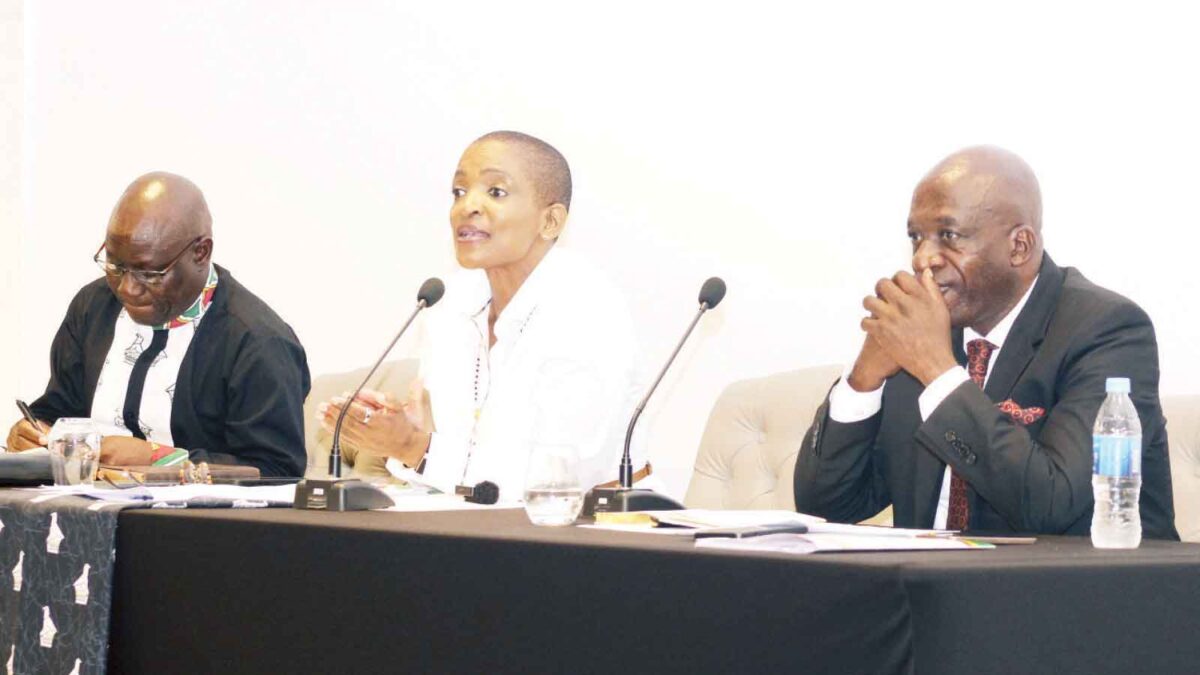
Government has officially launched its National Committee for the United Nations International Year of Sustainable and Resilient Tourism 2027, marking a major milestone in the country’s preparations for the global observance.
Unveiled yesterday in line with a UN Tourism directive for member States to establish national co-ordination bodies, the committee will spearhead activities focused on climate change and community empowerment.
Speaking at the launch, Tourism and Hospitality Industry Minister Barbara Rwodzi said the two pillars were central to building sustainable tourism, adding that Zimbabwe was well positioned following recent legislative reforms, including the amendment of the Tourism Act.
She said the 2027 programme aligns with President Mnangagwa’s vision of attaining an upper middle-income economy by 2030 and the National Development Strategy 2 (NDS2), which emphasises leaving no one and no place behind.
“These communities are the custodians of what we call tourism in every country, whether tourism is anchored on heritage, museums or any other attraction that we showcase,” she said.
“Programmes and projects in 2027 that speak to sustainability and resilience in tourism must focus on climate change issues and communities.
“Do not forget that, because that is the foundation for us to achieve an upper middle-income economy,” said Minister Rwodzi.
She explained that the amended Tourism Act promotes green infrastructure across hospitality, accommodation and food services, including solar water-heating systems, restaurant waste management, energy conservation and water provision for wildlife, in collaboration with the Environment and Agriculture ministries.
Recognising that green transitions require capital and time, Minister Rwodzi said Government would engage Treasury and financial institutions on a dedicated operator fund, alongside phased compliance timelines running up to 2030.
She commended First Lady Dr Auxillia Mnangagwa, patron of the Ministry of Tourism and Hospitality Industry, for pioneering gastronomy tourism, community tree-planting initiatives and grassroots empowerment programmes since 2019.
Minister Rwodzi added that Zimbabwe was recognised in London last week as a global leader in community-driven tourism for empowering local communities rather than merely purchasing their products.
“Now operators must empower communities by giving them seeds and fertiliser to produce what they want to be consumed,” she said.
Citing Great Zimbabwe as a model, she urged hospitality facilities to partner local business units and the Ministry of Lands, Agriculture, Fisheries, Water and Rural Development in establishing commercial nutritional gardens and buying back the produce.
“That symbol now must be producing nutritional gardens. Those nutritional gardens must not just be for consumption, but they should also be commercialised,” said Minister Rwodzi.
She stressed that tourism success should be measured not merely by visitor arrivals, but by tourist expenditure, contribution to Gross Domestic Product (GDP) and tangible benefits accruing to communities.
“Zimbabwe’s tourism success is not measured by the number of arrivals alone.
“What is important are two things: first, the spending of visitors when they arrive, and second, the impact that tourism’s contribution to GDP has on our communities.
“Last year, tourism contributed 10 percent to GDP, but what that contribution has done for our communities is the true measure of success,” she said.
Minister Rwodzi challenged the committee to deliver tangible pilot projects, including green water-heating installations, by the end of 2027.
“So, when we speak about water-heating systems, by the end of next year, committee members, we must have pilot projects,” she said, urging members to ensure tourism delivers lasting transformation by 2030.