Online Reporter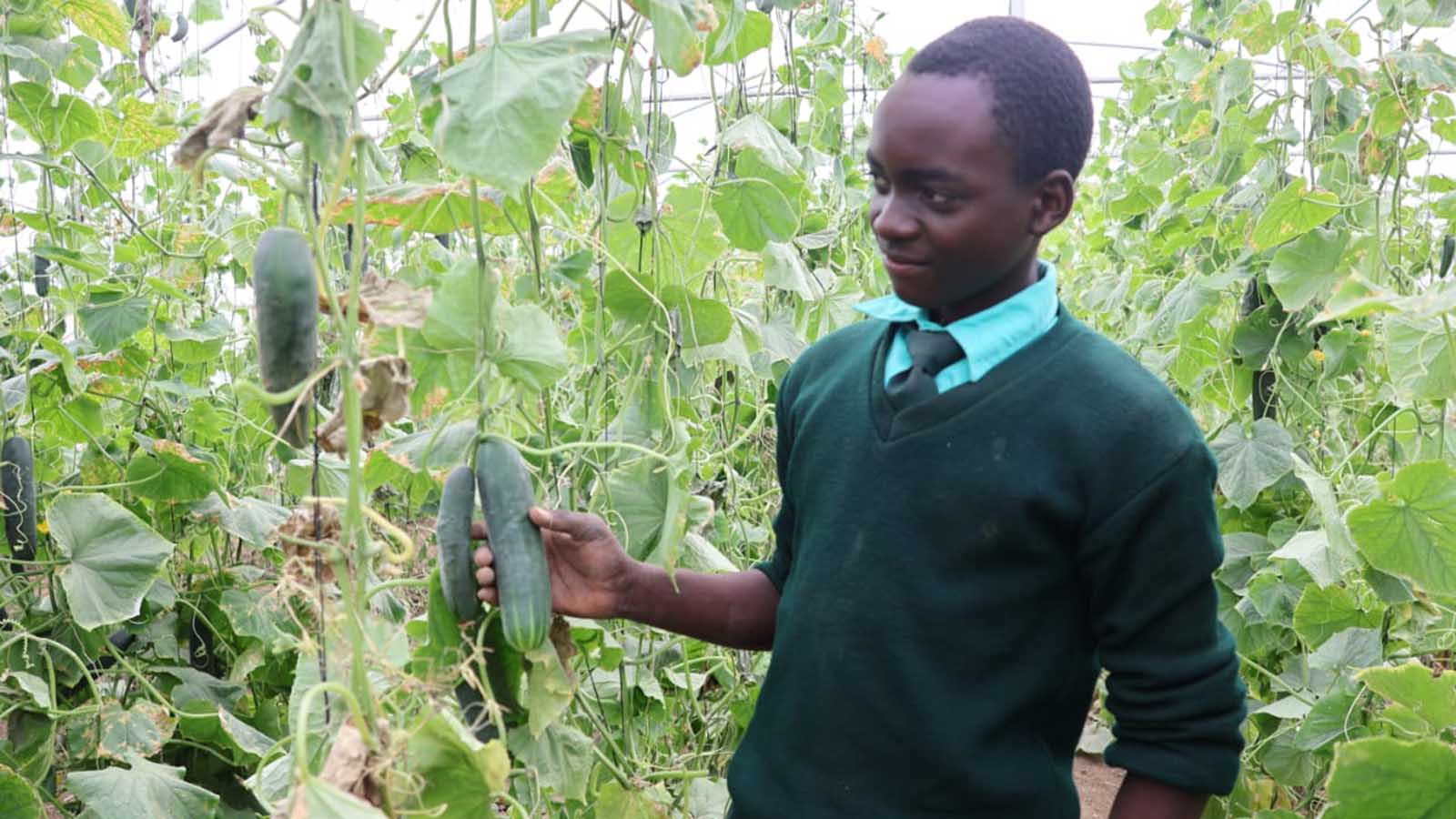
Theseus Shambare in MADZIVA
A GREENHOUSE horticulture project at Mutumba Primary School in Madziva, Shamva District, is generating more than US$2 500 per production cycle and directly funding school fees for vulnerable learners, in a development aimed at strengthening education support systems through school-based income generation.
The US$12 000 greenhouse, established under an initiative by SOS Children’s Villages, is producing tomatoes and cucumbers for local markets, with proceeds channelled towards supporting underprivileged learners at the school.
School authorities say tomato production alone generates over US$2 000 per cycle, while cucumber harvests contribute at least US$500 per cycle, creating a steady income stream that is now sustaining 45 vulnerable learners.
The income is being used primarily to pay school fees and support other education-related needs, reducing the risk of school dropouts among children from disadvantaged households.
Mutumba Primary School teacher Christopher Dzapasi said the greenhouse had evolved into a structured income-generating model that is directly impacting learners’ access to education.
“What we are seeing is a project that goes beyond food production. It is now a reliable support system that is keeping vulnerable learners in school through self-generated income,” he said.
He said the greenhouse was also enhancing practical agricultural learning, as learners are exposed to modern farming techniques linked to irrigation and commercial production.
SOS Programme Coordinator for Shamva District, Mr Malven Manyeza, said the greenhouse model was designed to promote sustainability and reduce dependency on external funding.
“The idea is to ensure schools are not just beneficiaries of aid, but active producers of income that directly supports vulnerable children,” he said.
He said the project also equips learners with practical agribusiness skills that can be applied beyond the classroom, contributing to long-term resilience.
Shamva District Development Coordinator Mr Clever Machekera said the greenhouse initiative reflects a broader shift in development programming towards sustainability and community-led solutions.
He said such interventions were particularly important in mining-affected districts where social vulnerabilities such as school dropouts and child neglect remain a concern.
“Across the 29 districts, development partners are increasingly focusing on sustainable models that address vulnerabilities in a lasting way, especially in communities affected by mining activities,” he said.
He added that school-based income-generating projects were helping to reduce dependency while strengthening access to education for vulnerable children.
“This greenhouse is a practical example of how schools can become centres of economic empowerment while ensuring children remain in education,” he said.
Learners at the school say the greenhouse is also providing hands-on experience in agriculture, linking classroom learning with real production systems.
“We are learning how to grow tomatoes and cucumbers, and how farming can also help support our education,” said learner Wayne Chambati.
The greenhouse project is part of wider efforts to strengthen school resilience and improve access to education for vulnerable children through sustainable, income-generating initiatives.