Wenslus Murape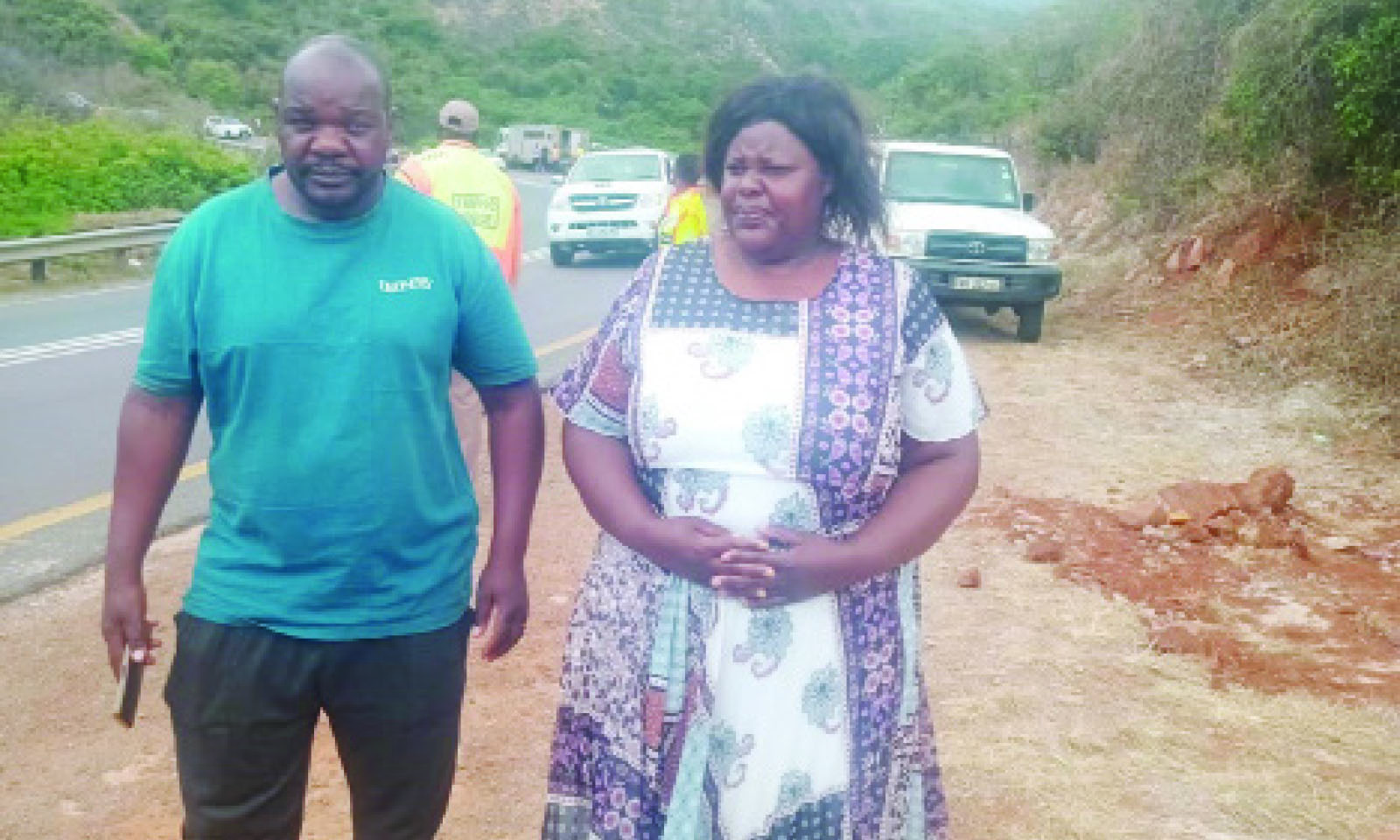
Thupeyo Muleya in MAKHADO, South Africa
IN the aftermath of the horrific bus crash that claimed 43 lives near Makhado in South Africa’s Limpopo province, grief-stricken families from Zimbabwe and Malawi have been scouring hospitals and mortuaries in search of their loved ones.
The tragedy, which unfolded on Sunday last week, has once again cast a dark shadow over the mountainous stretch of the N1 highway — a notorious accident hotspot near Ingwe Lodge, just outside Makhado town.
The ill-fated bus, which was travelling from Port Elizabeth (Gqeberha) to Harare and Malawi, plunged into a cliff after the driver reportedly lost control along a series of sharp curves.
Among the 43 dead were children, while 40 others miraculously survived with varying degrees of injury.
Witnesses described the scene as “unimaginable” and “horrific”, with emergency workers battling through the night to rescue survivors and recover bodies.
When the bus veered off the road and tumbled down the cliff, the air was pierced by screams.
Survivors remember the sound of twisting metal, shattering glass and blood-curdling desperate cries.
Within minutes, the once-bustling highway was transformed into a scene of unspeakable horror — the twisted wreckage illuminated by flashing red and blue emergency lights, the smell of diesel and blood mingling in the cold mountain air.
A Malawian survivor, Mr Willard Suwedi, said he blacked out as the bus veered off the road and only regained consciousness in hospital.
“Along the way, the driver had been speeding, and we advised him to slow down, but he didn’t seem to care,” he said.
“I blacked out when the bus went down the cliff.
“The next thing I woke up with bandages in hospital.
“I thank God I am alive, though I am at a loss for words after losing so many of my countrymen.
“I am also grateful to our government for the assistance they have rendered during this dark period.”
President Mnangagwa declared the accident a State of Disaster, paving the way for Government to provide assistance for burial of the deceased and payment of hospital bills for the hospitalised victims.
Another survivor, Ms Modester Toendepi, who is still admitted at Elim Hospital, described the experience as deeply traumatic.
Ms Toendepi said when she regained consciousness, she saw a lot of people covered in blood and was told by medical staff that she had been involved in a road accident.
“My biggest worry was the state of my baby, who is one-and-a-half years old,” she said.
“I later got confirmation from our embassy staff that he is alive and in hospital.
“I don’t remember much besides seeing the bus drift down the cliff and I blacked out.”
A South African rescue worker, who requested anonymity, said the scene was the worst he had witnessed in his career.
“That was a devastating scene. I hope the grieving families will find closure soon. I have never seen such a horrific scene in my working life.”
For relatives, the days that followed were an endless nightmare.
Dozens descended on hospitals and mortuaries across Limpopo — Polokwane, Siloam, Elim, Tshilidzini and Makhado — clutching photographs and clinging to hope.
Mrs Cynthia Razawo from Harare said she spent three days searching for her deceased aunt, Mrs Annie Gukutikwa, without success.
Their relative who suffered head injuries during the accident could only be identified after they got her last picture with a new hairstyle from her daughter-in-law based in Harare.
“The situation was terrible,” she said.
“On day three, we found the police at the accident scene searching for any outstanding bodies using sniffer dogs.
“There were scores of people there trying to find closure.
“Up to now I am still traumatised after seeing photographs of most of the bodies, some of which were in bad shape in the aftermath of the incident.”
Another relative who lost her cousin said she was heartbroken to see injured victims denied treatment because hospitals were demanding cash upfront.
“Things got better when Malawi, Zimbabwe embassy officials and those from the Ministry of Transport arrived. It was hell. I want to thank the three governments for such good coordination which saw most of our people getting help,” she said.
Ms Sibongile Dube, a Zimbabwean based in Polokwane, was among the first people to arrive at the crash site.
“People were screaming down the cliff and one thing I would like to say is to extend my sincere appreciation to the South African rapid response team; they were equal to the task, otherwise the whole lot of passengers would have perished.
“Some travellers also helped to go down to assist with taking out people from the bus.”
At the scene, helicopters whirled above, airlifting the critically injured from the ravine.
Mr Gift Sithole from Beitbridge said he was so overwhelmed he broke down in his car.
He described the wreckage as “horrific”.
“I got out of my car intending to help, I failed to hold back my tears; the police and the rescue team wouldn’t allow ordinary people on the scene.
“In a state of shock, I spent nearly three hours in my car devastated until I was advised to drive off by the police along with other motorists,” said Mr Sithole.
Bus operator DNC Coaches’ operating supervisor Mr Oliver Govha said the company was offering full support to the bereaved families.
“We will be visiting all grieving families before and after burial to provide assistance. We are also helping Malawian passengers who have been discharged from hospital with transport back home,” he said.
The Makhado crash has reignited calls for the authorities to take stronger measures to address the recurring accidents along this treacherous stretch of the N1.
For now, families continue to grieve, united by loss and by the haunting memory of a journey that ended in tragedy.
‘Speeding, faulty brakes caused deadly Limpopo crash’
Sunday Mail Reporter
A DEADLY combination of speeding, overloading and faulty brakes caused the Limpopo bus crash that claimed 43 lives on the N1 highway in South Africa last Sunday, preliminary investigations by the South African Department of Transport have confirmed.
According to the report, the bus driver was travelling too fast for the conditions while descending a mountain pass, despite knowing the vehicle’s braking system was severely defective.
Mechanical examinations later confirmed that only five of the 10 brakes on the bus and trailer were working at the time of the accident.
“A major contributing factor to the cause of the bus crash was the driver of the bus who drove at a speed too high for the conditions down the mountain pass,” reads the report.
“During the mechanical investigation, it was also established that the bus and trailer only had five out of the 10 brakes in operational condition and that one brake on the bus had no braking ability.
“It was established that out of the five brakes on the bus one was not in an operational condition.
“None of the four brakes on the trailer had been in any operational condition.”
The suspension on the trailer was also found to be poorly repaired, rendering both the bus and trailer unroadworthy.
The bus, which was en route from Port Elizabeth in the Eastern Cape to Harare, was also overloaded, carrying 91 passengers despite having a seating capacity of only 62.
Among the passengers were 11 children aged between three and five, as well as travellers from Malawi, Congo and Zimbabwe.
The trailer was heavily loaded with baggage and personal belongings, adding to the strain on the vehicle.
“There were 11 children between the ages of three to five years old, and if Regulation 231 of the National Road Traffic Regulation 2000 is applied, then two children between the ages of three to six years old shall be counted as one person.
“This implies that at the time, the vehicle was overloaded by 23 persons.
“It has been established that the trailer attached to this bus was loaded with baggage and personal belongings,” the report continues.
The crash resulted in 43 fatalities, while 34 passengers were seriously injured and six others sustained minor injuries.
Eight survivors reportedly left the crash scene without receiving medical attention or being recorded by first responders.
Investigators ruled out weather conditions and road surface as contributing factors, noting that visibility was clear at the time of the crash and that the N1 roadway and signage were in good condition.
“The weather conditions at the time of the road crash were daylight and clear with good visibility and is not considered a cause and/or contributory factor to this road crash.
“The road surface along the N1 before and after the crash scene was noted as being in good condition and therefore not considered a cause and/or contributory factor to this road crash.
“The road markings on the N1 are in good condition and have good reflectivity and are not considered a cause and/or contributory factor to this road crash.”
“There is sufficient signage along the roadway on approach to the downhill to warn drivers to prepare to negotiate the roadway.”
The Department of Transport said the findings highlighted the need for stricter vehicle inspections, especially for foreign-registered buses entering South Africa.
The department also recommended that the Road Traffic Management Corporation and its provincial counterparts intensify enforcement targeting heavy vehicles that ignore warning signs and fail to reduce speed on steep downhill stretches.
It also called for regular checks on vehicle loads to prevent overloading, which worsens crash risks and increases casualties in accidents.
Mass physical identification of accident victims begins tomorrow
THE identification of the 43 victims — among them Zimbabweans and Malawians — who died in Sunday’s horrific bus accident in South Africa is set to begin tomorrow morning at Siloam Hospital in Limpopo province.
The authorities have since completed post-mortems on all the bodies, paving the way for the identification exercise, which is being coordinated by officials from the Zimbabwean and Malawian embassies with support from the South African government.
The post-mortems were conducted at Tshilidzini Regional Hospital, while both the Zimbabwean and Malawian governments are covering medical, repatriation and upkeep costs for their nationals.
A senior official at the Zimbabwe Consulate in Johannesburg, Mr Chengetai Murahwa, said the identification process would take place in three stages — photography, physical identification, fingerprint verification and DNA testing, especially for the seven minors among the deceased.
As of yesterday, 33 Zimbabweans had been identified among the deceased.
“These include 16 women, 12 men and five minors,” he said.
“We have been able to identify the bodies with the help of their relatives and now we are set to have a mass physical viewing on Monday.
“We have arranged logistics for all the relatives from Zimbabwe and those who are within South Africa.
“After we have done all the three identification stages, we can then start processing the repatriation document.”
He said the Government had made arrangements to assist affected families, including covering medical expenses, accommodation and transportation of bodies back home.
“In addition, we have also advised the next of kin on the requirements and supporting material they should bring for the processing of repatriation documents.”
Fourteen Zimbabweans remain hospitalised across various facilities in Limpopo province, and well-wishers have donated food hampers to patients admitted at Elim Hospital.
To coordinate the process, the Government has established two 24-hour command centres in Makhado and Beitbridge and engaged Doves Funeral Services to assist with the repatriation of the deceased.
The tragedy occurred along the N1 highway, about 100 kilometres from the Beitbridge Border Post, when a bus travelling from Port Elizabeth to Harare carrying 68 adults, three crew members and 14 children veered off the road and overturned, killing 43 people on the spot.
Malawi High Commission First Secretary Ms Justina Botomani said they had identified eight Malawians among the dead — six men, one woman and one boy.
“With the support from our host and other stakeholders and relatives, we have identified eight of our nationals among the deceased so far. We have organised transport for the eight others who have been discharged from various hospitals,” she said.
“At the moment, we have a total of seven people who have been hospitalised and we await the commencement of the physical identification process which will be from Monday.
“As the Malawi High Commission, we have also issued travel documents to our nationals most of whom lost these during this tragic accident. In addition, we have given them some money for their upkeep on the journey to Malawi.”
DNC Coaches operations supervisor Mr Oliver Govha said the company was working closely with the authorities to support affected families.


 Online Reporter