malvernmugadzikwa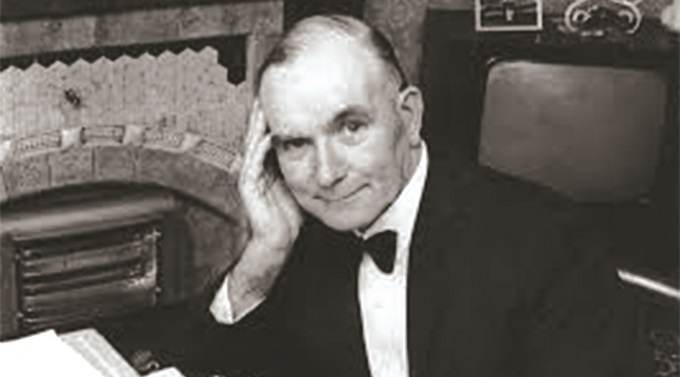
ZIMBABWE last carried out executions in July 2005 with the hanging of notorious criminals Stephen Chidhumo and Edgar Masendeke.
However, since then, there has been a moratorium on executions.
Although courts are still handing down the death penalty, recruitment of a hangman has proved difficult, perhaps indicating the general reluctance among Zimbabweans to take up such a ghoulish job.
Under Section 48 (2) of the Constitution, capital punishment for murder committed in aggravating circumstances is limited to males aged between 21 and 70 years.
Women are, however, exempted.
Over the years, the majority of applicants for the vacant post of public executioner have largely been men, with only two women coming forward.
All this makes Albert Pierrepoint, the late English hangman, one of the most prolific executioners to have ever lived.
But critically, he, too, came to the realisation that the death penalty was not as deterrent as it was ought to be.
This is partly one of the reasons why there has been heightened advocacy for the abolition of the death penalty in some jurisdictions.
******************************
On July 15, 1953, notorious British serial killer John Christie was about to be executed at London’s Pentonville Prison. Immediately before he was to be hanged, Christie, his hands tied behind his back, complained that his nose itched. The executioner then leaned in and told Christie: “It will not bother you for long.”
That executioner was named Albert Pierrepoint. Throughout the 1930s and 1950s, the British hangman made a career out of killing infamous serial murderers and Nazi war criminals, among others.
Between 1932 and 1956, he hanged a record number of people in accordance with British law. While the exact number of people remains unknown, common estimates say it was 435 while the man himself once claimed 550.
Whatever the exact number, Pierrepoint remains one of modern history’s most prolific legal killers — with a fascinating story to match.
The beginnings of an executioner
Pierrepoint, born on March 30, 1905 in Yorkshire, was always going to be an executioner. At the age of just 11, he wrote in an essay: “When I leave school, I should like to be the official executioner.”
But Pierrepoint’s morbid dreams did not come about by accident. His father and uncle were both executioners, and Pierrepoint wanted to continue in the family business.
His father died in 1922, but Pierrepoint inherited the notes, diaries and journals he had kept on how to hang people.
Upon studying his father’s notes, Pierrepoint sought to become an executioner more than ever before, but his queries to the Prison Commission were dismissed; he was told that there were no vacancies.
In the meantime, he made ends meet in his new home in Greater Manchester by taking odd jobs like making deliveries for a wholesale grocer.
Finally, in 1932, Pierrepoint got this shot at being an executioner when a space opened up following the resignation of an assistant executioner. He attended his first execution in Dublin in late 1932 — which was carried out by his uncle, Thomas Pierrepoint — and was able to observe and assist in a number of executions afterwards.
However, Pierrepoint was still a rookie and there simply were not that many executions in Britain in the 1930s, so the eager young hangman did not get his chance to actually carry out an execution right away.
In fact, his first execution was not until October 1941, when he hanged gangster and murderer Antonio Mancini in London. The following year, he executed the notorious spree killer Gordon Cummins, the “Blackout Ripper” believed to have murdered and mutilated four women over the course of just six days in February 1942.
But after World War II, Albert Pierrepoint’s workload increased immensely.
Executing Nazis and beyond
Just after the close of World War II, Britain’s most famous executioner truly made a name for himself by hanging approximately 200 war criminals, many of them Nazis.
Between 1945 and 1949, Pierrepoint travelled to Germany and Austria more than 20 times in order to execute some of the most disturbing Nazis to have committed atrocities during the war.
One such war criminal was Josef Kramer, the Commandant of Auschwitz and then Bergen-Belsen, where prisoners dubbed him “The Beast of Belsen”.
Another of Pierrepoint’s Nazi hangings was Irma Grese, “The Hyena of Auschwitz”, who became a concentration camp guard when she was just a teenager.
Pierrepoint executed dozens upon dozens of other war criminals just as vicious (while also executing Britain’s own acid bath killer in 1949).
He even once hanged 13 in a single day on February 27, 1948.
After executing many hated Nazis, Pierrepoint became famous as a sort of quasi-war hero and also made enough money to buy a pub named The Poor Struggler outside Manchester (while still carrying out executions when the need arose).
People flocked to the pub so they could be served a pint by Britain’s Nazi executioner.
But in 1950, Pierrepoint’s life as a pub-owning executioner took a dark turn.
One of his pub’s regulars, James Corbitt, was sentenced to death for the brutal murder of his girlfriend in a fit of jealousy. Corbitt had gotten drunk at Pierrepoint’s pub and even sang a song with the executioner, before heading home to commit his crime.
After Corbitt was sentenced to death, Pierrepoint was the one to perform the execution.
He said it was only time that he regretted doing his job.
Accounts vary, but some say this is when Pierrepoint began to consider putting down the noose for good.
Still, he stayed employed as a hangman for five more years, during which time he executed high-profile criminals like serial killer Christie and Timothy Evans, the man who had mistakenly been hanged for one of the former’s crimes before new evidence was found and Christie himself was arrested.
On July 13, 1955, Pierrepoint executed another high-profile murderer, Ruth Ellis, a model and nightclub hostess who had shot her abusive boyfriend to death.
Because she was a woman who had killed an abusive boyfriend while clearly in a state of extreme stress, Ellis’ death sentence was extremely controversial among the British public to the point that the government’s views on capital punishment began to change.
But before the execution jobs even had a chance to dry up too much (Britain outlawed executions in 1965), Pierrepoint resigned following a January 1956 dispute in which he was not paid his full rate (about US$450 when adjusted for inflation) for an execution that was called off just before it was to take place.
Receiving his full rate in such a case would have been customary but not mandatory in such a case.
With that, the career of Britain’s most famous and prolific executioner came to an end.
Legacy and craft
The executioner Pierrepoint himself died on July 10, 1992 at the age of 87 in Southport, the seaside town near Liverpool, where he had retired with his wife after resigning from his position as a man who had killed hundreds of people. — Wires



 Online Reporter