Online Reporter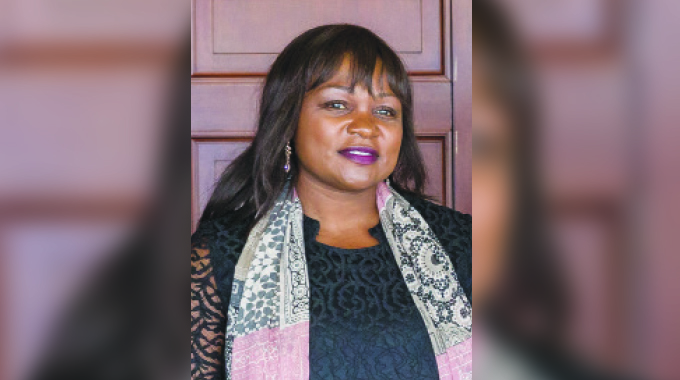
Gibson Mhaka, Zimpapers Politics Hub
THE Gukurahundi national outreach programme is gathering momentum, with nearly 5 000 submissions from victims and their families in Matabeleland North and South provinces recorded despite repeated calls from some opposition parties to boycott the process.
Zimpapers has established that, as of Wednesday, the number of submissions continues to grow, indicating increasing trust and acceptance of the initiative among affected communities. A total of 4 935 submissions have been received to date, 2 639 from Matabeleland South and 2 296 from Matabeleland North.
The latest statistics from four chiefs in these provinces show 675 submissions, comprising 395 written forms and 402 audio recordings. Out of these, 448 audios have already been transcribed. Significantly, women have been the dominant participants, accounting for 2 908 submissions compared to 2 027 from men.
In an interview, Attorney-General Mrs Virginia Mabiza, who heads the secretariat of the Matabeleland Peacebuilding Outreach Programme, said the growing participation is a clear rebuttal to the programme’s detractors.
“The substantial rise in submissions, despite calls for a boycott from those attempting to undermine the process, demonstrates that these efforts have not resonated with local communities,” said Mrs Mabiza.
“People have opted for engagement instead of division. We have prioritised transparent processes, consistent community feedback, and culturally appropriate communication in local languages.”
Mrs Mabiza said the Government, working closely with traditional leaders, faith-based organisations and local structures, has assured participants that their testimonies will be received with dignity, treated with the highest confidentiality and honoured as part of the nation’s shared journey towards truth, healing and reconciliation.
A major contributor to the programme’s success has been the proactive involvement of 65 Chiefs, who have posted on the online platform. Mrs Mabiza stressed the critical role of traditional leaders in ensuring the authenticity and security of the process.
“Traditional leaders have been instrumental in validating and safeguarding testimonies at the grassroots level. Their respected position within communities provides a credible assurance that the process is legitimate and community-driven,” she explained.
“Chiefs have facilitated safe venues for testimony collection and have assisted in the secure handling of audio submissions before they are transferred to the Co-ordination Centre for verification.
“Their active participation has strengthened the authenticity of the outreach programme and ensured that sensitive information remains protected.”
Recognising the sensitivity of some testimonies, the secretariat has implemented targeted measures to meet women’s unique needs.
Mrs Mabiza said the Secretariat has put specific measures in place to handle women’s unique needs.
“We have ensured that the members of the chiefs’ panel are trained to handle delicate testimonies, including cases involving trauma. Safe spaces have been created for women to share their experiences confidentially, and psychosocial support and counselling are being provided directly by a trained member of the chiefs’ panel,” she said.
“These measures guarantee that women’s voices are fully captured in a manner that is respectful, protective and responsive to their specific needs.” Mrs Mabiza said with the submissions approaching 5 000, the outreach programme is now entering a new stage.
“We are currently finalising the first critical step of the process, which is the consultative process, ensuring that no one is left behind. As we speak, transcription and translation of testimonies are being undertaken with the utmost accuracy and integrity,” she said.
“Once this foundational work is complete, we will advance to a rigorous verification stage, followed by a comprehensive analysis that will integrate the findings and proffer recommendations beneficial to the victims and the communities involved.”
President Mnangagwa officially launched the Gukurahundi public hearings programme in July last year, empowering traditional leaders to conduct hearings as part of an internal, home-grown resolution process.
The initiative, first announced in February 2019, forms part of the Second Republic’s efforts to address the Gukurahundi disturbances of the 1980s through dialogue and reconciliation.
It aligns with the President’s vision of building national unity, fostering healing and bringing closure to a painful chapter in Zimbabwe’s history.
The Gukurahundi disturbances, which occurred between 1983 and 1987, were a period of civil unrest and armed conflict largely affecting Matabeleland and parts of the Midlands.
The conflict was officially resolved through the Unity Accord of 1987, signed between Zanu and PF-Zapu. However, for decades, survivors and families of victims called for a formal platform to share their experiences, document losses and seek closure.
In February 2019, the Second Republic led by President Mnangagwa initiated a comprehensive peacebuilding framework for Gukurahundi, moving away from a top-down state-led investigation model towards a community-driven truth-telling process.
The Matabeleland Peacebuilding Outreach Programme was established to operationalise this framework, guided by principles of confidentiality, victim protection and community ownership.
The process aligns with National Development Strategy 1 (NDS1), which emphasises social cohesion, inclusive governance and healing as key pillars for long-term stability and national unity.
It also reflects Zimbabwe’s adoption of reconciliation norms in line with the African Union’s transitional justice policy.
“Once this foundational work is complete, we will advance to a rigorous verification stage, followed by a comprehensive analysis that will integrate the findings and proffer recommendations beneficial to the victims and the communities involved.”
President Mnangagwa officially launched the Gukurahundi public hearings programme in July last year, empowering traditional leaders to conduct hearings as part of an internal, home-grown resolution process.
The initiative, first announced in February 2019, forms part of the Second Republic’s efforts to address the Gukurahundi disturbances of the 1980s through dialogue and reconciliation. It aligns with the President’s vision of building national unity, fostering healing and bringing closure to a painful chapter in Zimbabwe’s history.
The Gukurahundi disturbances, which occurred between 1983 and 1987, were a period of civil unrest and armed conflict largely affecting Matabeleland and parts of the Midlands. The conflict was officially resolved through the Unity Accord of 1987, signed between Zanu and PF-Zapu. However, for decades, survivors and families of victims called for a formal platform to share their experiences, document losses and seek closure.
In February 2019, the Second Republic led by President Mnangagwa initiated a comprehensive peacebuilding framework for Gukurahundi, moving away from a top-down state-led investigation model towards a community-driven truth-telling process. The Matabeleland Peacebuilding Outreach Programme was established to operationalise this framework, guided by principles of confidentiality, victim protection and community ownership.
The process aligns with National Development Strategy 1 (NDS1), which emphasises social cohesion, inclusive governance and healing as key pillars for long-term stability and national unity. It also reflects Zimbabwe’s adoption of reconciliation norms in line with the African Union’s transitional justice policy.