

 admin
admin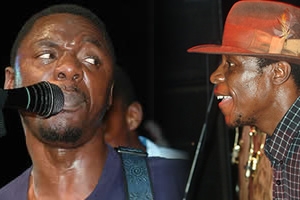
bash at Richwood Sports Club in Meyrick Park in Harare, before travelling to Gweru for yet another exciting show.
Previously, Gwala has shared the stage with Amavhitikazi, among other local groups, and his local fans are always excited when he is in town.
But who is Freddy Gwala?
Born and brought up in Soweto, Gwala kick-started his music career by forming with the group Pure Gold in 1973, together with his brothers.
He was also instrumental in the formation of Platform One, which later became one of South Africa’s leading
music groups with a number of hit songs to their name.
Platform One became famous for their wedding songs, most of which Gwala composed and produced for the group.
Gwala calls his music “Zumba”, which is a fusion of soul and disco.
His period in prison inspired most of his artistry.
“I’m singing for the inmates and the youth out there,” he once said.
He, however, said crime does not pay and uses his music to discourage crime, after having spent eight years in jail for car theft.
His catalogue of music includes the smash hit “Amadamara”, “Khipidayimani”, “Shikhisha”, “Manana”, “Sesh’omnyama”, S’bongile”, “Abazali Bami” and “Bafana Bafana” which he sang for the South African men’s senior national soccer team.
Freddy has left a mark all over South Africa, contributing to albums of several artistes including Blondie Makhene, Vusi Shange and the late Brenda Fassie.
He composed the song “My Baby,” which featured on Fassie’s “Imali” album.
Freddy still composes and produces songs for Pure Gold and Platform One.
His shows in Harare and Gweru are expected to rekindle his romance with Zimbabwean fans.


 Online Reporter