Online Reporter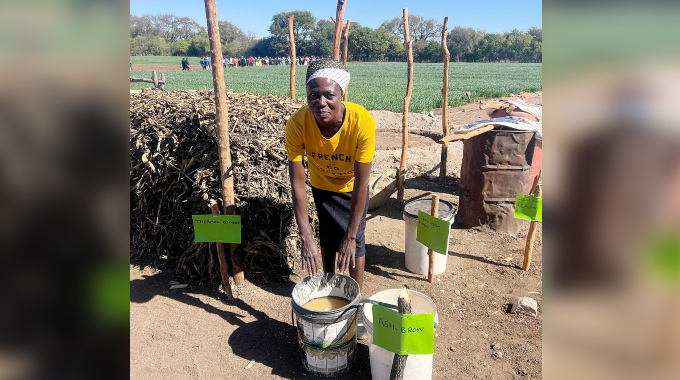
Sukulwenkosi Dube-Matutu, [email protected]
FARMERS at Madema Garden in Gwanda have embraced the production and use of organic fertilisers and pesticides — a move that has improved crop performance while significantly reducing production costs.
The farmers prepare a variety of inputs, including ash brew used as a pesticide, thermal compost made from maize stover, and liquid manure derived from cow, chicken and goat dung, as well as weeds. These organic fertilisers are also applied in their individual fields outside the garden.
One of the farmers, Ms Iputsenga Nare, said they received training from Agricultural and Rural Development Advisory Services (Ardas) business advisors, on how to produce the fertilisers using locally available resources.
“In our production, we prepare our own fertilisers from organic products. This method is affordable and safer for both crops and consumers compared to chemical fertilisers,” she said.
Explaining the process, Ms Nare said liquid manure is made by sealing dung in a sack, submerging it in water inside a drum, and stirring it for seven days before sealing it off to decompose for three to four weeks. The resulting liquid is then diluted and applied to crops.
For thermal compost, she said farmers use a mix of fresh and dry maize stover or lucerne combined with animal dung, which is stacked and left to decompose.
The farmers also produce ash brew pesticide by boiling a mixture of green bar soap, ash, and water. The solution is then left to settle for 24 hours before the liquid is applied to crops.
“This pesticide is very convenient because the crops can be consumed immediately after application,” Ms Nare said.
Madema Garden chairperson, Ms Eggie Mazibeli, said the use of organic fertilisers and pesticides has improved crop health and boosted yields.
“We chop the green bar into small pieces. We fill a container with water and place it on a fire, then we add the soap pieces and stir continuously until the soap has dissolved. We then put 10kg of ash into a pot, pour in the soapy liquid, and add 20 litres of water,” she said.
In an interview, Matabeleland South Ardas Deputy Director, Mr Bhekilizwe Ncube, said his department is training more farmers on organic input production as part of efforts to promote sustainable and affordable farming practices.
“Organic fertiliser is cost-effective because it uses resources that are readily available to farmers. It also helps improve soil health, which in turn enhances crop productivity,” he said. — @DubeMatutu