Online Reporter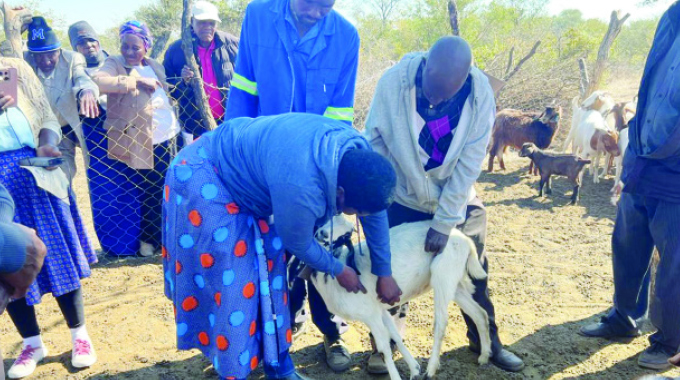
Sukulwenkosi Dube-Matutu, Matabeleland Bureau
DETERMINED to improve their goat breeds and market linkages, farmers in Gwanda District have established associations as they take their farming initiative to a commercial level and aim to reap the economic benefits from improved herds.
The farmers, who were mainly rearing the Matabele breed in small groups, have introduced Kalahari bucks to their herds.
Ward 17 goat farmers association chairperson, Mr Philip Sithole said they came together as goat farming groups from different villages in the ward to establish an association for goat breeding.
He said their goat farming groups have been focusing on the Matabele breed, but they are now crossing the Matabele with the Kalahari. He added that once they have a substantial herd, they will then introduce the Kalahari breed at group level.
The farmers benefitted from a project that was rolled out by the Edward Memorial Ndlovu Trust, to mitigate effects of climate change.
The trust has supplied Kalahari bucks to three associations from three wards in the district.
“Our association is made of eight farmer groups from Ward 17. When we started this association in April, each group contributed goats of the Matabele breed towards our common kraal. We then received a Kalahari buck from Edward Ndlovu Memorial Trust, which has been mating with our Matabele goats, in order to come out with stud breeds.
“We now have a herd of 42 goats and of these are 17 kids, which are a cross of the Kalahari and Matabele. We are in the process of growing our herd and in the process, we have an obligation to pass on some goats to other farmers as well,” he said.
Mr Sithole said the project will help to ensure that they can supply bigger markets.
The secretary of the association, Ms Keabetswe Nare said they have gained vast knowledge in goat breeding, which is helping them to sustain their project. She said selling their goats in large numbers will help them to realise a high income to fend for their families.
Ms Nare said they work collectively to ensure their animals have feed. She said they are now working on establishing a plot where they will grow fodder crops for their goats.
Speaking during a goat management training in Manama area, Edward Ndlovu Memorial Trust director Mr Mike Moyo said they have come in to assist farmers in establishing associations through the “Study Circle” methodology.
The study circle programme follows a co-operative approach, which encourages farmers to come together, analyse their problems, learn together, pool their resources in small groups in order to increase their power and ability to push back the frontiers of poverty.
He said this also brings farmers together to take collective action and generate solutions to common problems. In the process, farmers are equipped with skills they need to effect change within their communities.
Mr Moyo said the programme is also part of efforts to boost production and ensure food and nutrition security in communities towards attainment of Vision 2030.
He said farmers first established study circles with about six to 12 members and they have now combined their study circles to form associations.
“Under the goat project we capacitated farmers with goat breeding knowledge under the study circle concept. We then borrowed the farmers some Kalahari bucks in order to improve their breeds and then we came in with goat management training so that we equip farmers with knowledge on how to maintain these herds.
“Goat management covers goat housing, health and feeding, among other things and we have also trained farmers on marketing and we have been assisting them with market linkages.
We are now saying that we want farmers to adopt fodder production in order to produce quality breeds, which will be competitive in the market. One fodder crop we wish to promote among farmers is the cactus,” he said.
He said the farmers will be expected to pass on the goats next year.Mr Moyo said the target is to ensure that by the end of 2025, each farmer should have at least 50 goats, which are pure breeds.
He said engaging farmers to form associations has helped to inculcate a business mindset, among farmers.
—@DubeMatutu