Online Reporter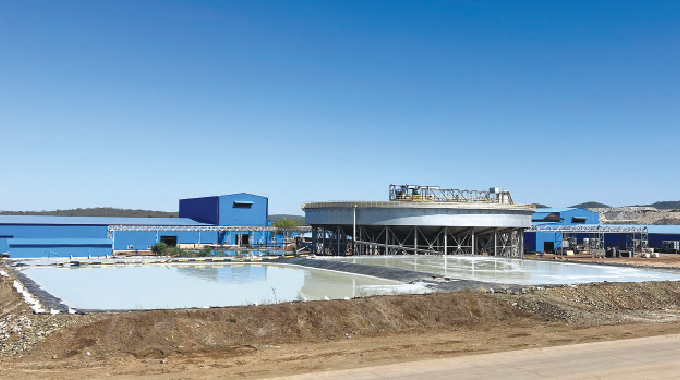
Sukulwenkosi Dube-Matutu, Sunday News Reporter
GWANDA Lithium Mine has invested US$5 million in a tantalum and niobium beneficiation plant, marking a significant step towards increased mineral value addition and positioning the Matabeleland South operation as a key player in Zimbabwe’s push to maximise returns from its vast mineral resources.
The new plant will enable the mine to recover and process three minerals — lithium, tantalum and niobium — from the same ore, increasing the value derived from resources that were previously exported with limited local beneficiation.
The investment comes as Government intensifies efforts under the Second Republic to move the country away from exporting raw minerals towards a model centred on extraction, processing, beneficiation and manufacturing.
Zimbabwe has tightened restrictions on the export of unprocessed lithium and mineral concentrates as part of a broader strategy to retain more value locally and drive industrialisation.
For years, Gwanda Lithium Mine exported raw lithium with limited beneficiation taking place within the country.
The new processing circuit is expected to produce about 300 tonnes of tantalite and niobium concentrate annually, opening a new value stream for the mining operation.
Speaking during a tour of the mining plant on Friday by Minister of State for Matabeleland South Provincial Affairs and Devolution Albert Nguluvhe and other Government officials, Gwanda Lithium Mine public relations manager Mr Nickson Kutsaranga said the operation had significantly expanded its beneficiation capacity.
“Our operations have significantly grown as we are beneficiating tantalum-niobium as well. So from the same lithium raw ore we are now declaring three minerals, which are lithium, tantalum and niobium,” he said.
Mr Kutsaranga said the company had also diversified into gold processing through Din Gold Group, with more than US$115 million invested under phases one and two of the project.
“We have gone further here within the Gwanda Lithium Mine premises to establish another entity that specialises in gold processing under the Din Gold Group. We invested in excess of US$115 million under phase one and two of the project and we will continue expanding,” he said.
“Our target is to ensure that we contribute to Zimbabwe’s target of building a US$40 billion mining economy by 2030 while at the same time empowering communities.”
The company currently employs more than 800 people across its operations, with the expansion expected to create further economic opportunities.
The beneficiation milestone also comes as Gwanda Lithium Mine partners BBR to facilitate the movement of lithium concentrate through the recently established West Nicholson transhipment siding.
Information, Publicity and Broadcasting Services Deputy Minister and Gwanda South legislator Dr Omphile Marupi said mining investments should translate into tangible benefits for communities through employment creation and broader economic development.
He said Zimbabwe was deliberately moving away from an extract-and-export economic model.
“The separation and extraction of three extra minerals from what we initially knew of is an extra for us. Employment of plus 800 workers is a good development to our community. These are the kind of investment projects that we want to see as a nation, as we want growth and progress,” said Dr Marupi.
Minister Nguluvhe said the growth taking place at Gwanda Lithium Mine reflected investor confidence in Zimbabwe’s business environment.
He said the Second Republic’s engagement and re-engagement policy and the “Zimbabwe is Open for Business” thrust had created conditions conducive to investment.
“This shows that the investor has confidence with what is happening in Zimbabwe and the business environment that the country has. The Second Republic has said the country is open for business and also created a conducive environment for investors and the work we see here is part of the results of this policy,” he said.
“What’s important for us is to create an environment which makes the investor confident and this is what we have done.”
Minister Nguluvhe, however, urged mining companies to ensure that investment benefits extend beyond the mine fence through meaningful corporate social responsibility programmes.
He said mining companies should invest in infrastructure development, skills transfer and community empowerment to ensure communities hosting mining operations benefit from the exploitation of natural resources.
“Investment in the mining sector should bring mutual benefit to the community, investor and Government,” he said.
The developments come against the backdrop of Government’s intensified beneficiation drive, which seeks to ensure that Zimbabwe’s mineral wealth contributes more directly to industrialisation and economic transformation.
Government announced in February the suspension of exports of lithium concentrates and other raw minerals as part of measures to promote local value addition.
The policy aligns with President Mnangagwa’s vision of ensuring that the country’s mineral resources generate broader benefits for citizens instead of being exported in raw form and later imported as high-value finished products.
Mining has emerged as one of the major pillars of Zimbabwe’s economy, contributing significantly to export earnings and national economic growth.
The sector is expected to play a central role in the country’s ambition to build a US$40 billion mining economy by 2030, with investments in beneficiation and value addition increasingly viewed as critical to ensuring that Zimbabwe retains a greater share of the wealth generated from its natural resources.